Our trips
The Icons
The great classics of Nepal, well-known and proven itineraries.
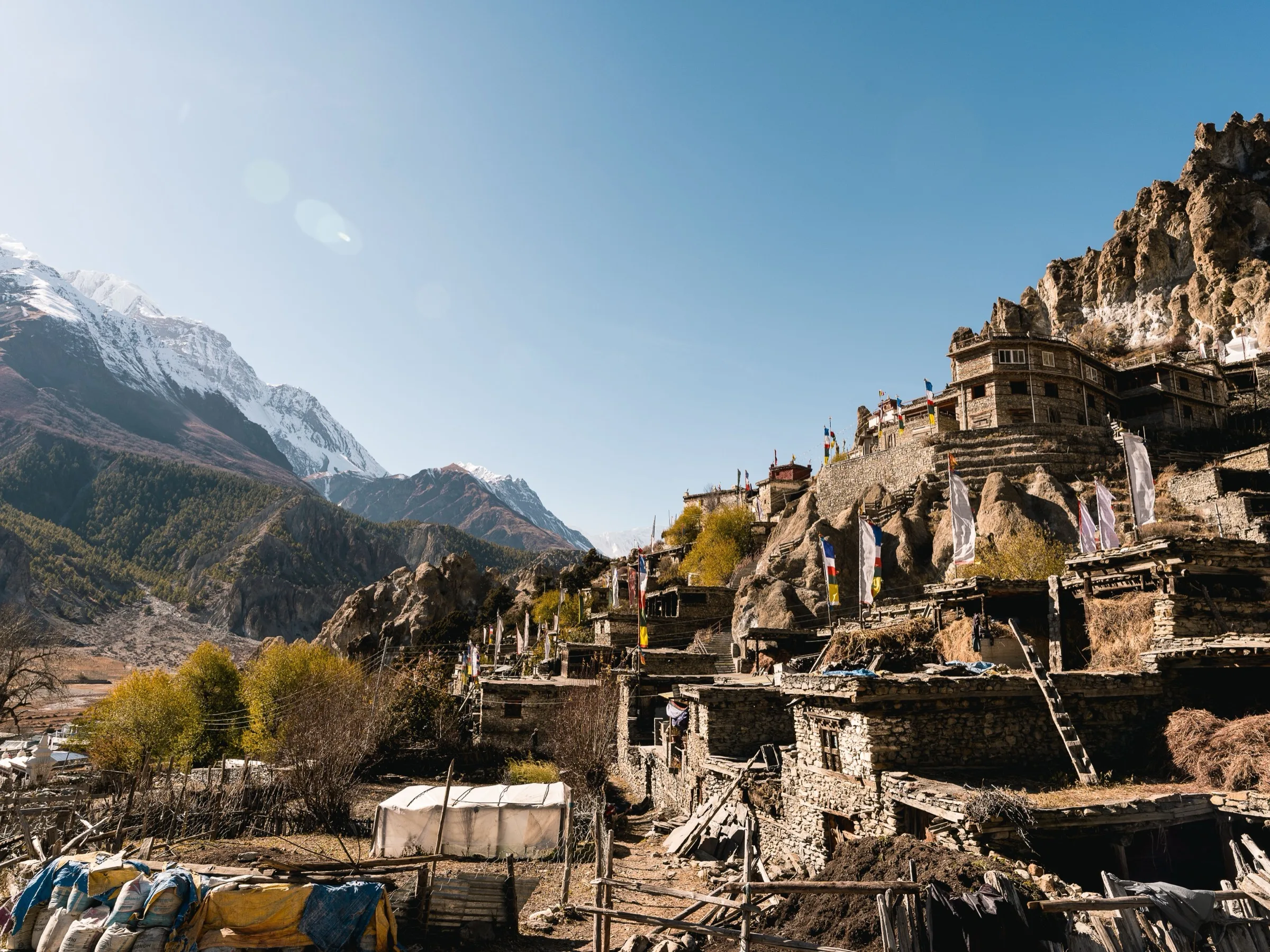
Regarded as one of the longest and most complete treks in the world, the Annapurna Circuit is not only a journey through exceptional natural landscapes: it is a genuine cultural voyage. Over more than 200 km and across four districts of Nepal, the route makes a full circuit of the Annapurna Conservation Area and the massif of the same name. Accessible to trekkers of varying experience, it nonetheless demands good physical preparation, because of its length and the altitude reached at the pass. All along the way, the peaks of Annapurna, Dhaulagiri and Manaslu reveal themselves, alongside Machhapuchhre (6,993 m), Tilicho Peak (7,134 m) and Pisang Peak (6,091 m).
This trek begins in Kathmandu. The road then leads north-west, via Besisahar, as far as Dharapani, from where the trail starts towards the village of Chame. The route progresses anticlockwise, crossing the highland villages of Lower Pisang, Manang and Yak Kharka, before crossing the Thorong La pass (5,416 m) to reach the Mustang district.
Because of its proximity to Tibet, this region has a resolutely Tibetan way of life, culture and traditions. On the far side of the pass, the pilgrimage site of Muktinath, revered each year by thousands of Hindu and Buddhist pilgrims, marks the entry into a semi-arid, desert-like landscape, very different from the green valleys of the start. The descent continues to Jomsom, the windy town of Mustang, from where a trans-Himalayan flight reaches Pokhara. From there, the return to Kathmandu is made by road (or with a short flight possible as an option).
The trek is best undertaken in spring (March–May) or autumn (September–November). In spring, the flowering rhododendron forests and mild temperatures offer pleasant conditions, for beginners and experienced trekkers alike. Autumn, considered the best season overall, follows the monsoon rains: the air is clearer, the views of the peaks sharper, and the trails livelier, carried along by the Nepalese festivals of Dashain and Tihar.
Between Tibetan villages of Mustang, a pilgrimage sanctuary, a high pass and panoramas over three massifs of more than 8,000 metres, the Annapurna Circuit combines a real physical challenge, driven by the length of the route and the altitude of the Thorong La pass, with a cultural diversity that is rare on a single itinerary.
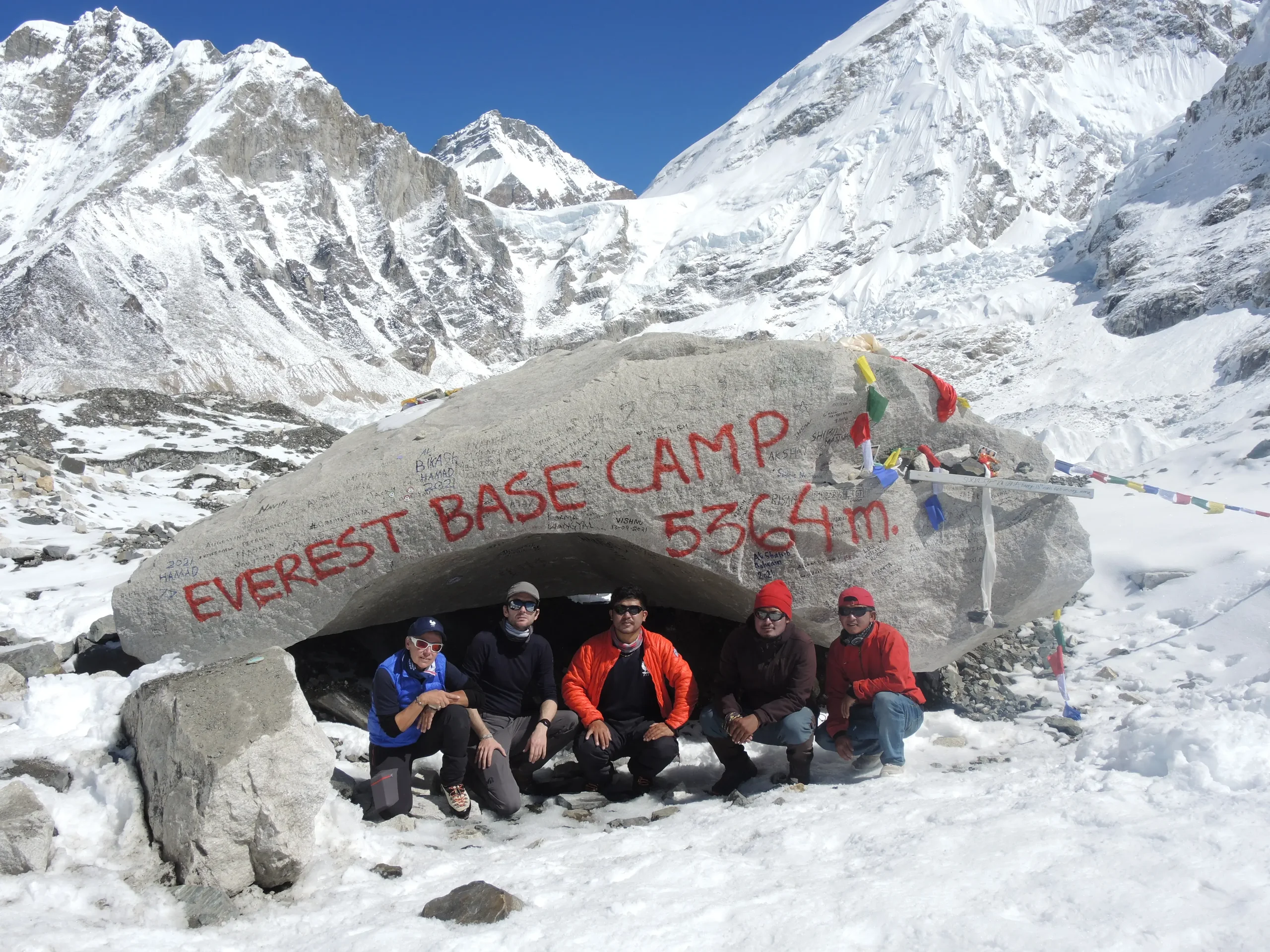
At the foot of the roof of the world, this legendary trek is far more than a hike: it is a total immersion in the heart of the Himalayas.
The classic route climbs the wooded valleys alongside the Dudh Koshi River to the glacial heights beyond the tree line. Rhododendron forests, dizzying suspension bridges and Sherpa villages shaped by mountain life follow one after another, while each stage reveals increasingly striking panoramas of the surrounding peaks.
As the trail climbs, the forests give way to alpine meadows, yak pastures and fields surrounded by stone walls; at the foot of imposing giants such as Ama Dablam, Lhotse and Nuptse.
Sherpa culture permeates every step of the way: mani stones carved with prayers, prayer wheels turned by the flow of streams, and monasteries such as Tengboche offering havens of serenity amid these majestic landscapes.
Beyond the vegetation, the moraine of the Khumbu Glacier leads to Everest Base Camp (5,364 m), a landmark in the history of world mountaineering. The final climb to Kala Patthar (5,644 m) rewards walkers with an unobstructed and unforgettable view of Everest and its neighbouring peaks. One of the most beautiful Himalayan panoramas there is.
Accessible to hikers in good physical condition, the itinerary carefully alternates climbing days with acclimatisation stages, for a safe progression to high altitudes.
The trek is best undertaken in spring (March–May) or autumn (September–December), when the trails are in very good condition and visibility is at its best.
This journey is as much a physical adventure as a profound cultural encounter: contemplating the Himalayan landscapes, immersing yourself in the life of the Sherpas, being close to the highest peaks in the world; an experience that leaves a lasting mark on those who take it on.
The Atypicals
Routes away from the most frequented circuits, for a more authentic experience.
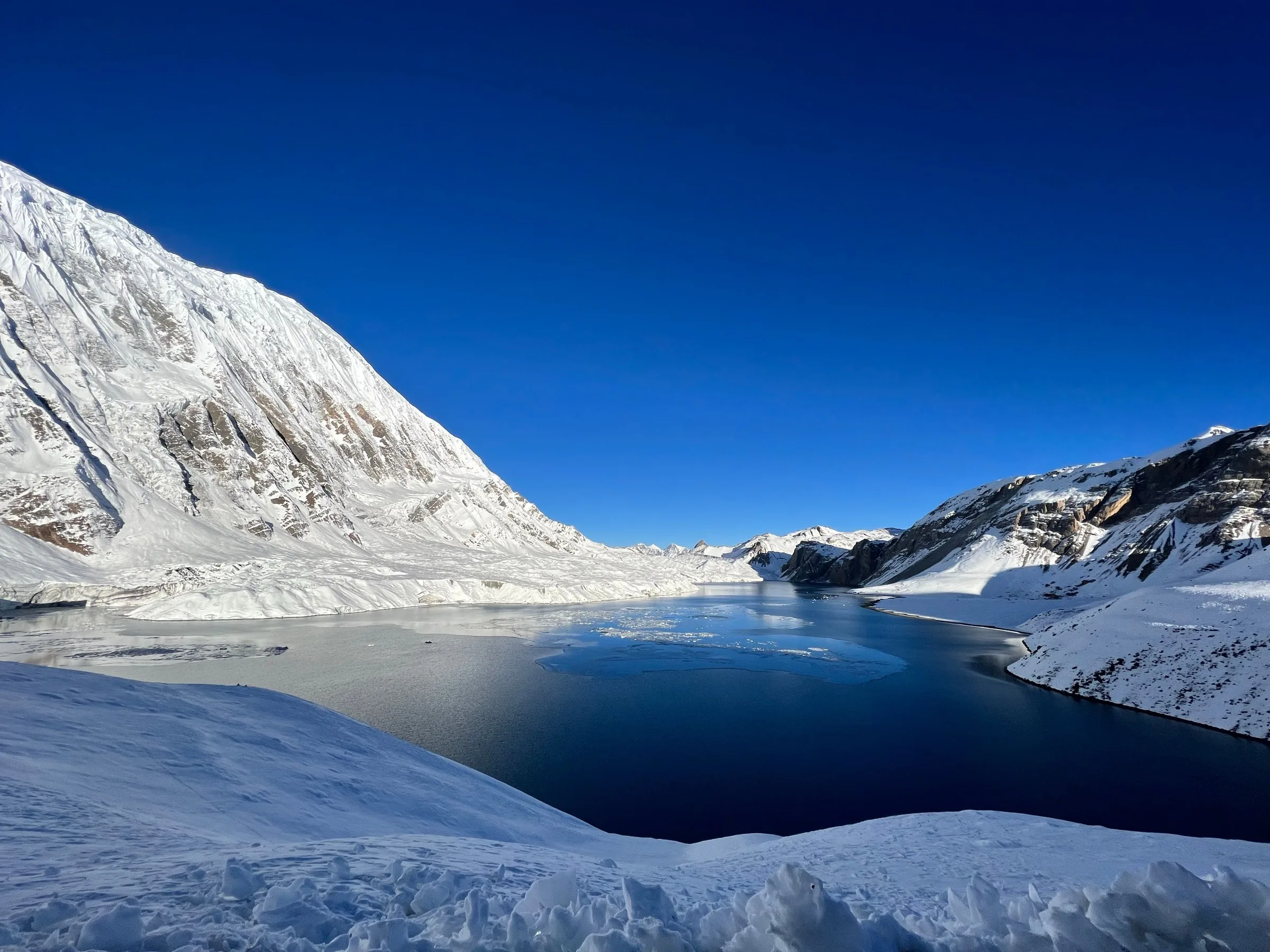
Chulu Far East is a 6,059 m trekking peak in the Annapurna region, one of the least frequented climbs of Nepal. This trip combines its ascent with a long trek around the Manang valley and the sacred Tilicho Lake (4,920 m), for a route as varied in its landscapes as in its culture.
The journey begins in Kathmandu, where a free day lets you meet your guides and prepare for the climb. A long drive then leads to Chame, in the Manang district, where the trek begins. The trail follows the Marsyangdi valley through the Tibetan Buddhist villages of Pisang and Ngawal, then turns north to Julu Khola and to Chulu Far East base camp (5,000 m). Two acclimatisation days, one at Julu Khola and one at base camp, and a training session on the use of technical equipment prepare you for the climb. After a night at the high camp, you climb to the summit, from where the panorama stretches over the Annapurna, Gangapurna, Manaslu and Chulu massifs.
After the climb, the route goes back down to Manang and continues through a quiet part of the Annapurna region, by Siri Kharka and Tilicho base camp, to Tilicho Lake, considered sacred and cited in the Ramayana. Two high passes lead to Yak Kharka, then the trail descends to Jomsom, in Mustang, from where a flight reaches Pokhara before the road back to Kathmandu.
The best seasons are spring (March to May) and autumn (September to December). Although the peak is not technical, it requires good physical fitness and a first experience of altitude, because of the length of the route and the altitude reached at the high camp and at the passes.
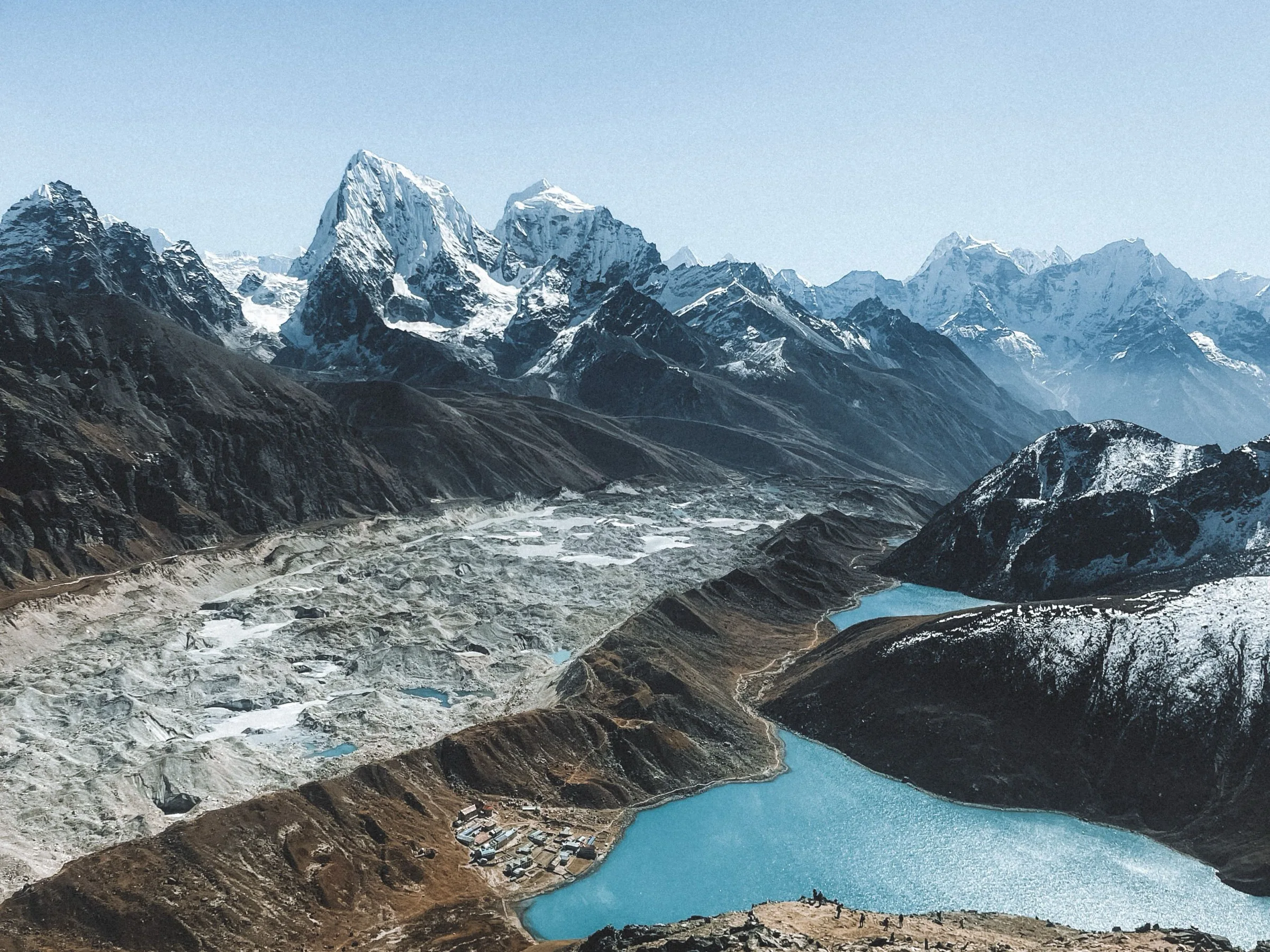
This trek combines two faces of the Himalayas: the turquoise beauty of the Gokyo lakes and the legendary walk to Everest Base Camp. The route deliberately leaves the busiest trails of the Khumbu to first climb the quieter western valley of Gokyo, where prayer flags fly above ancient trails and glacial lakes reflect giants such as Cho Oyu. From their shores, the climb up Gokyo Ri offers a panorama over the Himalayas, from Everest to Cho Oyu.
The journey then shifts to its most demanding moment: crossing the Cho La pass (5,420 m), a rocky and then glacial section that links this unspoilt realm to the main Everest trail. The glacier crossing, which may require microspikes, calls for a sure foot and good physical fitness. From there, the route joins the classic walk to Everest Base Camp (5,364 m), at the foot of the Khumbu Icefall, before the final dawn climb of Kala Patthar (5,644 m) for the close-up view of the roof of the world.
This trek is as much a cultural immersion as a physical challenge. Nights are spent in remote lodges where Sherpa hospitality is unfailing, along trails lined with mani stones (carved with prayers) and prayer wheels. It is a demanding route, reserved for walkers who are physically fit, determined and free of vertigo: sustained height gains, a night above 5,000 m at Gorak Shep, and the technical section of the Cho La pass that combines altitude, rocky terrain and a glacier crossing.
Our local partner has built the itinerary around gradual acclimatisation and relies on its most experienced guides to make this great traverse safe. It is best undertaken in spring or autumn, when conditions are most stable for crossing the pass in the best conditions.
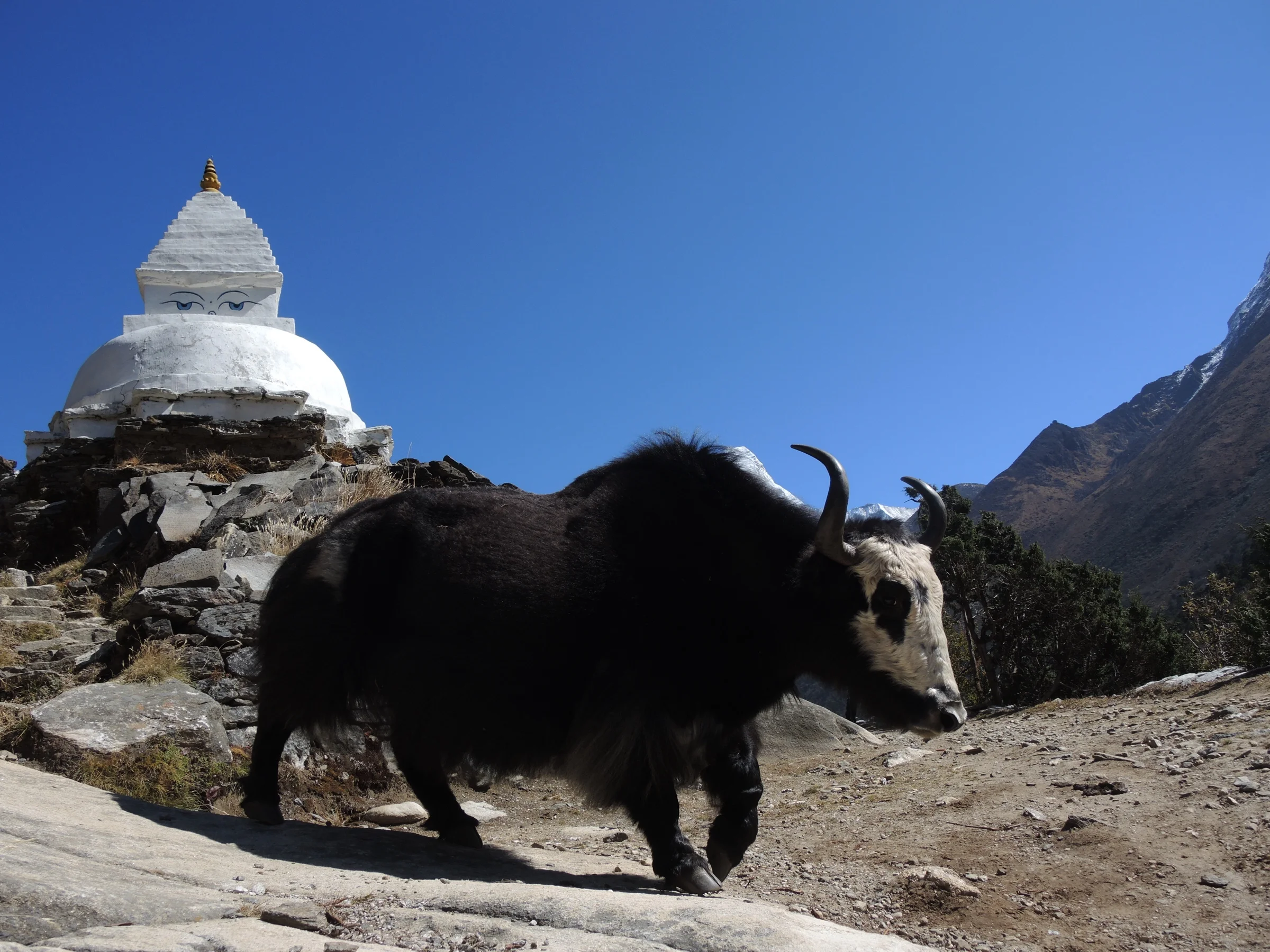
The trek from Jiri to Everest Base Camp is the historic route to Everest, the one taken by the first expeditions before Lukla airport opened. Unlike the modern route reached by flight, this traditional trail begins with a scenic road journey to Jiri, then climbs gradually through terraced hillsides, dense rhododendron forests, Sherpa villages and high mountain passes, before reaching the legendary Everest region.
Over many days of walking, this route crosses valleys and villages far less frequented than the classic route, for a deeper immersion in local culture and an acclimatisation that happens naturally, day by day. Along the way, trekkers discover remote hamlets, ancient monasteries and trails steeped in history. After crossing the Lamjura La pass and joining the main Khumbu route, the trek continues to Namche Bazaar, Tengboche Monastery, Everest Base Camp and the iconic Kala Patthar viewpoint, from where you gaze at unforgettable sunrises over Mount Everest and the surrounding Himalayan peaks.
The Everest Base Camp trek via Jiri is aimed at walkers looking for a quieter, less crowded alternative to the classic route, ready to commit for the long haul: the succession of climbs and descents through the foothills, day after day, demands solid endurance, well beyond what the short version of the trek requires. In return, this approach on foot offers gradual acclimatisation, a more intimate encounter with local culture and spectacular mountain landscapes — a demanding and rewarding long-distance trek.
The Sanctuaries
Trips centred on culture and spirituality.
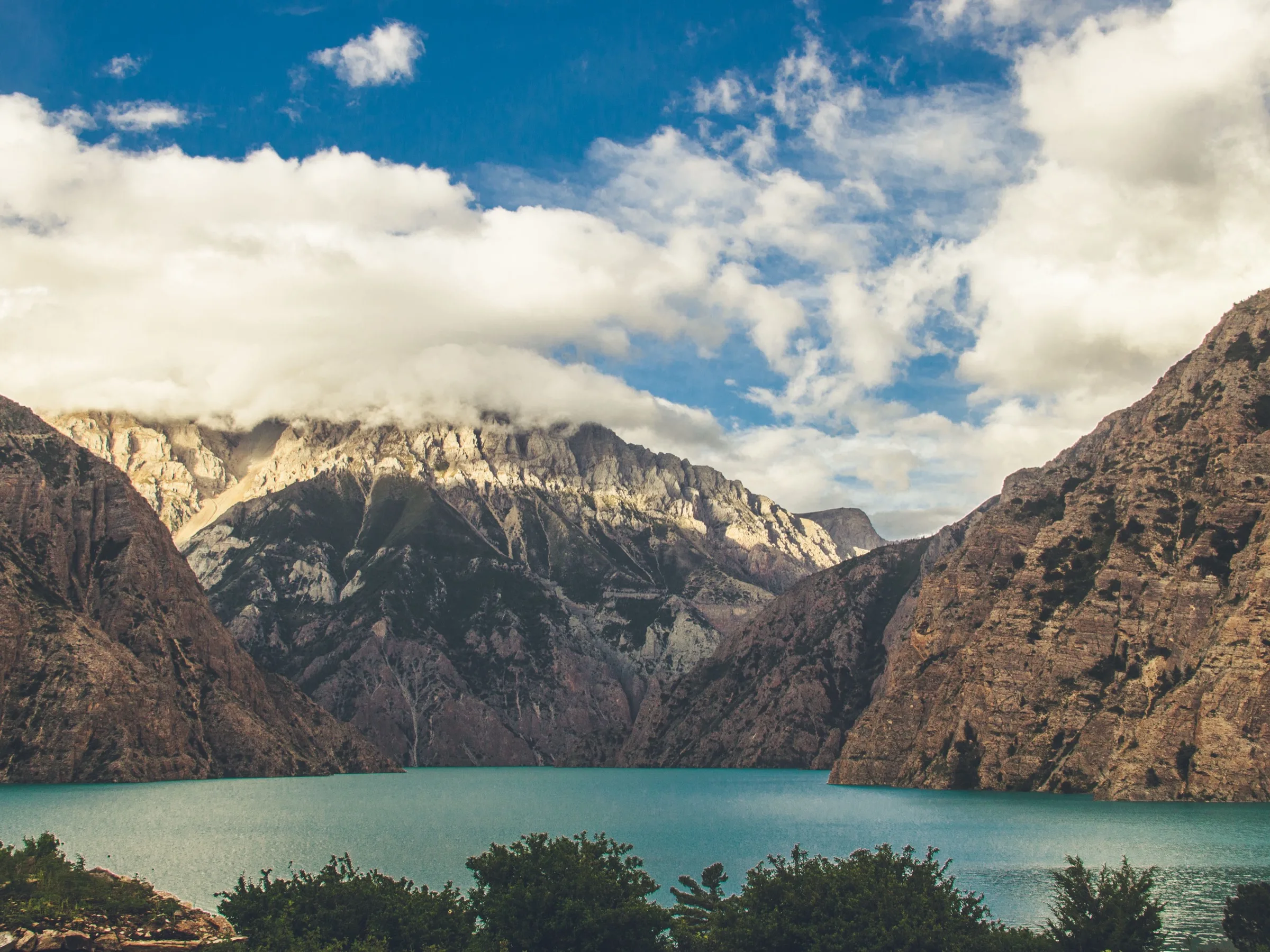
Upper Dolpo is one of the most remote and unspoilt regions of Nepal. Long closed to foreigners and still subject to a restricted-access permit, it has preserved, sheltered from modernisation, a way of life and traditions of Tibetan and Bön influence found nowhere else in the Nepalese Himalayas. This trip leads into the heart of this isolation, to the turquoise waters of Phoksundo Lake and the cliff-side monasteries that form the spiritual heart of the region.
The trip begins in Kathmandu. A flight to Nepalgunj and then to Juphal starts the trek, which first follows the Thuli Bheri River to Suligad Ghat, crossing suspension bridges and cedar forests. The trail then reaches Chhepka and then Renje, before reaching the village of Ringmo, with its mud houses and its chortens (Buddhist monuments) covered in prayer flags. It is here that Phoksundo Lake appears, its waters strikingly clear, where a day is set aside for acclimatisation and for discovering the Tibetan way of life of the inhabitants. The trek continues along the Phoksundo Khola River to Phoksundo Bhanjyang, then crosses the Kang La pass (5,350 m) to reach Shey Gompa, a Kagyupa monastery founded in the 11th century whose history goes back to the saint Padmasambhava — a further day is devoted here to acclimatisation and to visiting the site. The route then crosses the villages of Namgung and Saldang, then Yangtze Gompa, a Bön monastery, before reaching Sibu and Jeng La Phedi. Crossing the Jeng La pass (5,220 m) opens the descent towards the Dho Tarap valley, where a second acclimatisation day allows you to visit several monasteries in the area. The return is via the meadows of Karma Kharka, Khanigaon, Tarakot and Dunai, before a return flight to Nepalgunj and then Kathmandu.
This trek demands real self-sufficiency: the stages are long, three passes of more than 5,000 m must be crossed, and several nights are spent in tents in sections without any accommodation. Three acclimatisation days are spread along the itinerary to allow the body to adapt gradually to the altitude. Good physical fitness and experience of trekking in remote terrain are needed to approach this trip in good conditions.
The best seasons for this trek are spring (April to June) and autumn (September to November), when the weather is most stable, the skies clear and the views of the Himalayan peaks sharpest. Spring brings wild flowers and green alpine landscapes, while autumn offers crisp air, dry trails and excellent visibility.
Beyond the physical effort, this trip is above all an encounter: with a Tibetan Buddhist culture preserved by isolation, with monasteries several centuries old and with communities whose hospitality remains intact. Our local partner, drawing on its experience of this demanding region, accompanies you step by step in this immersion in the heart of one of the last Himalayan sanctuaries.
The First Summits
Ascents of non-technical peaks, open to beginner climbers.
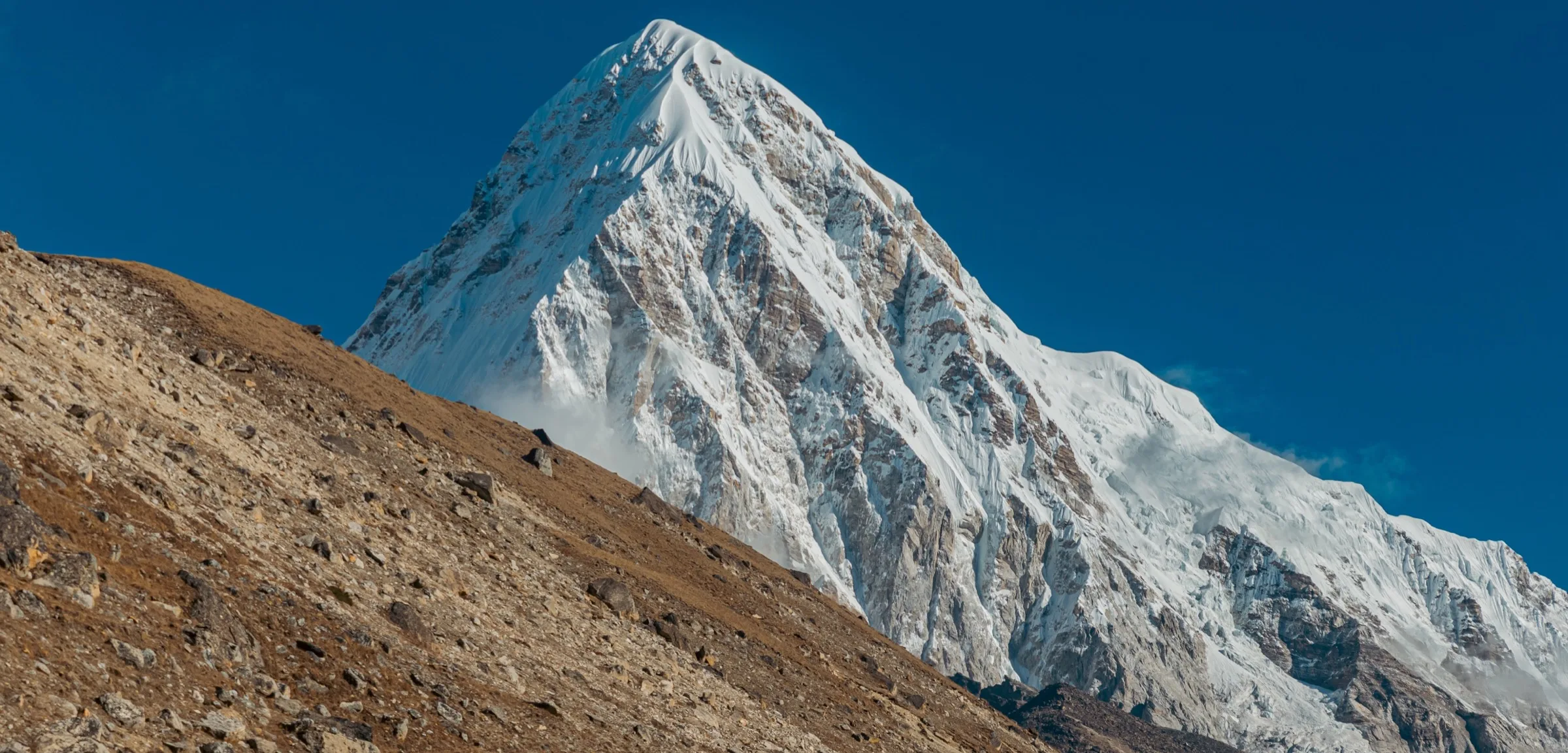
On the edges of the Everest massif, this crossing combines three high passes and three Himalayan peaks and covers the whole Khumbu region. The itinerary offers one of the most demanding routes in Nepalese trekking, far from the classic base camp trails.
The journey begins with a flight to Lukla, the gateway to the Everest region. The trail then climbs through the Sherpa villages of Phakding, Namche Bazaar, Thame and Lumde, before reaching the first of the three passes, the Renjo La (5,360 m). Beyond it opens the unspoilt Gokyo valley and its glacial lakes, where the climb up Gokyo Ri (5,357 m) offers a first overall panorama of the massif.
Crossing the Cho La pass (5,420 m), over icy and sometimes slippery terrain, leads to Lobuche Base Camp, the starting point for the first climb: Lobuche East (6,119 m), reached by an exposed final ridge. The third pass, the Kongma La (5,535 m), usually snow-covered, then leads to Pokalde Base Camp, where the climb up Pokalde Peak (5,806 m) begins. The last technical stage of the trip, the ascent of Island Peak (6,165 m), ends with an exposed traverse to the front of the summit glacier, with views of Everest (8,848 m), Lhotse (8,516 m) and Makalu (8,485 m).
After these three summits, the descent passes through Chhukung, Dingboche and Tengboche Monastery, before reaching Namche Bazaar and then Lukla, for a flight back to Kathmandu.
Throughout the route, the landscapes alternate between rhododendron forests, glacial moraines and snow-covered passes, while the Sherpa villages you pass through — Namche Bazaar, Thame, Gokyo, Dingboche, Tengboche — offer a continuous immersion in the Buddhist culture and traditions of the Khumbu. The panoramas open onto some of the highest peaks in the world: Everest, Lhotse, Nuptse, Ama Dablam, Makalu, Cho Oyu.
This route is aimed at experienced trekkers, in excellent physical condition, able to operate for several days above 5,000 metres and to handle technical terrain — snow, ice, exposed ridges — on three successive climbs. The gradual acclimatisation and the contingency days built into the itinerary, notably at Chhukung before Island Peak, take account of this dual physical and altitude demand.
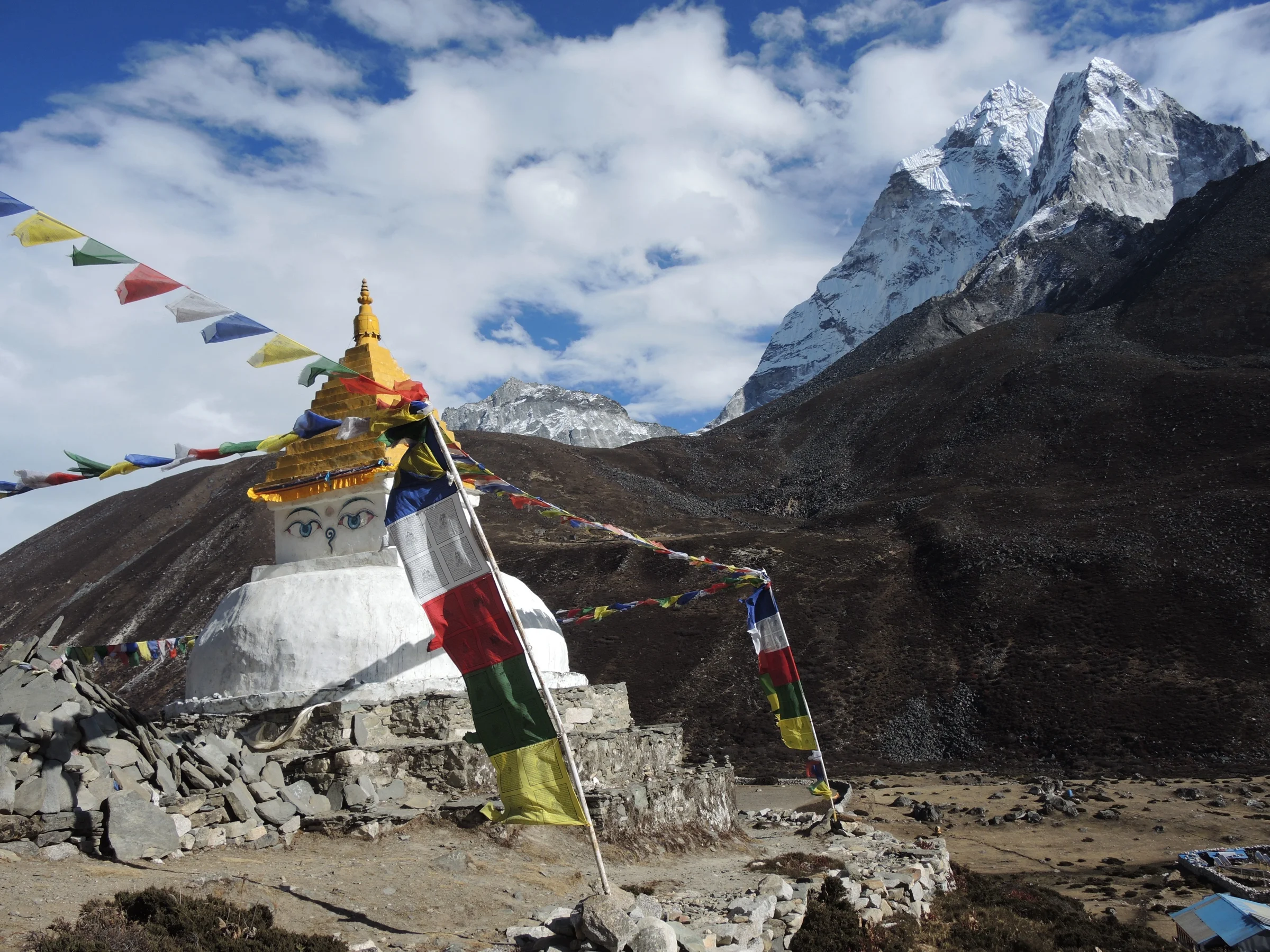
Rising to 6,165 m, Island Peak (Imja Tse) holds a place of its own among the iconic peaks of the Khumbu, in the shadow of giants such as Everest (8,848 m) and Lhotse (8,516 m). Accessible to beginner mountaineers who have already had some practice, but demanding real physical fitness, it has long attracted seasoned trekkers and climbers seeking a first experience above 6,000 metres.
This trip combines the ascent of Island Peak with the classic approach to Everest Base Camp. A flight reaches Lukla, the gateway to the Khumbu; the trail then climbs the valley via Phakding and the crossing of the Dudh Koshi River to Namche Bazaar, the main Sherpa town in the region. The route continues towards Tengboche Monastery, the spiritual heart of the Khumbu, then via Pangboche and Pheriche, before following the moraine of the Khumbu Glacier to Lobuche and Gorak Shep. From there, the path leads to Everest Base Camp, then to the summit of Kala Patthar, from where the sunrise reveals a wide panorama over Everest and the neighbouring peaks.
From Lobuche, the route branches off towards the Kongma La pass (5,535 m), crossed in the direction of Chhukung, where the second part of the trip begins: the technical climb itself. From Island Peak Base Camp, a training session allows you to become familiar with the ice axe, harness, crampons and jumar before the summit push. The final climb combines steep slopes, a glacier section, fixed ropes and sometimes ladders over crevasses, up to the summit at 6,165 m, facing Everest, Lhotse and Nuptse.
The descent then reaches Pangboche, then Namche Bazaar, before the return to Lukla and the flight to Kathmandu.
This trip is best undertaken in spring (March to May) or autumn (October to December), when conditions on the glacier and the high-altitude trails are at their most favourable. It requires good physical fitness for the approach and a real commitment for the technical part at high altitude: some prior practice with crampons and an ice axe is required, as the climb is negotiated with fixed ropes and technical equipment, under the guidance of our partner's guides.
Between immersion in Sherpa culture — villages, monasteries, prayer wheels — and physical commitment to the glacial summit of Island Peak, this trip brings together the two faces of the Khumbu: the cultural approach of the trek and the demands of high mountaineering.
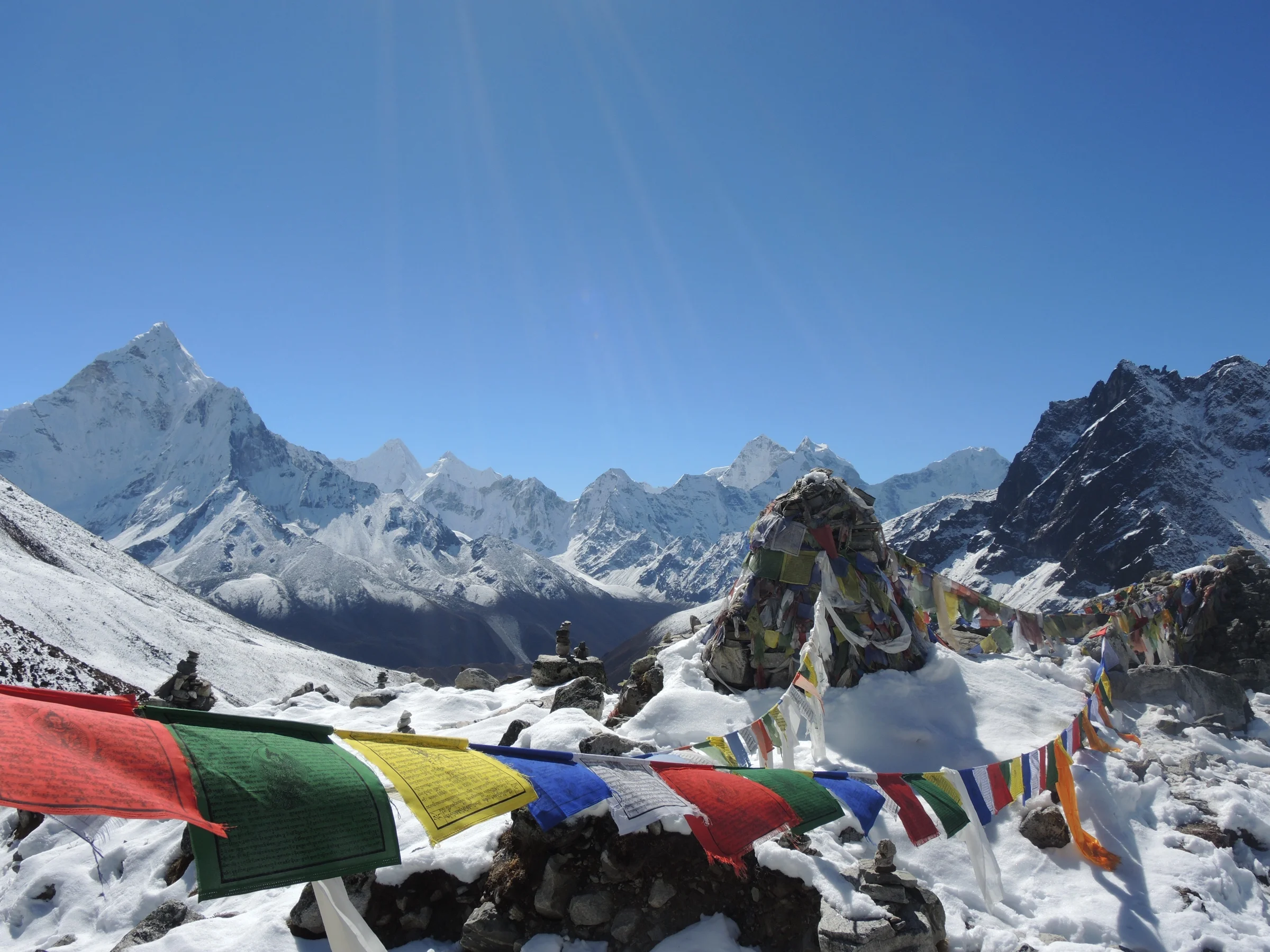
In the Khumbu region, Everest district, the ascent of Lobuche East (6,119 m) leads to a summit with an unobstructed view of Everest (8,848 m) and several other snow-capped giants, at the end of a route that mixes traditional Sherpa villages, forest trails of Sagarmatha National Park and a final climb requiring constant attention.
The trip begins in Kathmandu, where a representative of our local partner welcomes you at the airport and takes you to your hotel. The next day is devoted to preparing for the climb (permits, full equipment check, additional gear) and, depending on the time available, to visiting the city.
On the third day, a short scenic flight takes you to Lukla, where the approach trek begins. The trail follows the Dudh Koshi River to Phakding, crosses several suspension bridges and passes through pine and rhododendron forests before reaching Namche via Monjo, the gateway to Sagarmatha National Park. The route continues towards Tengboche, Dingboche and then Lobuche, with two acclimatisation days along the way, to Gorak Shep. From there, an excursion leads to Everest Base Camp and the Kala Patthar viewpoint, before descending back to Lobuche.
The climb and the camp structure. The climb itself then begins. From Lobuche, a steep trail leads to the high camp (5,400 m), where crampons and ice axe become necessary to cross snow-covered terraces and glaciers. The final climb to the summit first crosses rocky terrain to about 5,700 m, then continues on fixed rope over sometimes slippery slopes, under the strict guidance of the guides. At the summit, in clear weather, the panorama extends over Everest (8,848 m), Lhotse (8,516 m), Cho Oyu (8,188 m), Nuptse (7,861 m) and Ama Dablam (6,812 m).
The return takes the same route to Lukla, before a flight to Kathmandu. Along the way, the trek is a chance to discover the wildlife and vegetation of Sagarmatha National Park, the culture and traditions of the Sherpa people, and wide panoramas over the peaks and valleys of the Khumbu. The best times for this climb are from September to November and from March to May.
This trip combines two inseparable dimensions: the approach route, marked by the encounter with Sherpa culture and the landscapes of the Khumbu, and the climb itself, which demands rigour and technique on the summit slopes of Lobuche East. The guides of our local partner accompany every stage, from the preparation in Kathmandu to the return, with the possibility of adapting certain aspects of the trip to the needs of the participants.
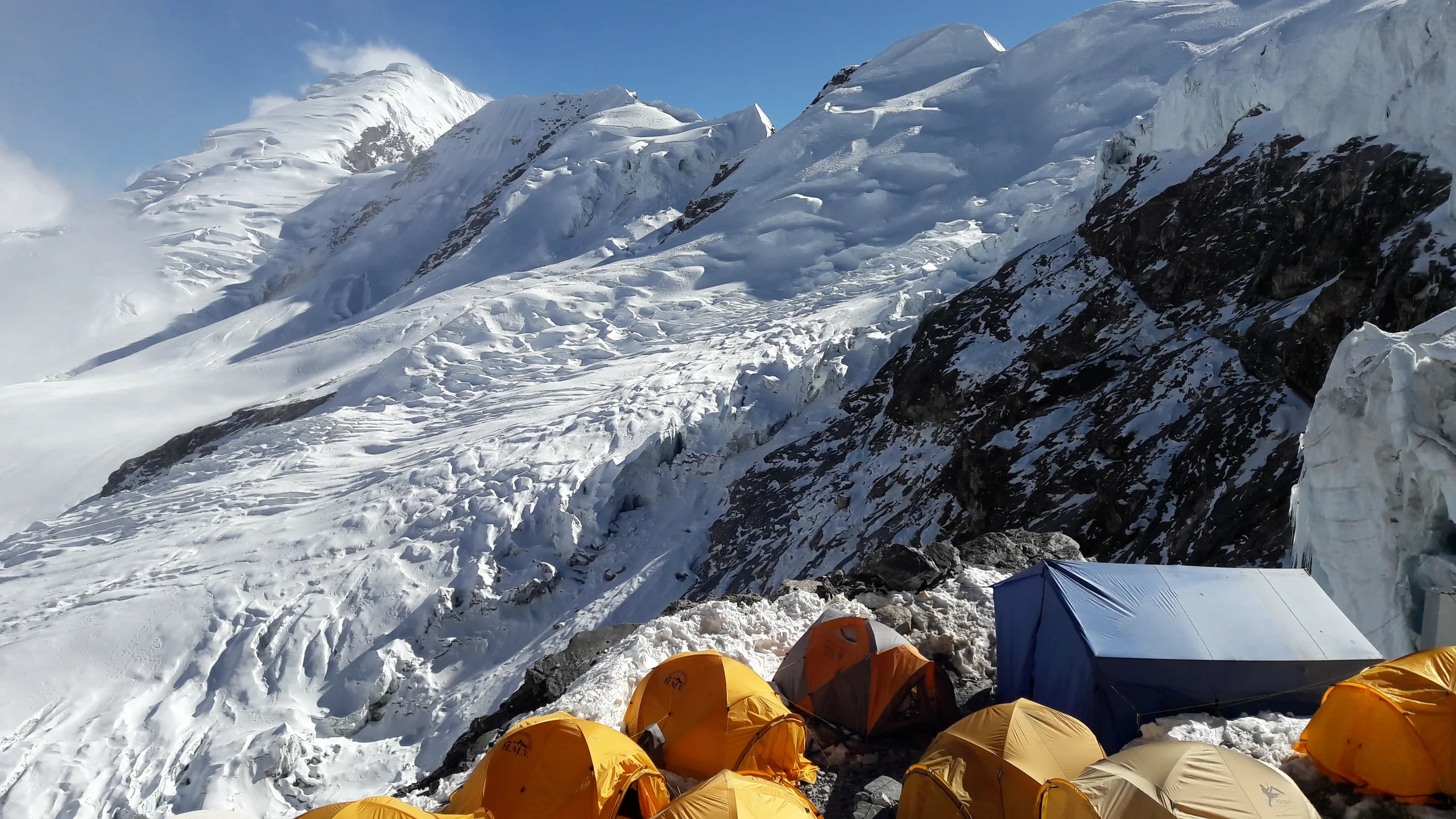
In the heart of the Khumbu and Makalu regions, the ascent of Mera Peak (6,476 m) leads to one of the most accessible peaks above 6,000 m in Nepal. The route follows the remote Hinku valley, away from the busy Everest trails, and crosses a mosaic of rhododendron and pine forests, moraines and glaciers, where the wildlife and vegetation of Makalu Barun National Park sit alongside Sherpa villages rooted in their traditions.
After the formalities and equipment preparation in Kathmandu, the trip begins with a scenic flight to Lukla, the gateway to the trek. From Lukla, the trail heads down towards Paiya through a small jungle and waterfalls, before crossing the Kari La pass (3,145 m) towards Panggom. The route continues to Ningsow and then the Chhetra Khola, where Mera Peak appears for the first time above the forests. This section of the trek, little frequented, passes through isolated hamlets where the remoteness is felt as much as the landscape impresses.
From the Chhetra Khola, the climb continues via Kothe, Thangnak and Khare to the Mera high camp, at 5,780 m. The ascent is gradual: each stage gains little altitude, and a rest day at Khare allows the body to adapt before the final effort. There, climbers also receive an introduction to ice-climbing techniques and to handling the equipment — crampons, ice axe, ropes — needed for summit day.
The final climb begins in the middle of the night, to make progress on the Mera Glacier before the snow warms up. The route, essentially a long walk on the glacier, presents no extreme technical difficulty, but the altitude and the cold make it a demanding challenge. At the summit, the panorama extends over Everest (8,848 m), Cho Oyu (8,188 m), Lhotse (8,516 m), Makalu (8,485 m), Kangchenjunga (8,586 m), Nuptse (7,861 m), Chamlang (7,319 m) and Baruntse (7,129 m).
The descent takes the same route to Kothe, then goes by Thuli Kharka before crossing the Zatrwa La pass (4,610 m) to reach Lukla.
Spring (March to May) and autumn (September to November) are the best seasons for this climb, with stable weather and clear views of the surrounding peaks. Winter remains feasible for experienced climbers, ready to face the cold and the snowfall; the monsoon, on the other hand, makes the trails slippery and limits visibility, and is not recommended.
Expeditions
Major summits, requiring rigorous logistics and careful preparation.
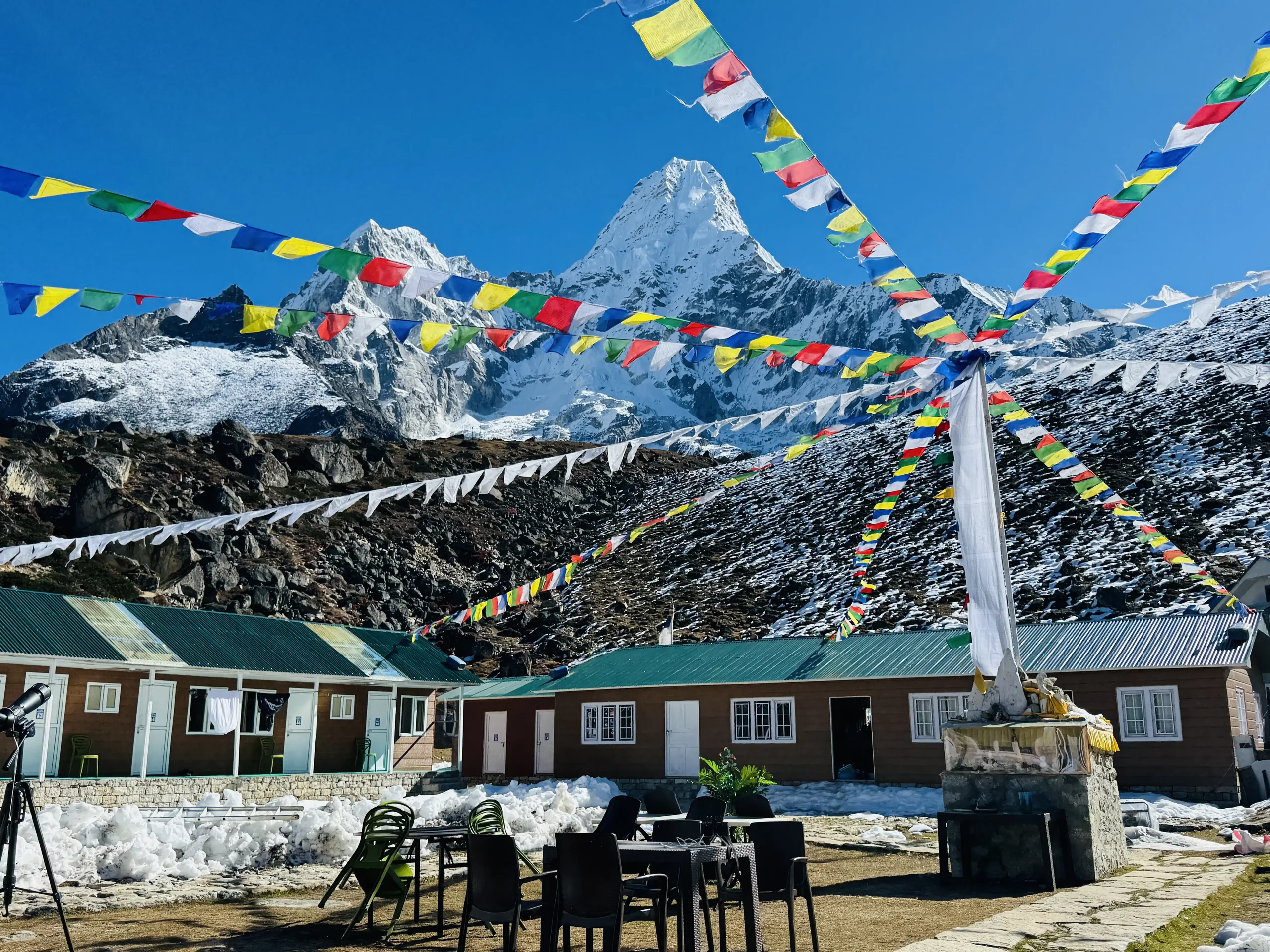
South of Everest (8,848 m), in the Khumbu region, Ama Dablam (6,812 m) is one of the most iconic and technically demanding climbs in Nepal. Its pyramid-shaped silhouette, knife-edge ridges and steep mixed terrain make it one of the most beautiful peaks in the Himalayas.
This expedition combines technical rock climbing, sections of snow and ice and constant exposure: a genuine high-altitude mountaineering experience that remains a major objective for accomplished climbers the world over.
The expedition begins in Kathmandu with the paperwork and the issuing of the expedition permits, followed by a scenic flight to Lukla. The approach trek follows the classic Everest Base Camp route, through traditional Sherpa villages and the heart of the Khumbu valley.
Thorough acclimatisation is key to a successful climb. The gradual ascent passes through Namche Bazaar (3,440 m), where a rest day allows optional excursions to Khumjung, Kunde and the Everest View Hotel, then Tengboche Monastery, the largest in the Khumbu, before Pangboche and Dingboche (4,410 m). A further acclimatisation day here is devoted to the climb up Nangkartshang Peak (5,083 m). The route then continues towards Lobuche, Everest Base Camp (5,364 m) and Gorak Shep, up to the Kala Patthar (5,644 m) viewpoint, which offers a panorama over Everest, Lhotse, Cho Oyu and Ama Dablam itself. Once acclimatisation is complete, the expedition descends via Pheriche and Pangboche to Ama Dablam Base Camp (4,570 m).
The climb itself follows the south-west ridge, one of the most technical standard routes among the Himalayan peaks below 7,000 metres. From base camp, the climbers' rotation leads first to Camp I (5,700 m), over snow slopes and trails that already call for confident use of technical equipment. Progress towards Camp II is made using fixed ropes and ascenders, while the section from Camp II to Camp III links climbs and descents that require constant use of mountaineering gear.
The Yellow Tower is one of the key sections of the climb: a near-vertical rock wall to be climbed on fixed ropes, at high altitude, where you have to manage both the exposure and the transitions between different types of terrain. Above Camp III, steep snow slopes and then a narrow summit ridge lead to the top of Ama Dablam. A successful ascent ultimately depends on the weather conditions, the safety of the route and the cohesion of the team.
This expedition is aimed at climbers who are comfortable with fixed-rope progression, exposure and mixed terrain at high altitude. Ama Dablam is, moreover, often regarded as an excellent preparatory climb before turning to Himalayan expeditions of 7,000 and 8,000 metres.
Beyond the technical challenge, this trip is also a cultural immersion in the Sherpa villages, the Buddhist monasteries of Tengboche and Pangboche and the legendary Khumbu region — a complete mountaineering expedition.
The IFMGA / NNMGA-certified high-mountain guides and the experienced Sherpa climbers of our local partner oversee every stage of the expedition. Cimes et Horizon places safety, professionalism and responsible Himalayan mountaineering at the heart of this climb, which remains, for any mountaineer, a defining milestone in their journey.
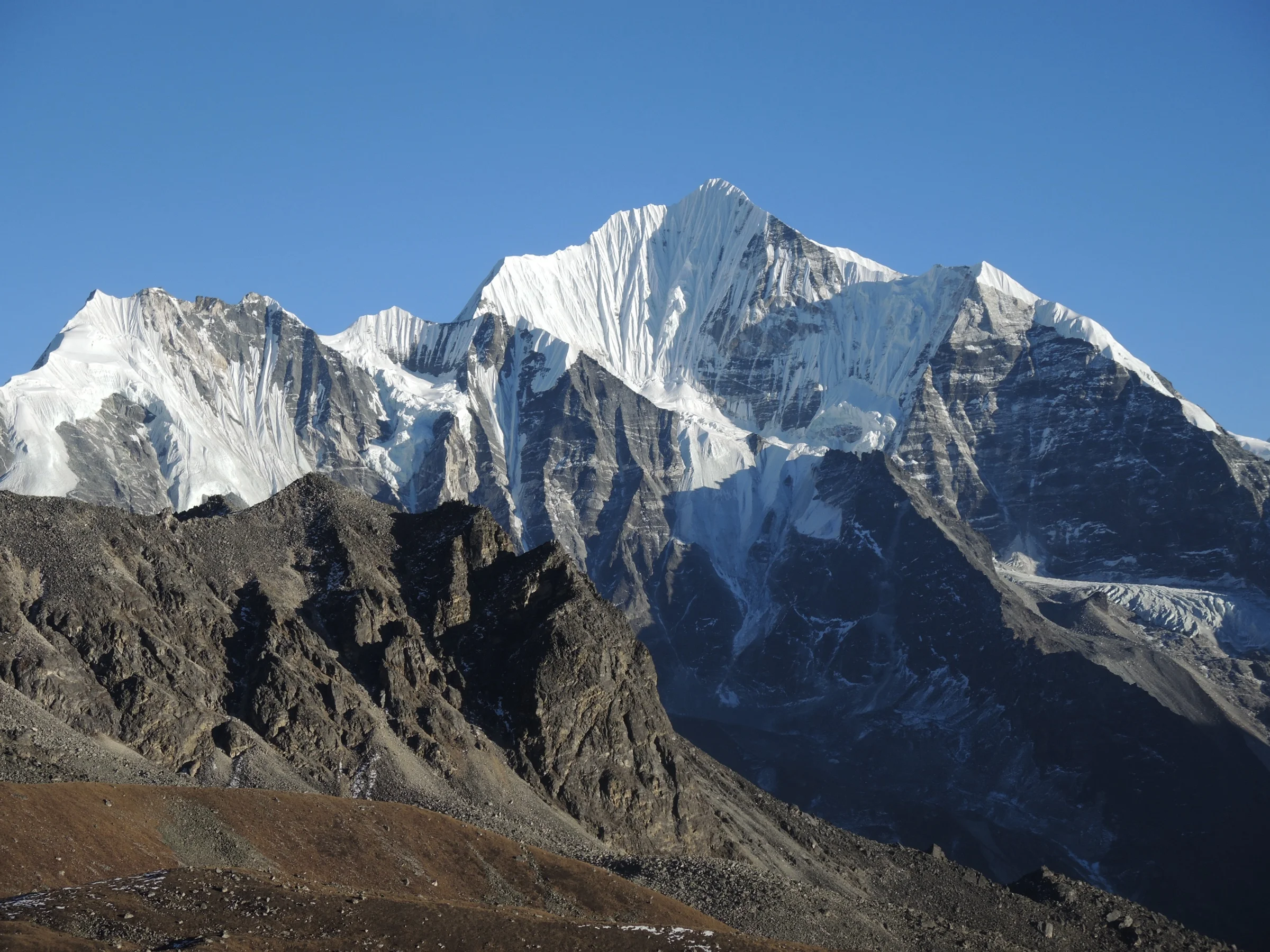
Himlung Himal (7,126 m) rises in the Peri-Damodar range, in north-west Nepal, in the immediate vicinity of the Tibetan border, in the Annapurna region. The range is renowned for its spectacular peaks and demanding climbs; besides Himlung, it includes Chulu East, Chulu West and the Damodar Himal. This closeness to Tibet imbues the whole region with a resolutely Tibetan culture, language and architecture.
Isolated, the region can only be approached at the end of a long trek to base camp. Away from the main trekking circuits, the caravan follows high passes, remote villages, narrow ravines, forests and rock walls, passing springs, gompas and hamlets with a distinctive culture.
This 7,000-metre summit attracts climbers in search of new horizons. Without the technical difficulties typical of other peaks in this category, Himlung Himal is often chosen as a preparatory climb for a first 8,000er. It remains, nonetheless, one of the technically most accessible Himalayan 7,000ers, and one of the most rewarding. From base camp (4,900 m), the climb is organised in the classic way, with three high camps, linked by sections of snow and ice fitted with fixed ropes, up to the summit.
The expedition begins with a drive from Kathmandu to Koto, via Besisahar, followed by an approach on foot through the Nar Phu valley, a restricted area, via Meta, Kyang and Phu Gaon, to base camp. The climbing window leaves room for the acclimatisation rotations between the camps and for the weather; the return follows the same trail to Koto, then the road to Kathmandu. Spring (April to May) and autumn (October to November) are the best seasons, autumn generally offering the more favourable conditions.
Safety at high altitude remains the constant priority of our local partner's team: rigorous planning and a step-by-step progression accompany each member of the expedition, in a setting that is both demanding and unspoilt, far from the crowds of the great 8,000ers.