Upper Dolpo is one of the most remote and unspoilt regions of Nepal. Long closed to foreigners and still subject to a restricted-access permit, it has preserved, sheltered from modernisation, a way of life and traditions of Tibetan and Bön influence found nowhere else in the Nepalese Himalayas. This trip leads into the heart of this isolation, to the turquoise waters of Phoksundo Lake and the cliff-side monasteries that form the spiritual heart of the region.
The trip begins in Kathmandu. A flight to Nepalgunj and then to Juphal starts the trek, which first follows the Thuli Bheri River to Suligad Ghat, crossing suspension bridges and cedar forests. The trail then reaches Chhepka and then Renje, before reaching the village of Ringmo, with its mud houses and its chortens (Buddhist monuments) covered in prayer flags. It is here that Phoksundo Lake appears, its waters strikingly clear, where a day is set aside for acclimatisation and for discovering the Tibetan way of life of the inhabitants. The trek continues along the Phoksundo Khola River to Phoksundo Bhanjyang, then crosses the Kang La pass (5,350 m) to reach Shey Gompa, a Kagyupa monastery founded in the 11th century whose history goes back to the saint Padmasambhava — a further day is devoted here to acclimatisation and to visiting the site. The route then crosses the villages of Namgung and Saldang, then Yangtze Gompa, a Bön monastery, before reaching Sibu and Jeng La Phedi. Crossing the Jeng La pass (5,220 m) opens the descent towards the Dho Tarap valley, where a second acclimatisation day allows you to visit several monasteries in the area. The return is via the meadows of Karma Kharka, Khanigaon, Tarakot and Dunai, before a return flight to Nepalgunj and then Kathmandu.
This trek demands real self-sufficiency: the stages are long, three passes of more than 5,000 m must be crossed, and several nights are spent in tents in sections without any accommodation. Three acclimatisation days are spread along the itinerary to allow the body to adapt gradually to the altitude. Good physical fitness and experience of trekking in remote terrain are needed to approach this trip in good conditions.
The best seasons for this trek are spring (April to June) and autumn (September to November), when the weather is most stable, the skies clear and the views of the Himalayan peaks sharpest. Spring brings wild flowers and green alpine landscapes, while autumn offers crisp air, dry trails and excellent visibility.
Beyond the physical effort, this trip is above all an encounter: with a Tibetan Buddhist culture preserved by isolation, with monasteries several centuries old and with communities whose hospitality remains intact. Our local partner, drawing on its experience of this demanding region, accompanies you step by step in this immersion in the heart of one of the last Himalayan sanctuaries.
Highlights
Culture and traditions of Dolpo
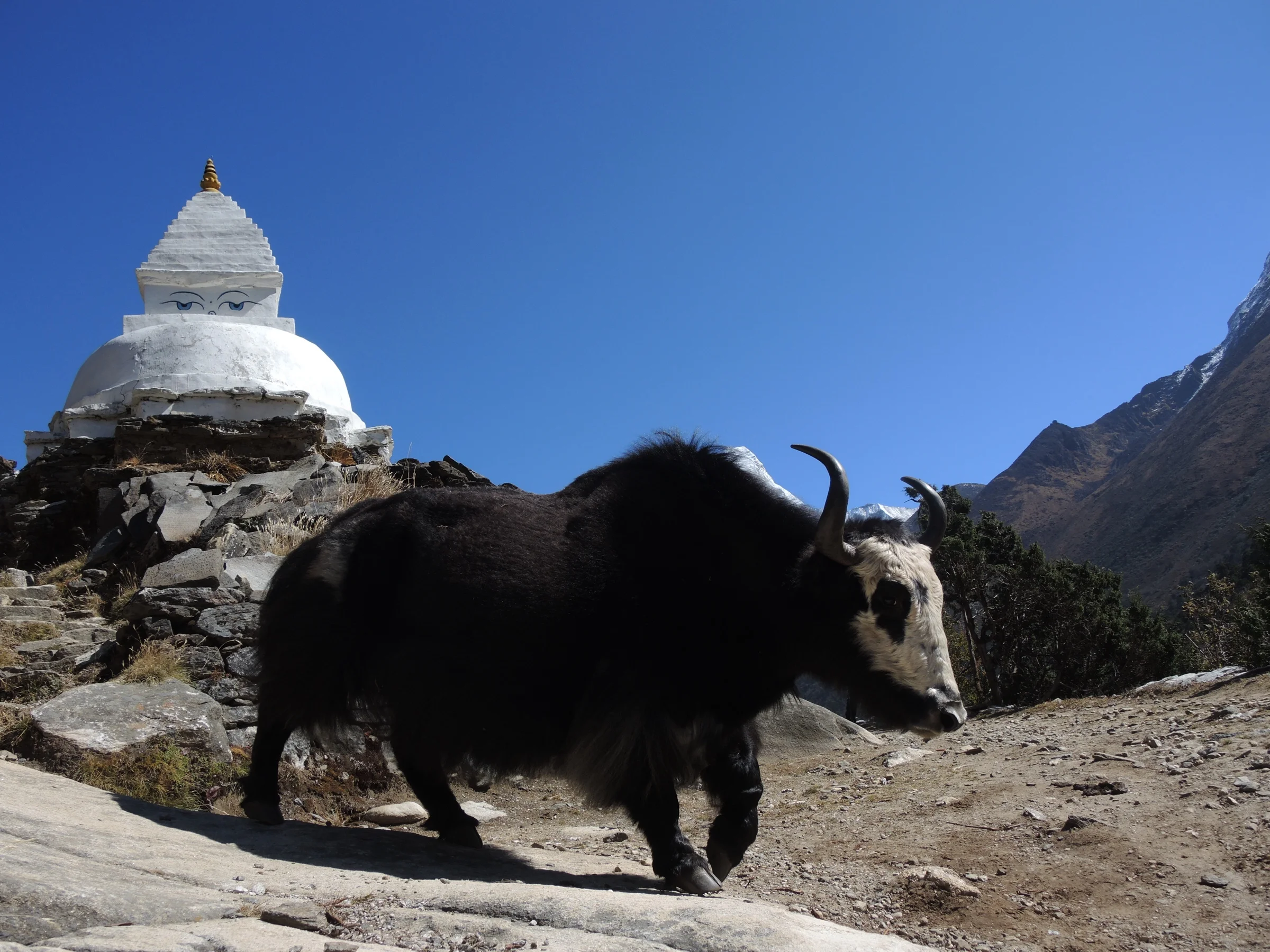
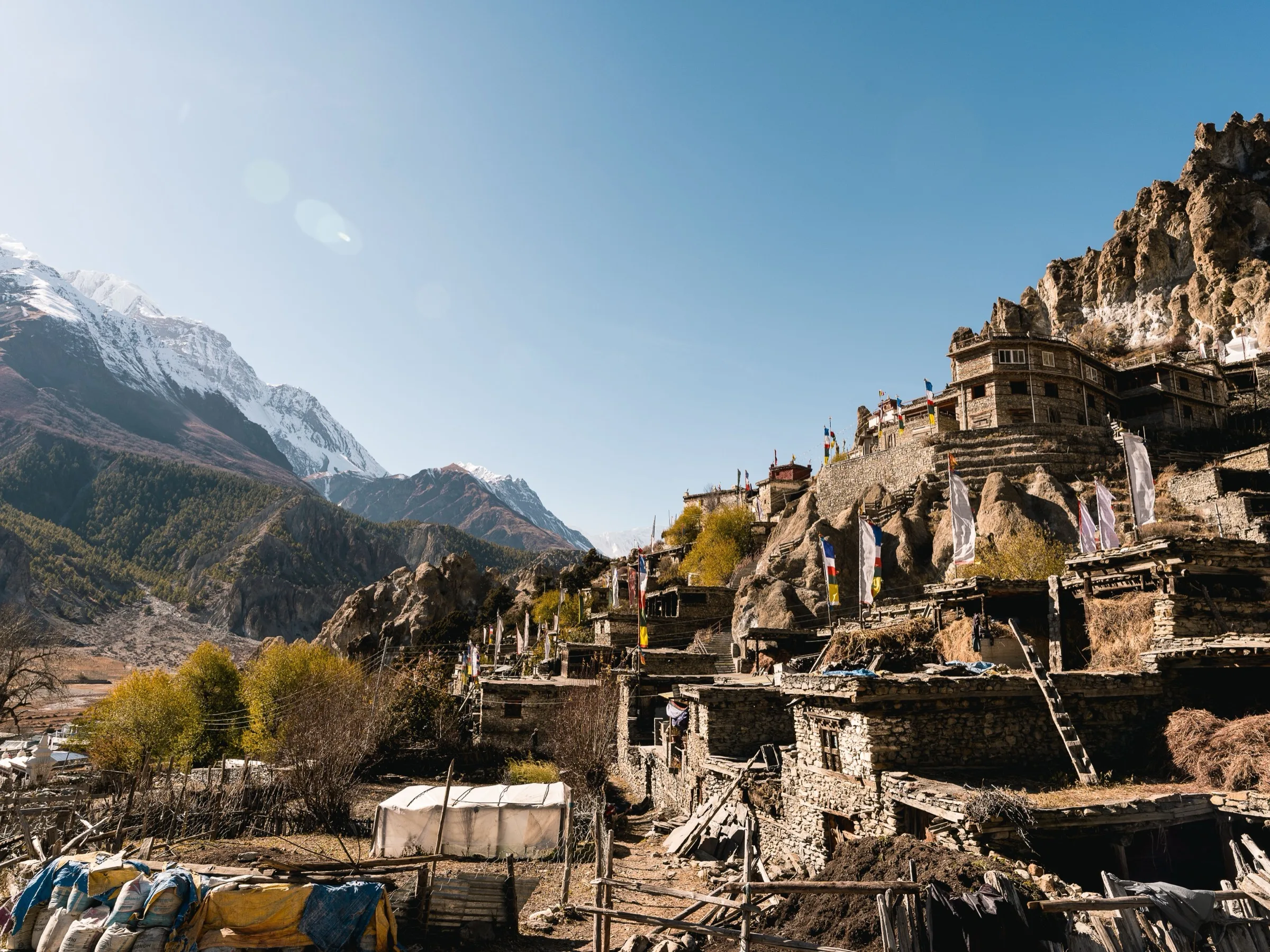
Sheltered by its isolation, the region has preserved an ancestral way of life of Tibetan and Bön influence, unique in Nepal.
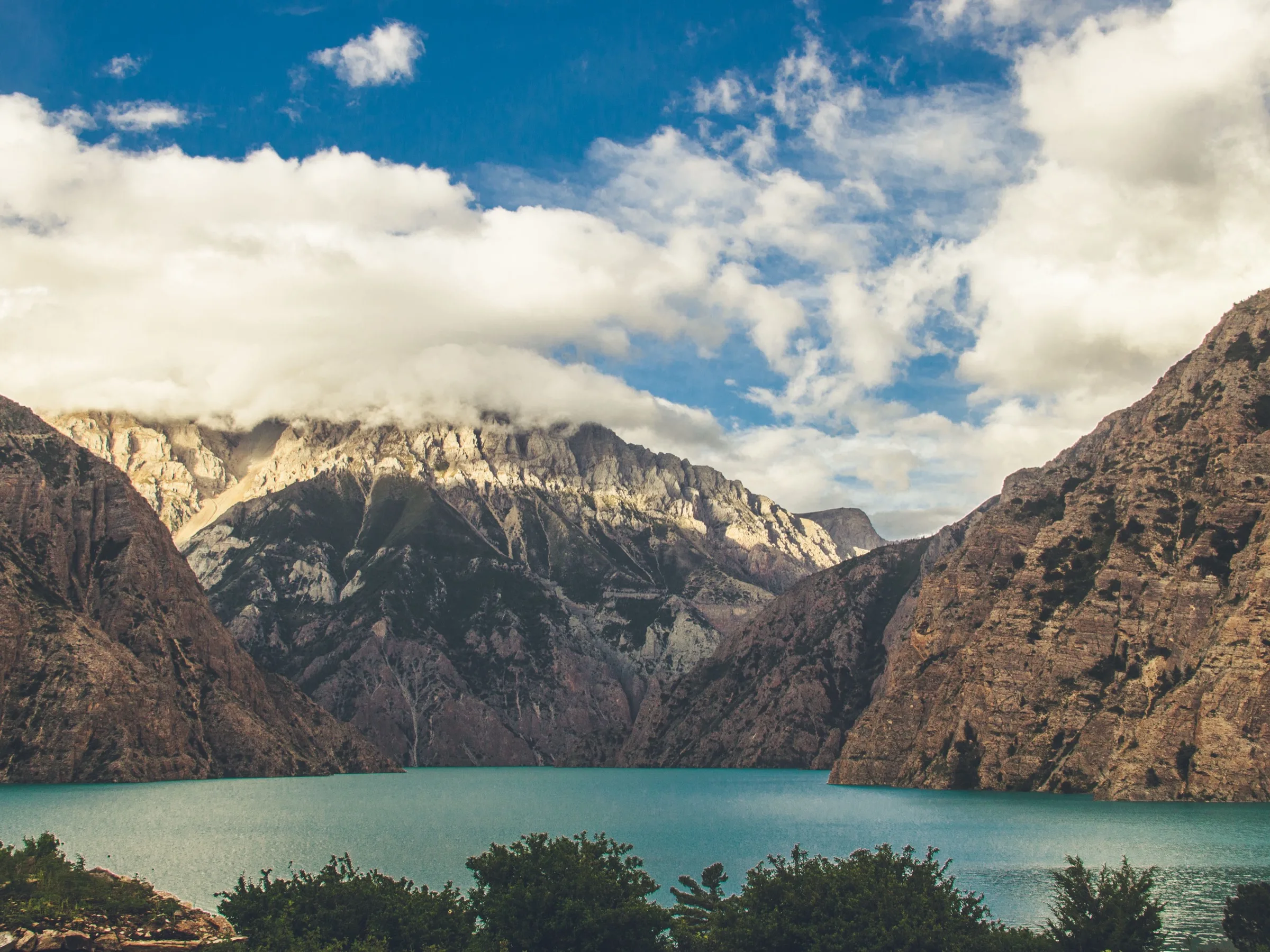
Phoksundo Lake
Its rarely clear turquoise waters, framed by the Kanjirowa Himal massif, make it one of the most beautiful natural sites in the country.
Shey Gompa and Yangtze Gompa
These centuries-old monasteries, one Kagyupa founded in the 11th century, the other dedicated to the Bön religion, are the spiritual hearts of Upper Dolpo.
Shey Phoksundo National Park
A crossing through cedar and juniper forests, rocky canyons and high pastures, up to the Kang La (5,350 m) and Jeng La (5,220 m) passes.
The welcome of the Thakuri and the nomadic communities
Along the trail, the hospitality of the villages of Ringmo, Saldang and Dho Tarap offers an authentic encounter with the people of Dolpo.
Itinerary
On arrival at Tribhuvan International Airport, a representative of our local partner welcomes you and takes you to your hotel in Kathmandu. The rest of the day is free, to recover from the flight before the trek, and a welcome dinner is offered in the evening. Night in Kathmandu (1,400 m).
The day is devoted to preparing for this long, largely self-sufficient trek: an equipment check and the last purchases. Depending on the time available, you can also visit the UNESCO World Heritage Sites of the Kathmandu valley — Pashupatinath, Boudhanath, Swayambhunath and Durbar Square are among the main places to see. Night in Kathmandu (1,400 m).
Early in the morning, a flight takes you to Nepalgunj, with views that pass from the high Himalayan peaks to the plains of the Terai. Nepalgunj, a town near the Indian border, surprises with its heat and its atmosphere, very different from Kathmandu. Depending on the time available, you can explore its main districts before setting off for Dolpo the next day. Night in Nepalgunj (150 m).
An early flight takes you to Juphal (2,475 m), the starting point of the trek. The trail descends straight away to the Thuli Bheri River, then follows it, crossing several watercourses and hamlets, to the confluence with the Suligad. Large cedar forests precede the arrival at the hamlet of Suligad Ghat, where the first camp is set up. Night in Suligad Ghat (2,080 m).
The trail crosses several bridges towards Ruktang, alternating climbs and descents to the junction that leads to Phoksundo Lake, then to Chhepka. From Chhepka, the path climbs a small ridge, then continues upstream along the watercourse to Renje. Night in Renje (3,010 m).
From Renje to Ringmo, the day is a sustained climb. The trail crosses wooden bridges above the Pungmo River, while the Phoksundo can be made out at the bottom of the valley. In Ringmo, the mud houses, the chortens and the mud-plastered mani walls (stones carved with prayers) bear witness to the Tibetan influence that runs through the whole region. A short walk then leads to Phoksundo Lake, nestled at the foot of the mountains. Night in Ringmo (3,660 m).
This rest and acclimatisation day is devoted to exploring the village of Ringmo and the shores of Phoksundo Lake, whose banks offer an open view of the Kanjirowa Himal massif. Ringmo is home to a population whose way of life, cuisine, architecture and clothing bear the mark of Tibetan influence; the village's many chortens carry the prayers of its inhabitants. Night in Ringmo (3,660 m).
The trail follows the shore of Phoksundo Lake through dense vegetation, on a stony path that calls for caution. It then crosses green pastures that give way to the alluvial plain of the Phoksundo stream, where the camp is set up in tents: the first night in complete self-sufficiency, far from any accommodation. Night at Phoksundo Khola (3,630 m).
Breakfast is taken by the Phoksundo Khola River, in a peaceful setting. The trail then climbs through a glacial valley, where it meets the Ghyampo Kapuwa River. Several wooden bridges to cross and a sustained climb lead to Phoksundo Bhanjyang, from where the Kang La pass (5,350 m) stands out clearly on the horizon. Night at Phoksundo Bhanjyang (4,120 m).
The trail first climbs the Kang La pass (5,350 m), steep and often slippery, the high point of this section of the trek. The top of the pass offers a striking panorama of the surrounding ranges. The descent winds through pastures where herds graze, watched over by shepherds, until the chortens of Shey Gompa appear, a sign of arrival at this isolated monastery. Night at Shey Gompa (4,343 m).
This second acclimatisation day is devoted to exploring Shey Gompa, whose history goes back to the time of the saint Padmasambhava. The first Kagyupa monastery in Nepal, it is said to have been founded in the 11th century. The visit extends to the nearby Crystal Mountain, a place of pilgrimage for the Buddhists of the region, before returning to camp. Night at Shey Gompa (4,343 m).
The path crosses juniper forests before descending into a rocky canyon. A succession of switchbacks and boulders leads to a pass at 5,094 m, the trek's second crossing above 5,000 m. The long descent that follows, heading due north, reveals a red stone building clinging to the wall of a gorge: Namgung Monastery, which heralds the arrival at the village of the same name. Night in Namgung (4,360 m).
Leaving Namgung, the trail climbs a slope and then continues on dry mountain tracks. The effort is rewarded with an open view of Saldang and, below, the Nagon River. The first hamlets herald the arrival at Saldang, a characteristic village of Upper Dolpo, where you can talk with the inhabitants. Night in Saldang (3,620 m).
The trail runs due north from Saldang, alternating climbs and descents to the Nagon River. It passes through the small hamlets of Tiling and Kaigaon, where a lunch break is planned, before reaching Yangtze Gompa. This monastery, which follows the Bön religion, is visited at the end of the day, and you can talk with the monks who live there to learn more about their traditions. Night at Yangtze Gompa (4,960 m).
The route then heads back through Saldang before following the bed of the Nagon River, dotted with chortens, terraced crops and mani stones. It follows the left bank of the river to Sibu. Night in Sibu (4,560 m).
The path follows the Nagon stream eastwards to the confluence of two small watercourses, then continues to the foot of the Jeng La pass. No dwellings remain at this altitude: camp is set up in tents at Jeng La Phedi, ready for the crossing of the pass the next day. Night at Jeng La Phedi (4,700 m).
The trail climbs to the high point of the Jeng La pass (5,220 m), from where the eye takes in a vast panorama of snow-capped peaks. The descent, on an uneven path, reaches the Tarap valley past Tokyu Monastery. The path then follows the Thakchiu Khola River to Dho Tarap. Night in Dho Tarap (3,944 m).
This last acclimatisation day allows you to explore the Dho Tarap valley and its monasteries: Dhoro Gompa, Shipchaur Gompa and Ribo Bhumpa Gompa are among the sites that can be visited around the village, where conversations with the inhabitants round off the discovery of this Upper Dolpo community. Night in Dho Tarap (3,944 m).
The trail descends into a valley that widens before narrowing into a gorge, amid junipers and wild roses. It reaches the confluence of the Tarap Chu and the Lang stream, then the vast meadows of Karma Kharka, where camp is pitched facing the green hills. Night at Karma Kharka (3,800 m).
The path follows the gorge of the Tarap River, passing several former campsites set on its banks. Narrow gorges and stone slabs set the rhythm of the route to Lammchaur and then Laina Odar. Several wooden bridges to cross precede the arrival at the Khanigaon camp, by the river. Night at Khanigaon (3,150 m).
The path crosses lush forests and then follows the river to Tarakot, where terraced crops and mud houses herald the return to lower altitudes. After a lunch break, the descent continues along the bank of the Thuli Bheri to Dunai. Night in Dunai (2,000 m).
From Dunai, the path stays broadly flat, along the Thuli Bheri, crossing terraced crops and villages, including Dhupichaur, Rupgad and Motipur, to Juphal, the start and end point of the trek in Upper Dolpo. Night in Juphal (2,475 m).
A short but spectacular flight links Juphal to Nepalgunj, revealing a last panorama of the snow-capped peaks and arid hills of Dolpo. A connecting flight then brings you back to Kathmandu, flying over the hills of mid-western Nepal. The end of the day is free to wander through the capital's markets and find a few souvenirs, and a farewell dinner celebrates the success of your trek. Night in Kathmandu (1,400 m).
A representative of our local partner accompanies you to Tribhuvan International Airport for your international flight.
Practical information
Best time to go
The best seasons for the Upper Dolpo Trek are spring (April to June) and autumn (September to November), when the weather is generally stable, with clear skies, comfortable daytime temperatures and spectacular views of the Himalayan peaks. Spring brings wild flowers and green alpine landscapes, while autumn offers crisp air, dry trails and excellent visibility. The trek is also possible in winter, but the passes may be blocked by ice or snow.
What the price includes
Included
- nights in a 3-star hotel, in a shared room, with breakfast
- nights in a tent, in shared accommodation
- a welcome dinner and a farewell dinner
- 3 meals a day during the trek and the climb
- half a litre of water at lunch and dinner during the trek and the climb
- a hot drink on arrival at the day's stage during the trek and the climb
Not included
- lunches and dinners in Kathmandu
- sweets and snacks
- single-room supplements
- drinks other than those listed as included
- showers and hot water during the trek and the climb
- laundry
Included
- airport–hotel transfers for the international flights
- airport–hotel transfers for the domestic flights
- domestic flights
- road transport
Not included
- international flights
- excess baggage fees on domestic flights
- helicopter flights