The trek from Jiri to Everest Base Camp is the historic route to Everest, the one taken by the first expeditions before Lukla airport opened. Unlike the modern route reached by flight, this traditional trail begins with a scenic road journey to Jiri, then climbs gradually through terraced hillsides, dense rhododendron forests, Sherpa villages and high mountain passes, before reaching the legendary Everest region.
Over many days of walking, this route crosses valleys and villages far less frequented than the classic route, for a deeper immersion in local culture and an acclimatisation that happens naturally, day by day. Along the way, trekkers discover remote hamlets, ancient monasteries and trails steeped in history. After crossing the Lamjura La pass and joining the main Khumbu route, the trek continues to Namche Bazaar, Tengboche Monastery, Everest Base Camp and the iconic Kala Patthar viewpoint, from where you gaze at unforgettable sunrises over Mount Everest and the surrounding Himalayan peaks.
The Everest Base Camp trek via Jiri is aimed at walkers looking for a quieter, less crowded alternative to the classic route, ready to commit for the long haul: the succession of climbs and descents through the foothills, day after day, demands solid endurance, well beyond what the short version of the trek requires. In return, this approach on foot offers gradual acclimatisation, a more intimate encounter with local culture and spectacular mountain landscapes — a demanding and rewarding long-distance trek.
Highlights
The pioneers' route
Walk in the footsteps of the first Everest pioneers, feel underfoot the crunch of ancient stone steps and the murmur of history at every turn.
A journey through varied cultures
Soak up the traditional lands of the Jirel, Rai and Sherpa peoples, listening to prayer chants rising from the hillside monasteries and breathing in the juniper incense carried on the wind.
Gradual acclimatisation
The long approach on foot offers a slow, natural acclimatisation that prepares your body for the altitudes of the upper Khumbu.
The lush foothills
Breathe in the rhododendron forests after the rain, walk through terraced maize fields and listen to the chatter of schoolchildren echoing through the valley.
Everest Base Camp and Kala Patthar
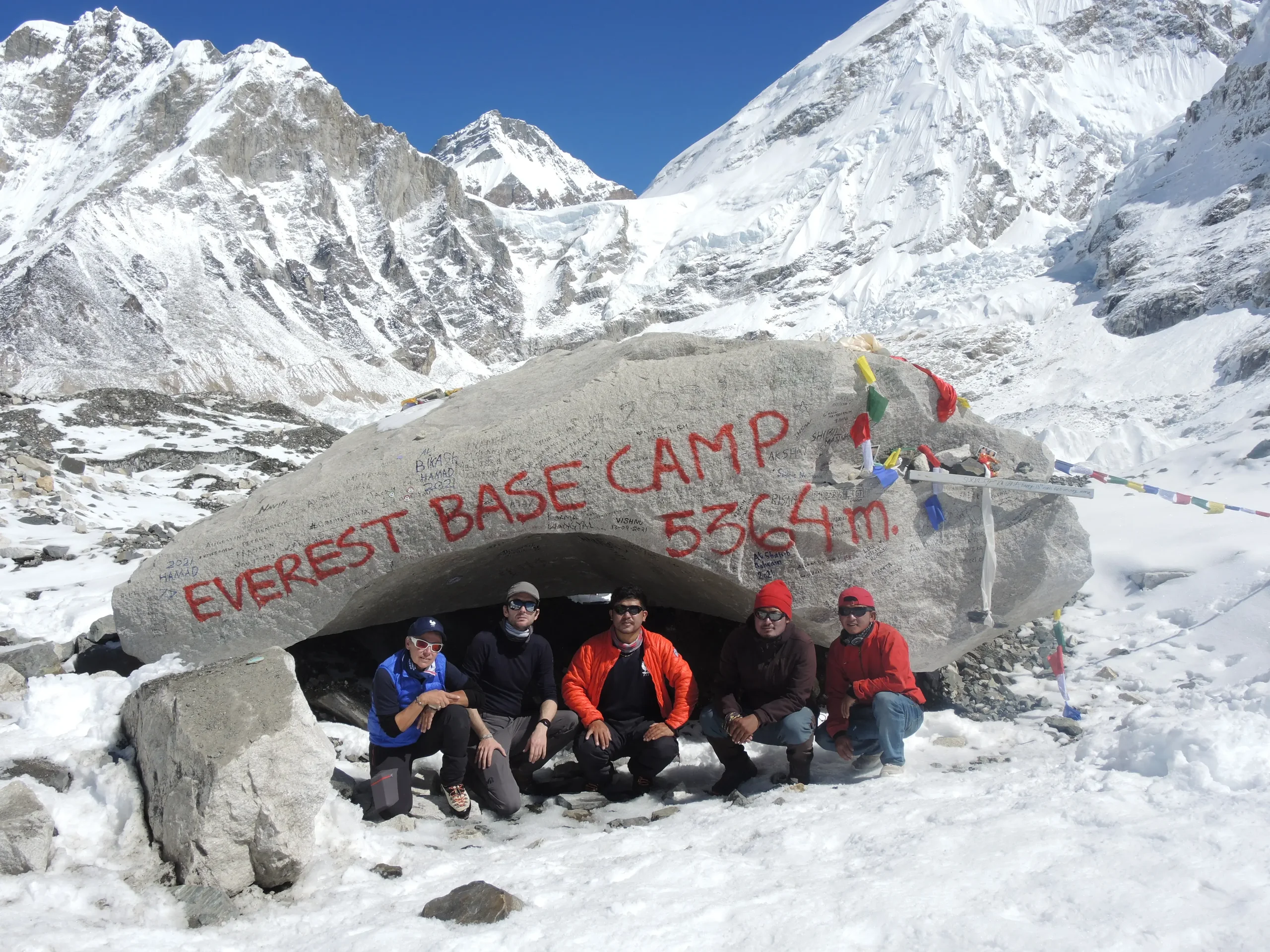
Reach the legendary Everest Base Camp (5,364 m) and climb Kala Patthar (5,644 m) for the definitive, unobstructed view of the summit of Everest.
The spiritual centres of the Khumbu
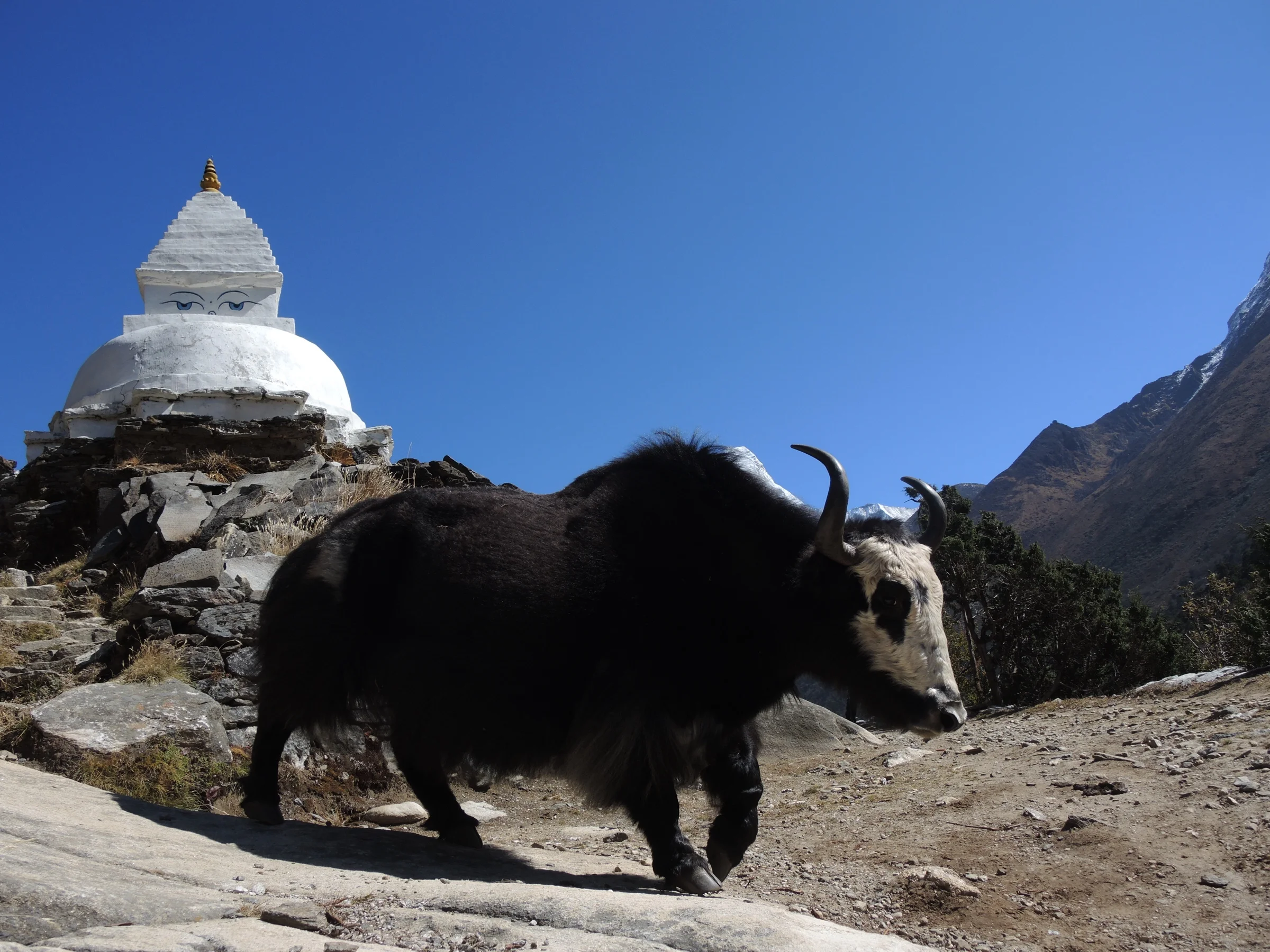
Pause in the candlelit calm of the monasteries of Junbesi and Tengboche, where prayer flags fly in front of the snow-capped peaks and time seems to slow down.
Itinerary
On your arrival at Tribhuvan International Airport, a representative of our local partner welcomes you and drives you to your hotel. It is a day to settle in and recover from jet lag. In the evening, a welcome dinner is held, followed by a full briefing on the trip ahead, a chance to meet your guide and to check your equipment. Night in Kathmandu (1,400 m).
This extra day in Kathmandu provides a margin in case the international flight is delayed or permit formalities drag on, before the long drive to Jiri. If all goes to plan, it suits a relaxed visit of the capital — the Boudhanath stupa, Durbar Square or the Thamel district — and a final check of your equipment for this long trek. Night in Kathmandu (1,400 m).
The adventure begins with an early start for the long but scenic road journey that takes you out of the Kathmandu valley and into the foothills. The road winds through terraced fields and along river valleys, where you see villagers at work and get a fascinating glimpse of rural Nepalese life. Night in Jiri (1,905 m).
The first day of walking feels like stepping back in time. Leaving the road behind, the trail climbs gently through forests where you will be greeted by the shy smiles of villagers working their fields. Today is a day of gentle ups and downs, letting you find your rhythm. You arrive in the small market town of Shivalaya, where you can relax by the river, lulled by the sound of the water during the evening. Night in Shivalaya (1,770 m).
The trek begins in earnest today, with a steady climb to the Deurali pass (2,705 m). Among the prayer flags of the pass, you take in the scale of the hills you are about to cross. Then a long descent through wooded hillsides, which works the legs, leads to the Sherpa village of Bhandar, a charming place with its walls of mani stones carved with prayers and a strong cultural atmosphere, your first real introduction to the Sherpa world. Night in Bhandar (2,190 m).
The day starts with a long descent to the Likhu Khola River (1,580 m), where the air is warm and the trail can be scorching under the midday sun. After crossing the river, a long climb rises through terraced millet and maize fields to the village of Sete. The stage is demanding, but the village lights appearing at dusk reward the effort. Night in Sete (2,575 m).
Today, you cross the Lamjura La (3,530 m), the highest pass between Jiri and Namche. The trail climbs through a magnificent ancient forest of rhododendron, oak and magnolia, where the air is cool and damp. The pass itself can be cold and windy, but the long descent to the hidden valley of Junbesi is pleasant and ends in a beautiful Sherpa village tucked away from the world. Night in Junbesi (2,700 m).
Junbesi, a charming village in the Solu region, lends itself to a well-earned rest day. You can visit the local monastery, where the deep chanting of the monks sometimes rings out, or walk to Thubten Choling Monastery, a major Tibetan Buddhist centre. You can also simply relax, sip tea on the terrace and let your lungs get used to the thinner air. Night in Junbesi (2,700 m).
The morning mist lifts to reveal the trail climbing from Junbesi to a ridge that offers, on a clear day, the first distant, unobstructed view of the Everest massif. From there, you descend to Ringmo, then climb again to cross the Trakshindo La pass (3,071 m). The trail then drops steeply through the forest to the Rai village of Nunthala, where the culture and architecture are clearly distinct from the Sherpa lands you have left behind. Night in Nunthala (2,200 m).
From Nunthala, the trail makes a long descent to the Dudh Koshi River, fed by glaciers, which you will follow for much of the trek. After crossing the river, a sustained climb, under a sun that is often generous, rises through Rai villages to the small hamlet of Bupsa. This day is a reminder of the physical demands of the foothills; on arrival, a cold drink and a well-earned rest await you. Night in Bupsa (2,360 m).
The trail continues its undulating course, crossing the Khari La pass before descending to Puiyan. The landscape is a mix of forests and terraced fields, and the villages, remote, have kept their traditional character. Tomorrow, you join the main Everest trail. Night in Surke (2,290 m).
A relatively short day's walk brings you onto the main trekking route, just below Lukla. You will notice the change at once: the roar of the Dudh Koshi River grows louder, the lodges become brighter and the menus more varied. The Khumbu valley comes alive as you continue to Phakding. Night in Phakding (2,610 m).
Today, you make the famous climb to Namche Bazaar. After entering Sagarmatha National Park, the trail descends to cross the Hillary Bridge before beginning the steady climb. Already well acclimatised thanks to the long approach, you will probably find this climb more manageable than those who have just landed at Lukla. Night in Namche Bazaar (3,440 m).
A day to further consolidate your acclimatisation. A hike up to the Everest View Hotel offers a superb panorama of the high peaks. The afternoon is free to explore Namche's remarkable market, where you will find bakeries among other things, or simply to settle in around a pot of tea and watch the world go by. Night in Namche Bazaar (3,440 m).
The trail winds along a balcony above the valley, with fine glimpses of the surrounding peaks, then descends to the river. After lunch, a demanding two-hour climb through the forest leads you to Tengboche Monastery, a spiritual haven in an unforgettable mountain setting. Night in Tengboche (3,860 m).
Today, you pass above the tree line, into a landscape of low vegetation and fields edged with low stone walls. Ama Dablam towers over you as you walk towards Dingboche. Every breath now becomes deliberate, slower and sharper, as the valley narrows towards the high peaks. Night in Dingboche (4,410 m).
Another acclimatisation day, essential to climb higher safely. You can spend it resting or set off on a hike along the ridge behind Dingboche, towards Nangkartshang Peak, from where the views of Makalu, Lhotse and the surrounding peaks are magnificent. Night in Dingboche (4,410 m).
The trail climbs to the Thukla pass, a plain ridge dotted with memorials dedicated to climbers. From there, you make your way along the moraine of the Khumbu Glacier to the small highland hamlet of Lobuche, where the nights are truly cold. Night in Lobuche (4,910 m).
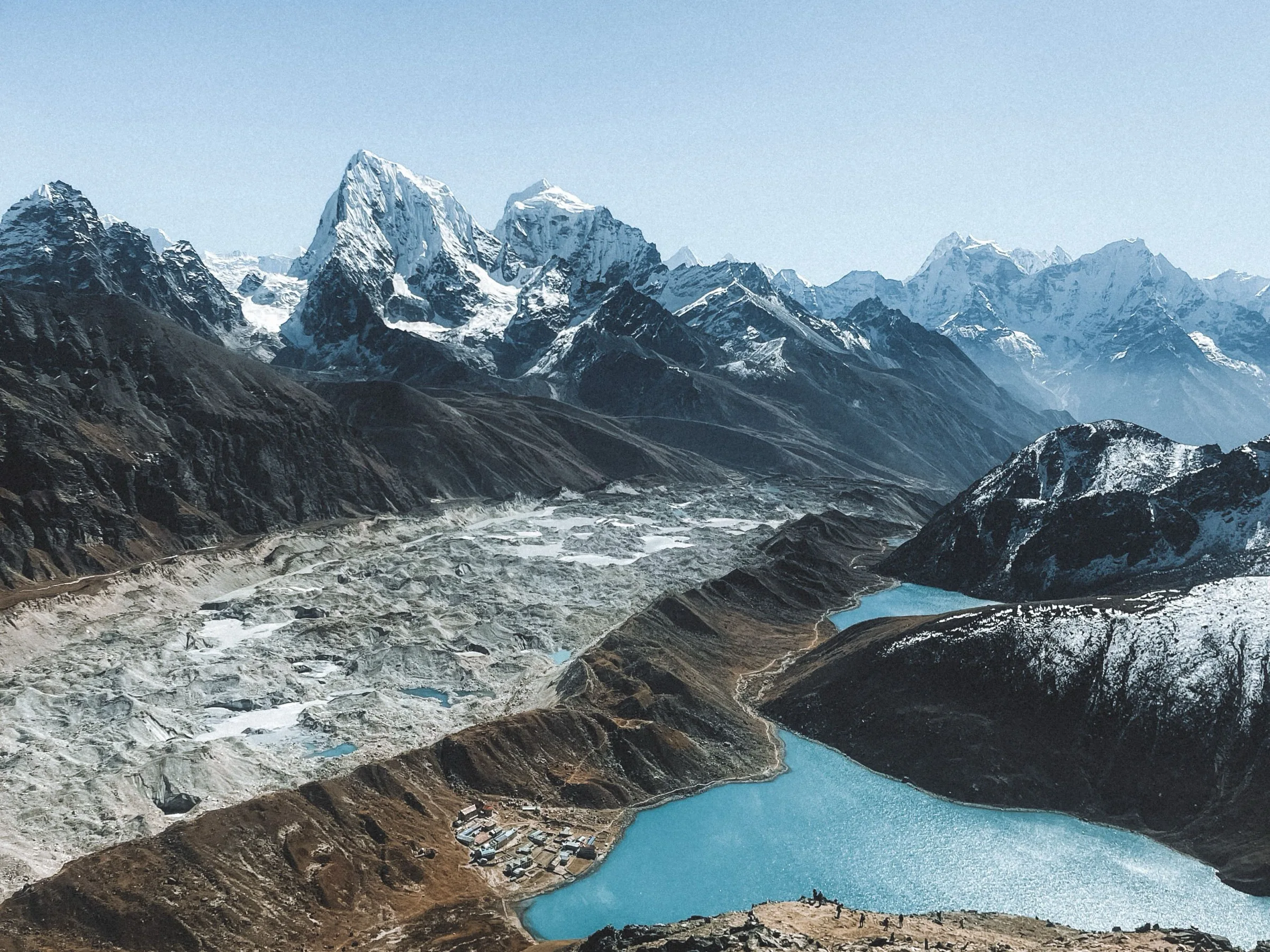
Today, you reach the goal of the trek. A 3-hour walk along the moraine leads to Gorak Shep. After lunch, you make the return trip to Everest Base Camp. At the foot of the Khumbu Icefall, you discover a place that is emblematic of mountaineering history. Night in Gorak Shep (5,164 m).
Early start for the climb to Kala Patthar. This small summit offers the most iconic sunrise view of Mount Everest. After breakfast, you begin the long descent to denser air, ending at Pheriche. Night in Pheriche (4,371 m).
A long day of descent takes you back down the valley. You pass again through Pangboche and Tengboche to reach Namche, the lively crossroads of the region, where a well-earned rest awaits you. Night in Namche Bazaar (3,440 m).
The last day of walking. You descend the Namche hill, then follow the Dudh Koshi River, passing through Phakding again, to Lukla. In the evening, you celebrate the end of the trek with the whole team that accompanied you, guides and porters. Night in Lukla (2,860 m).
An early flight is taken from Lukla, watching the mountains recede through the aircraft window. Depending on availability, known at booking, the flight from Lukla lands in either Kathmandu or Ramechhap. At Ramechhap, our vehicle is waiting for the 4 to 5-hour road journey to your hotel in Kathmandu. A well-earned rest and a hot shower await you at the hotel. In the evening, a farewell dinner celebrates the success of your trek. Night in Kathmandu (1,400 m).
This day is a necessary margin in case of flight delays out of Lukla. Delays are common, and this day is a wise precaution. If you return on the planned schedule, the day is free for sightseeing or shopping on your own. Night in Kathmandu (1,400 m).
A representative of our local partner accompanies you to Tribhuvan International Airport for your departure. You leave Nepal after this long trek on the trails. We hope the pioneers' route, its villages and its passes will stay with you for a long time. We will be glad to welcome you again soon.
Practical information
Best time to go
The best seasons for this trek are spring (March to May) and autumn (September to November), when the weather is most stable and the mountain views are clear. The upper part of the route, shared with the classic Everest Base Camp trail, is busier in these seasons; the first week, through the middle hills, remains quiet.
What the price includes
Included
- nights in a 3-star hotel, in a shared room, with breakfast
- nights in a lodge, in shared accommodation
- a welcome dinner and a farewell dinner
- 3 meals a day during the trek and the climb
- half a litre of water at lunch and dinner during the trek and the climb
- a hot drink on arrival at the day's stage during the trek and the climb
Not included
- lunches and dinners in Kathmandu
- sweets and snacks
- single-room supplements
- drinks other than those listed as included
- showers and hot water during the trek and the climb
- laundry
Included
- airport–hotel transfers for the international flights
- airport–hotel transfers for the domestic flights
- domestic flights
- road transport
Not included
- international flights
- excess baggage fees on domestic flights
- helicopter flights