This trek combines two faces of the Himalayas: the turquoise beauty of the Gokyo lakes and the legendary walk to Everest Base Camp. The route deliberately leaves the busiest trails of the Khumbu to first climb the quieter western valley of Gokyo, where prayer flags fly above ancient trails and glacial lakes reflect giants such as Cho Oyu. From their shores, the climb up Gokyo Ri offers a panorama over the Himalayas, from Everest to Cho Oyu.
The journey then shifts to its most demanding moment: crossing the Cho La pass (5,420 m), a rocky and then glacial section that links this unspoilt realm to the main Everest trail. The glacier crossing, which may require microspikes, calls for a sure foot and good physical fitness. From there, the route joins the classic walk to Everest Base Camp (5,364 m), at the foot of the Khumbu Icefall, before the final dawn climb of Kala Patthar (5,644 m) for the close-up view of the roof of the world.
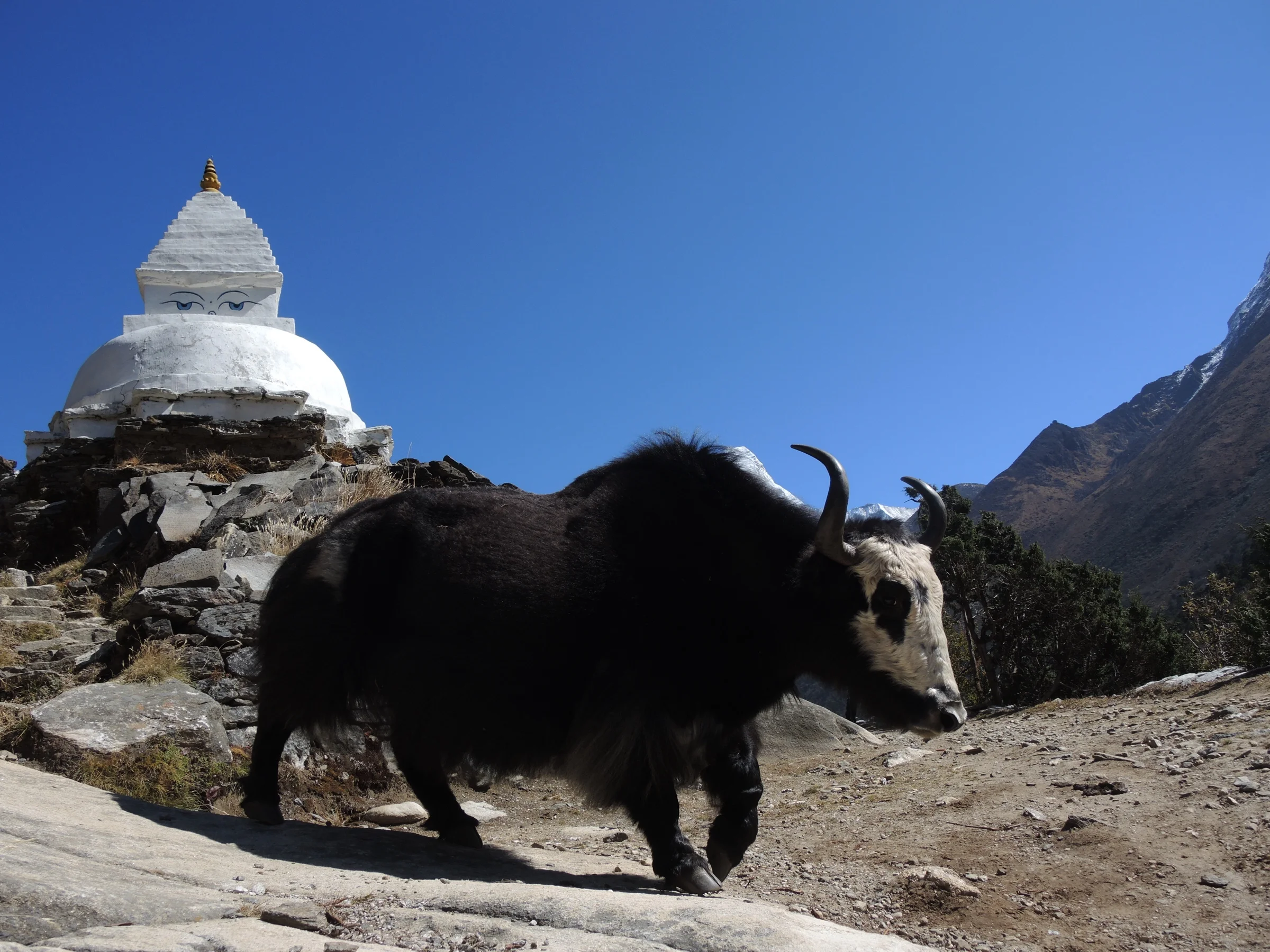
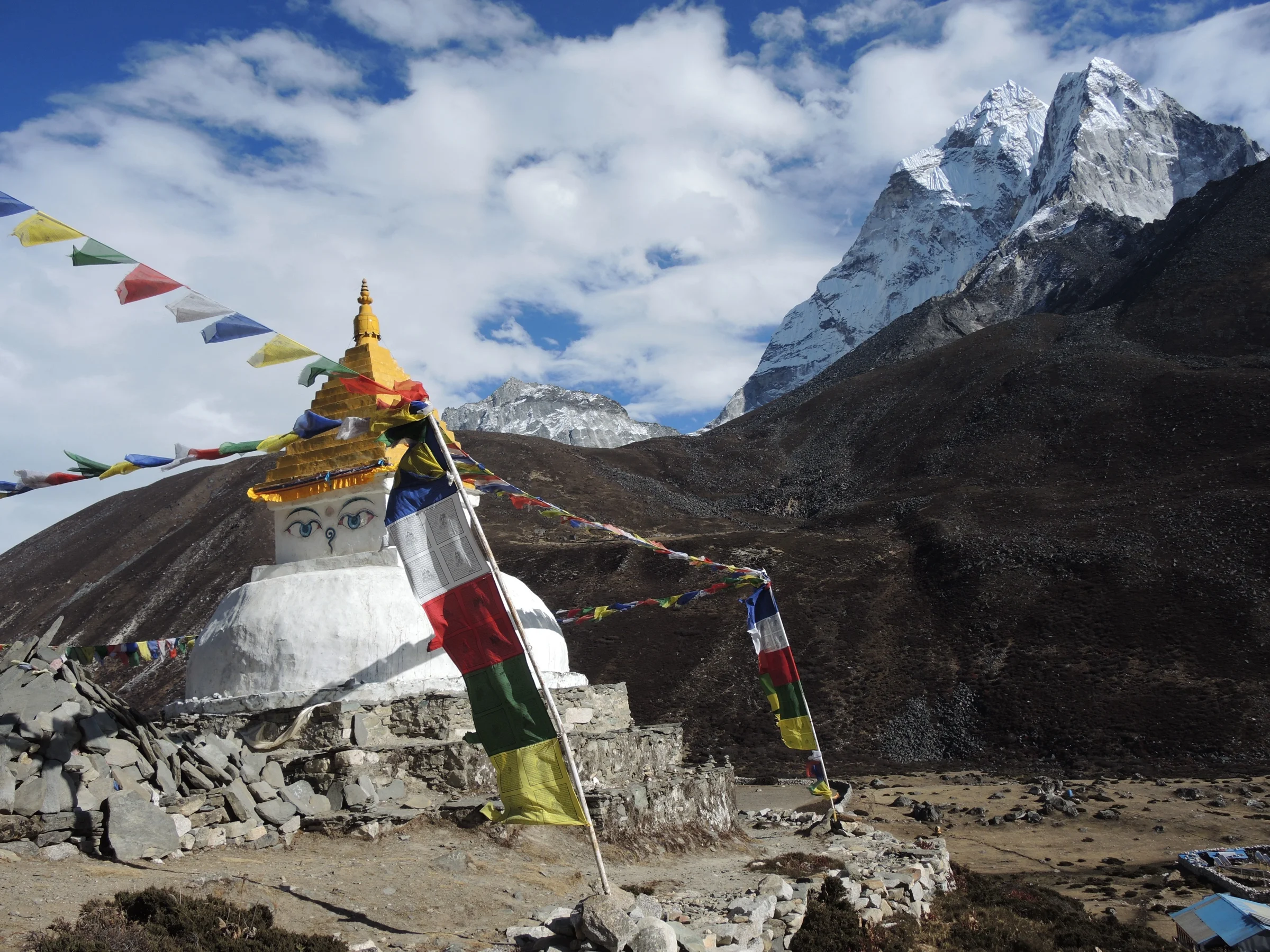
This trek is as much a cultural immersion as a physical challenge. Nights are spent in remote lodges where Sherpa hospitality is unfailing, along trails lined with mani stones (carved with prayers) and prayer wheels. It is a demanding route, reserved for walkers who are physically fit, determined and free of vertigo: sustained height gains, a night above 5,000 m at Gorak Shep, and the technical section of the Cho La pass that combines altitude, rocky terrain and a glacier crossing.
Our local partner has built the itinerary around gradual acclimatisation and relies on its most experienced guides to make this great traverse safe. It is best undertaken in spring or autumn, when conditions are most stable for crossing the pass in the best conditions.
Highlights
The flight to Lukla
Fly into the heart of the Himalayas on the flight to Lukla, over the terraced hills and deep river valleys that mark the start of the adventure.
Namche Bazaar
Acclimatise in the vibrant Sherpa capital, exploring its bustling market and enjoying the first glimpses of Everest, Nuptse and Ama Dablam.
The Gokyo lakes and Gokyo Ri
Discover the turquoise waters of the Gokyo lakes, away from the busiest trails, then climb Gokyo Ri (5,357 m) for one of the most complete panoramas of Everest and its neighbours.
The Cho La crossing
Cross the Cho La pass (5,420 m), between rocky trail and glacier crossing, the most technical section of the route, which links the Gokyo valley to the main Everest trail.
Everest Base Camp
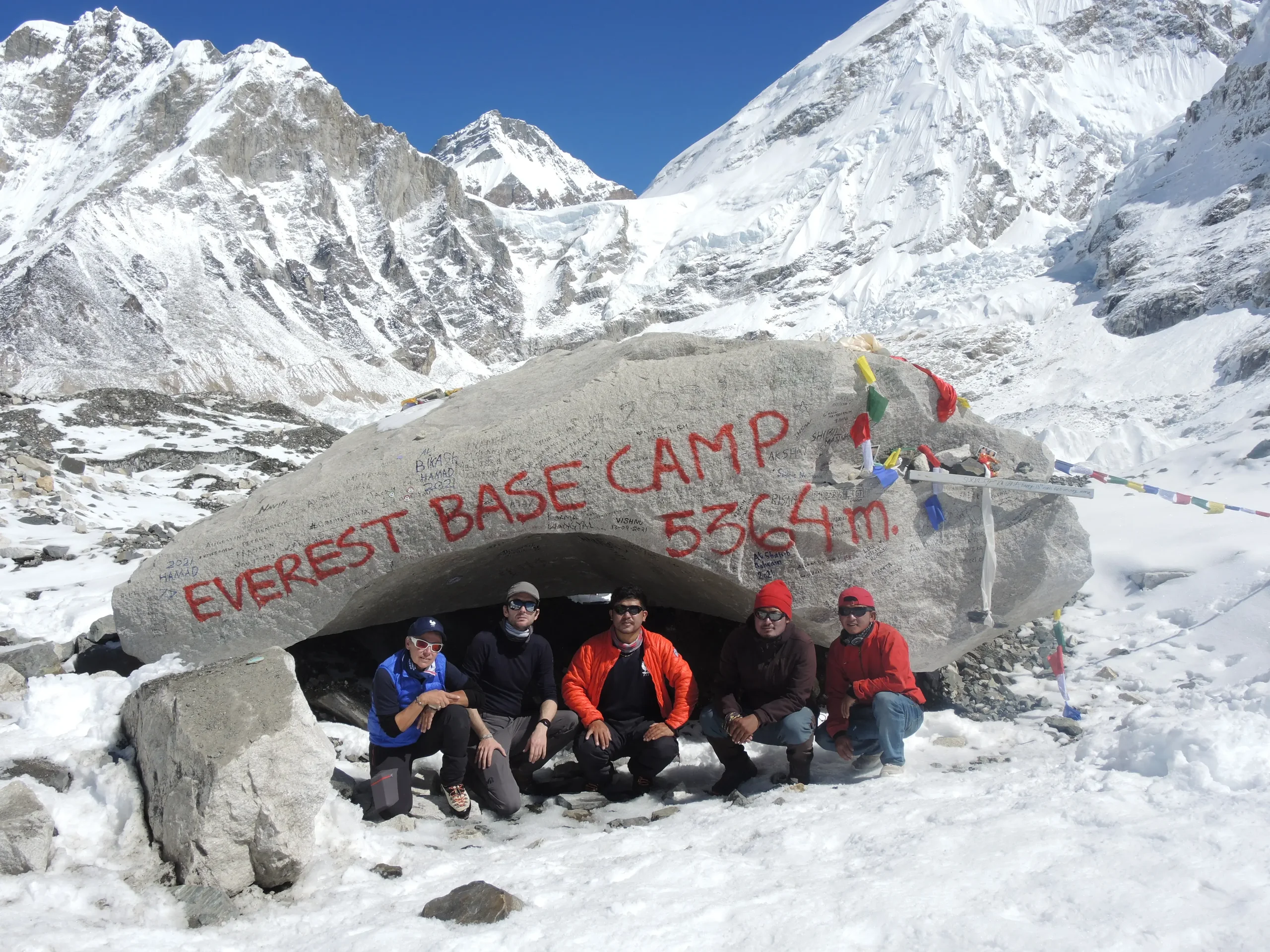
Stand in the legendary tent city at the foot of the highest mountain in the world, at the heart of the history of world mountaineering.
The summit of Kala Patthar
Rise before dawn to climb Kala Patthar (5,644 m) and see the first light of day set the summit pyramid of Everest ablaze.
A complete Himalayan traverse
Experience the balance between the serene Gokyo lakes, the demanding Cho La pass and Everest Base Camp, brought together in a single itinerary.
Itinerary
On your arrival at Tribhuvan International Airport, a representative of our local partner welcomes you and drives you to your hotel. The day is yours to settle in and recover from jet lag. In the evening, a welcome dinner is held, followed by a full briefing on the trip ahead, a chance to meet your guide and to check your equipment. Night in Kathmandu (1,400 m).
This spare day gives some leeway if your international flight is late, if the permits need extra time, or if weather delays the flights to Lukla. If nothing goes wrong, you can explore the UNESCO World Heritage sites of the valley — Boudhanath, Swayambhunath, Pashupatinath or the old city of Patan — or simply rest before this demanding trek. Night in Kathmandu (1,400 m).
Your Himalayan adventure begins with the journey to the trek's starting point. The flight to Lukla leaves from either Kathmandu or Ramechhap, depending on availability, which is known at booking. From Ramechhap, allow 4 to 5 hours by road followed by a 15-minute flight; if a flight is available from Kathmandu, it is a direct flight of about thirty minutes. Having arrived in Lukla, you begin the trek with a gentle descent through fragrant pine forests, along the Dudh Koshi River, to Phakding. It is a gradual introduction to the trail, allowing your body to begin adjusting to the mountain air. Night in Phakding (2,610 m).
Today's stage to Namche Bazaar is the first real test of the trek, a walk that introduces you to the rhythm of Himalayan climbs. The trail follows the Dudh Koshi River, crossing it several times on high suspension bridges decorated with prayer flags, including the spectacular Hillary Bridge. After passing through the gates of Sagarmatha National Park at Monjo, the path begins a long, steady climb. The guides lead this climb at a measured pace and remind you to walk bistari, bistari (slowly, slowly). The first glimpse of Everest through the trees during the climb is a profound reward for your efforts. Night in Namche Bazaar (3,440 m).
This is not a rest day, but an essential one for adjusting to the altitude, following the "climb high, sleep low" principle. After breakfast, the guides take you on a hike up to the Everest View Hotel. The panorama is your first great reward: a superb view of Everest, Lhotse, Nuptse and the magnificent Ama Dablam. The afternoon is free to explore Namche's remarkable market, where you will find bakeries among other things, or simply to settle in around a pot of tea and watch the world go by. Night in Namche Bazaar (3,440 m).
Leaving the main trail, you head west into the more peaceful Gokyo valley. The path winds along a balcony above the valley, with spectacular views, before dropping steeply to the river at Phortse Tenga, a descent that feels as though it gives back hard-won height. After lunch by the river, a steady climb through rhododendron and pine forests awaits you, leading to the small hamlet of Dole, where the air is cool and the sense of having left the crowds behind is immediate. Night in Dole (4,038 m).
A shorter but steep day that continues the climb up the valley. The landscape becomes more rugged and alpine, with superb views of peaks such as Cho Oyu and Kangtega revealing themselves at every turn. You pass through the village of Luza and follow cascading streams before reaching Machhermo, a picturesque spot from where you can see the high peaks of the rest of the trek. Night in Machhermo (4,470 m).
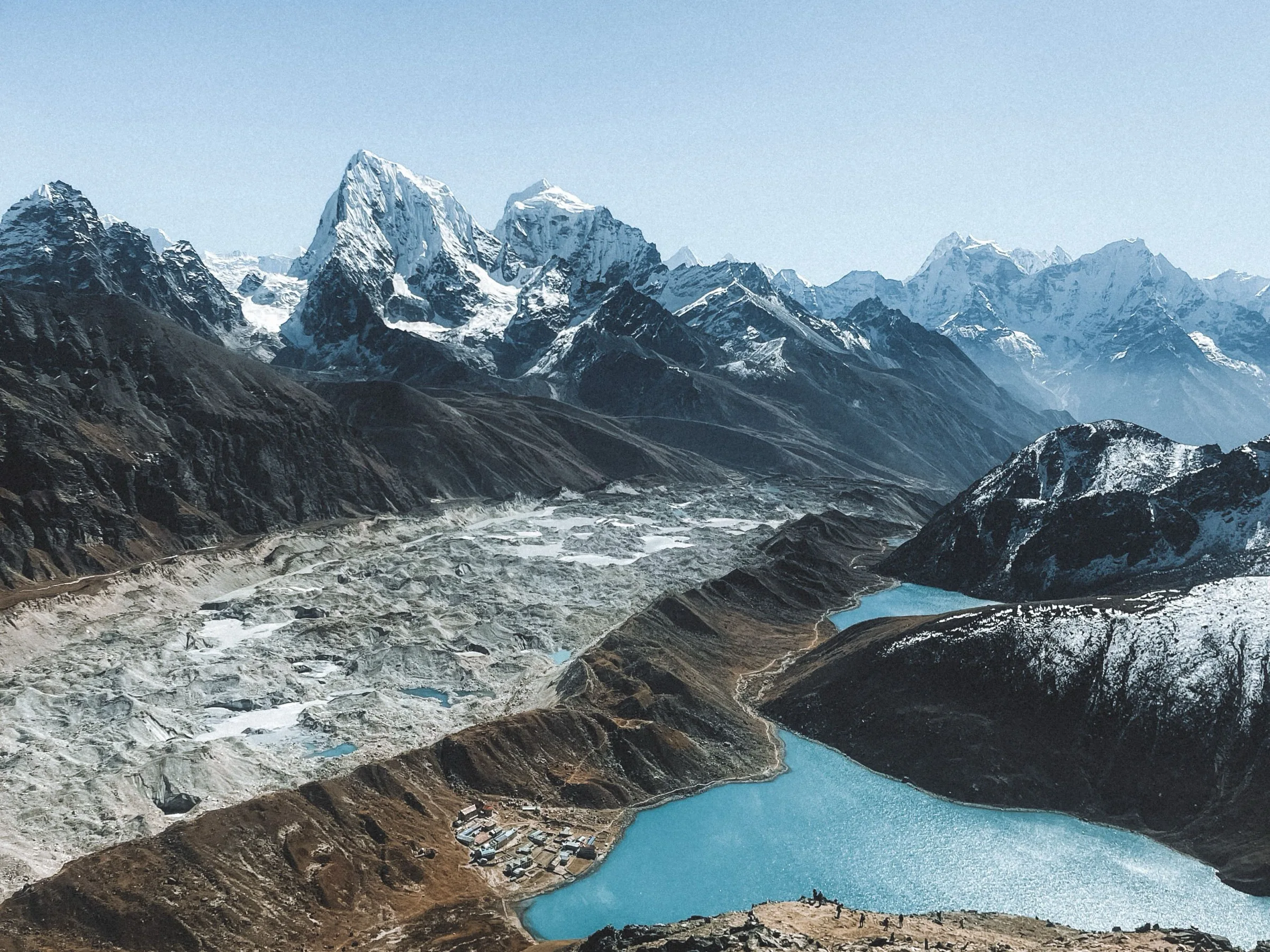
Today, you are rewarded with your first glimpse of the legendary Gokyo lakes. The trail climbs a ridge to reveal the first lake, then follows the second before reaching the third, on whose shore the village of Gokyo lies. The turquoise waters set against a backdrop of imposing peaks, offer an unforgettable sight, a place to spend the next two nights. Night in Gokyo (4,790 m).
This is a key day for acclimatisation. You go up Gokyo Ri, a steep climb with no technical difficulty. From the summit, the 360-degree view is sublime: a panorama over Everest, Lhotse, Makalu and Cho Oyu, reflected in the lakes below. Many consider this the finest viewpoint in the region. The afternoon is devoted to resting and exploring around the lakes. Night in Gokyo (4,790 m).
A short but spectacular day, in preparation for the Cho La pass. You cross the vast Ngozumpa Glacier, the largest glacier in Nepal, a huge undulating landscape of rock and ice. The route calls for a sure foot, and the guides lead the way through this terrain to the small, basic lodges of Thangnak (Dragnag), where you rest ahead of the early start. Night in Thangnak (4,700 m).
This is one of the most demanding and most rewarding days of the trek. An early start is essential. The climb to the Cho La pass (5,420 m) is steep and rocky, leading to a glacier crossing that may require microspikes. The top, adorned with prayer flags, offers impressive views of Ama Dablam before a steep descent to the lateral moraine of the Khumbu Glacier. The trail then levels off, following the moraine to Lobuche, where the nights are truly cold. Night in Lobuche (4,910 m).
The goal is in sight. You make your way along the moraine of the Khumbu Glacier to Gorak Shep, the highest stage of the trek. After a quick lunch, you make the return trip to Everest Base Camp (5,364 m). The trail is rough, but the destination is legendary. Standing among the expedition tents at the foot of the Khumbu Icefall, you cannot see the summit, but you feel its immense and powerful presence. Night in Gorak Shep (5,164 m).
You rise before dawn for the climb to the summit of Kala Patthar (5,644 m). In the icy stillness, you watch the sun light up the summit of Everest in a golden glow, the iconic view you have worked so hard to see. After descending for a well-deserved breakfast, you begin the long walk back to the warmer, denser air of Dingboche, a journey that seems remarkably easier with every breath of oxygen-rich air. Night in Dingboche (4,410 m).
This day is a safety margin in case of unforeseen delays, in particular weather-related problems at high altitude or minor health issues. If all goes to plan, it becomes an extra day of exploration, a longer lunch, or simply a chance to enjoy the mountain atmosphere without rushing. Night in Dingboche (4,410 m).
A long descent. You drop to the river at Phunki Tenga, then make the final climb to the iconic Tengboche Monastery, a spiritual haven that you will appreciate even more on the way back. From there, a fine balcony trail above the valley brings you back to the bright lights and hot showers of Namche Bazaar. Night in Namche Bazaar (3,440 m).
The last day on the trail is a long, celebratory walk, mostly downhill. You descend the Namche hill, leave the national park and follow the familiar path along the Dudh Koshi River to Lukla. The evening is spent with your whole team, a chance to thank the guides and porters who made your journey safe and successful. Night in Lukla (2,860 m).
An early flight is taken from Lukla, subject to the schedule. Depending on availability, known at booking, the flight from Lukla lands in either Kathmandu or Ramechhap. At Ramechhap, our vehicle is waiting for the 4 to 5-hour road journey to your hotel in Kathmandu. A well-earned rest and a hot shower await you at the hotel. In the evening, a farewell dinner celebrates the success of your trek. Night in Kathmandu (1,400 m).
This day is a necessary margin in case of flight delays out of Lukla. Delays are common, and a contingency day is a wise precaution. If you return on the planned schedule, the day is free for sightseeing or shopping on your own. Night in Kathmandu (1,400 m).
A representative of our local partner accompanies you to Tribhuvan International Airport for your departure. Your journey in Nepal ends today. We hope the turquoise Gokyo lakes, the Cho La pass and the view from Kala Patthar will stay with you for a long time. We will be glad to see you again in these mountains soon.
Practical information
Best time to go
The best seasons for this trek are spring (March to May) and autumn (September to December), when the weather is most stable and the mountain views are clear. The trails are busier in these seasons. The trek can also be done in winter, but the Cho La pass may then be blocked by ice or snow; during the monsoon and winter the trails are much quieter.
What the price includes
Included
- nights in a 3-star hotel, in a shared room, with breakfast
- nights in a lodge, in shared accommodation
- a welcome dinner and a farewell dinner
- 3 meals a day during the trek and the climb
- half a litre of water at lunch and dinner during the trek and the climb
- a hot drink on arrival at the day's stage during the trek and the climb
Not included
- lunches and dinners in Kathmandu
- sweets and snacks
- single-room supplements
- drinks other than those listed as included
- showers and hot water during the trek and the climb
- laundry
Included
- airport–hotel transfers for the international flights
- airport–hotel transfers for the domestic flights
- domestic flights
- road transport
Not included
- international flights
- excess baggage fees on domestic flights
- helicopter flights