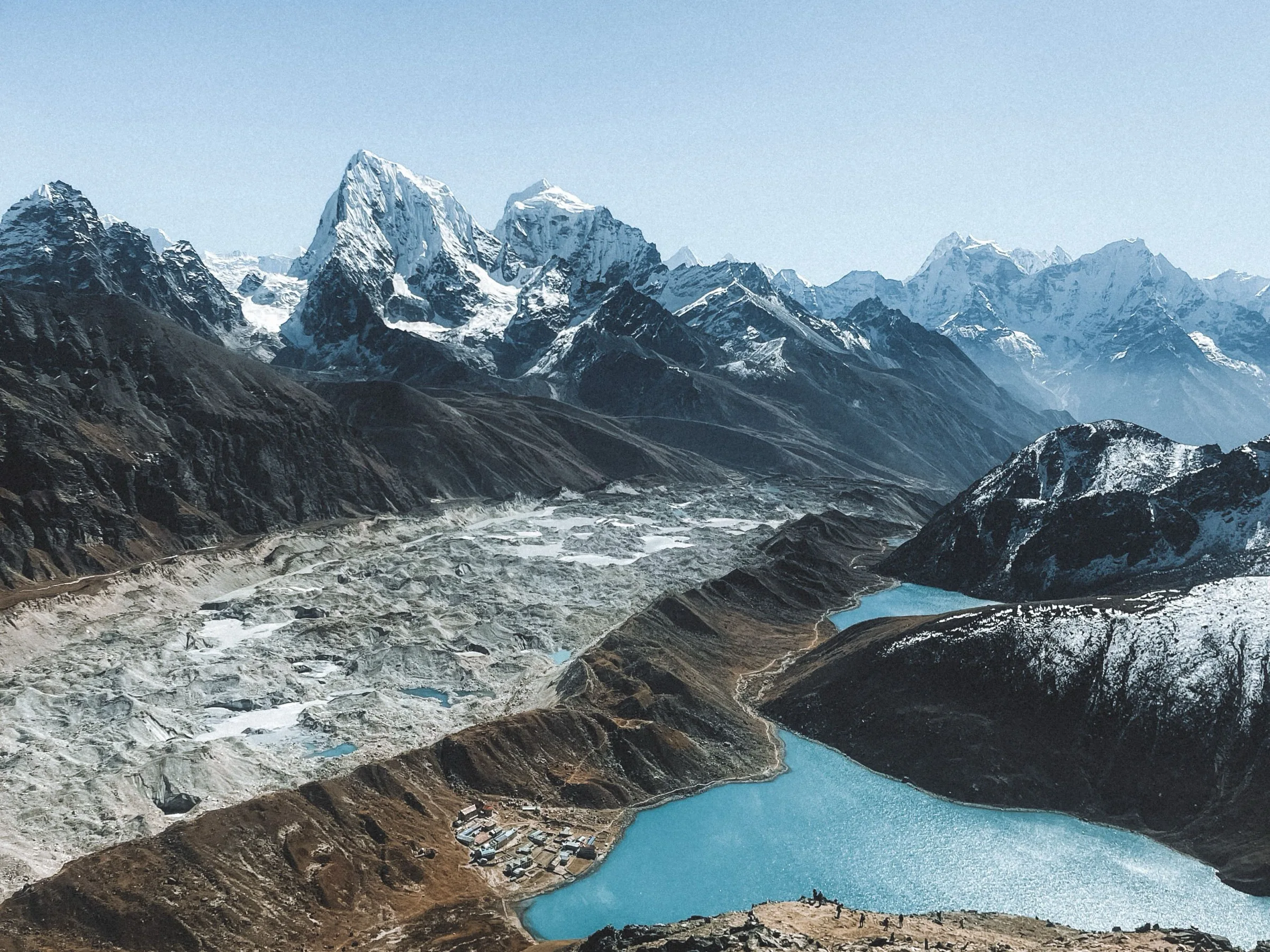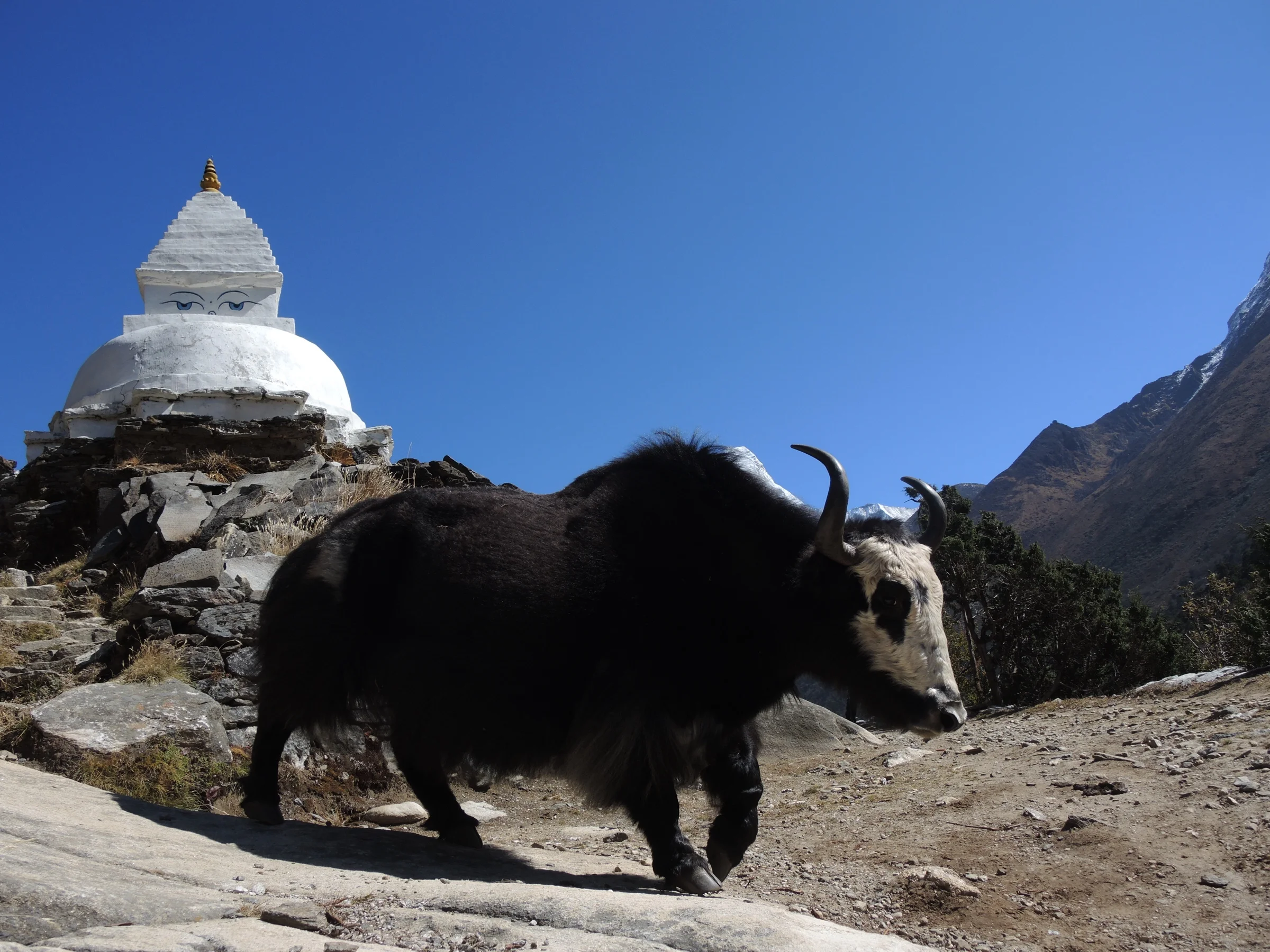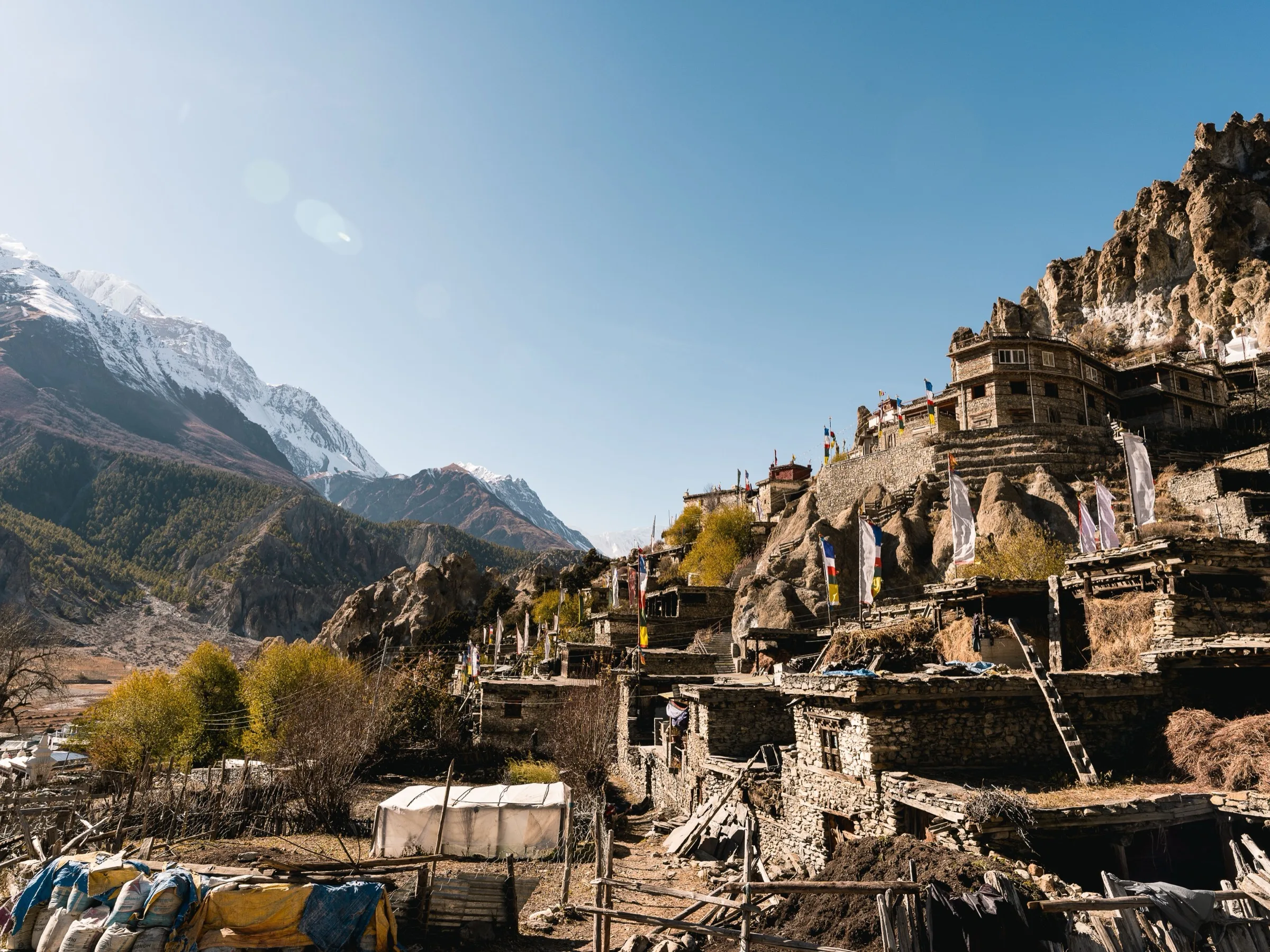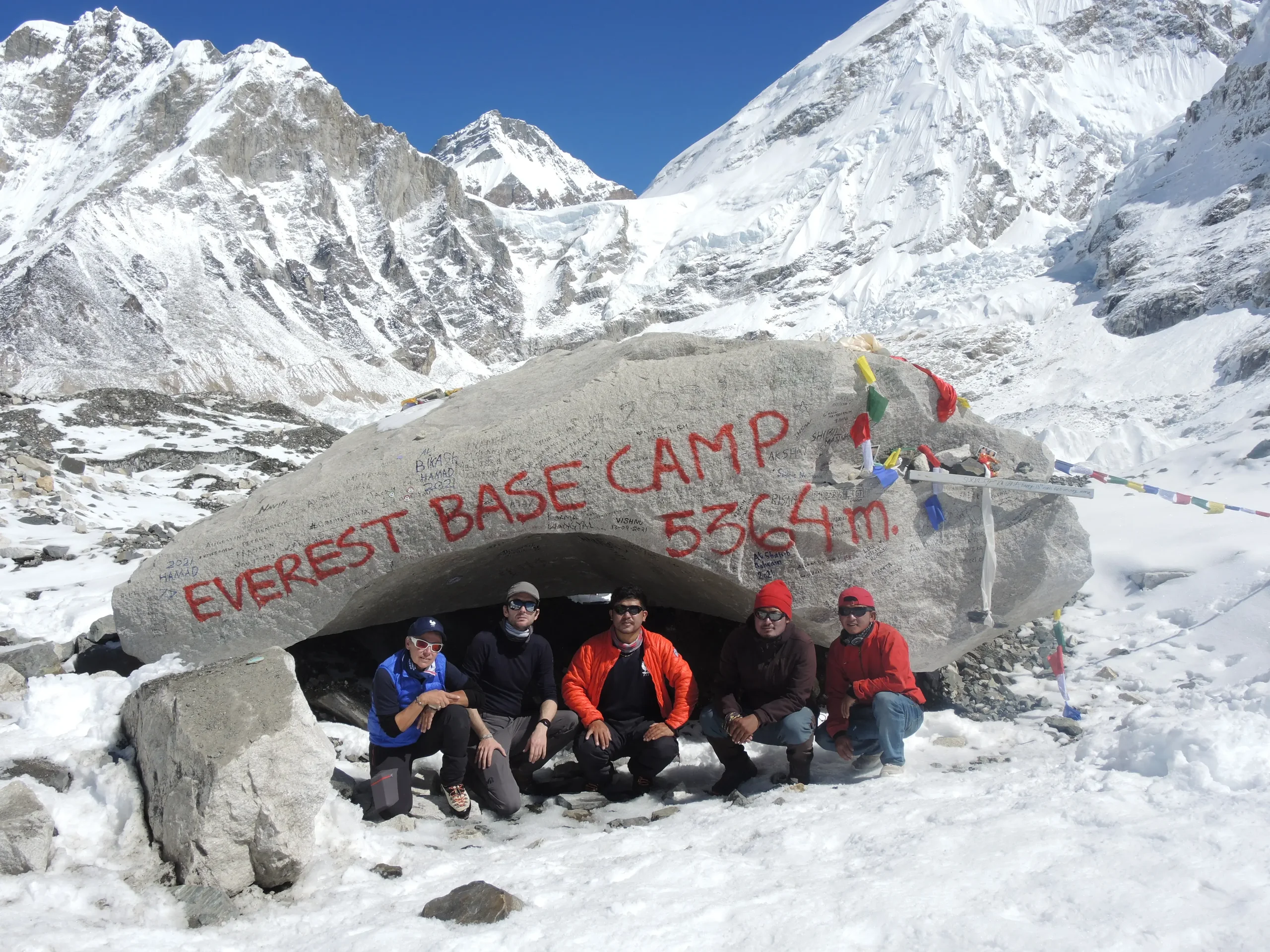
At the foot of the roof of the world, this legendary trek is far more than a hike: it is a total immersion in the heart of the Himalayas.
The classic route climbs the wooded valleys alongside the Dudh Koshi River to the glacial heights beyond the tree line. Rhododendron forests, dizzying suspension bridges and Sherpa villages shaped by mountain life follow one after another, while each stage reveals increasingly striking panoramas of the surrounding peaks.
As the trail climbs, the forests give way to alpine meadows, yak pastures and fields surrounded by stone walls; at the foot of imposing giants such as Ama Dablam, Lhotse and Nuptse.
Sherpa culture permeates every step of the way: mani stones carved with prayers, prayer wheels turned by the flow of streams, and monasteries such as Tengboche offering havens of serenity amid these majestic landscapes.
Beyond the vegetation, the moraine of the Khumbu Glacier leads to Everest Base Camp (5,364 m), a landmark in the history of world mountaineering. The final climb to Kala Patthar (5,644 m) rewards walkers with an unobstructed and unforgettable view of Everest and its neighbouring peaks. One of the most beautiful Himalayan panoramas there is.
Accessible to hikers in good physical condition, the itinerary carefully alternates climbing days with acclimatisation stages, for a safe progression to high altitudes.
The trek is best undertaken in spring (March–May) or autumn (September–December), when the trails are in very good condition and visibility is at its best.
This journey is as much a physical adventure as a profound cultural encounter: contemplating the Himalayan landscapes, immersing yourself in the life of the Sherpas, being close to the highest peaks in the world; an experience that leaves a lasting mark on those who take it on.
Highlights
The flight to Lukla
Experience the legendary flight to Tenzing-Hillary Airport, perched at an altitude of 2,860 m above the Dudh Koshi River. The spectacular views of towering peaks and deep valleys set the stage for your adventure.
Namche Bazaar
Acclimatise at 3,440 m in the vibrant Sherpa capital. Its bustling market, its lodges and the first striking glimpses of Everest, Nuptse and Ama Dablam offer a memorable introduction to the Khumbu.
Tengboche Monastery
Visit, at 3,860 m, the spiritual heart of the Khumbu. Framed by sweeping mountain panoramas, the monastery, with its serene atmosphere, its prayer flags and its chanting monks, offers a deep connection to Sherpa culture.
The Khumbu Glacier and Everest Base Camp
Cross the Khumbu Glacier moraine to base camp, at 5,364 m. The colourful expedition tents, the looming icefall and the raw energy of high altitude make this a legendary experience.
The summit of Kala Patthar
Climb up here, to 5,644 m, for an unobstructed view of Everest, Lhotse and Nuptse. A sunrise or sunset here rewards your efforts with one of the most iconic Himalayan panoramas.
Sherpa culture and village life
Along the trail, discover the warmth and resilience of the Sherpa people. The turning mani prayer wheels, the yak caravans, the fields edged with low stone walls and the highland hamlets reveal a life deeply connected to the mountains.
Itinerary
On arrival at Tribhuvan International Airport, a representative of our local partner welcomes you and drives you to your hotel. The day is devoted to settling in and recovering from jet lag. In the evening, a welcome dinner is held, followed by a full briefing on the trip: an introduction to the lead trek guide and an equipment check. Night in Kathmandu (1,400 m).
This buffer day absorbs the unexpected before departure: a delayed international flight, poor weather for the flight to Lukla, or permit formalities still to complete. If everything is ready, the day is free to visit the Kathmandu valley — Pashupatinath, Boudhanath, Swayambhunath or Durbar Square — or to make a last stop at the trekking shops in Thamel. Night in Kathmandu (1,400 m).
The day begins with the journey to the trek's starting point. The flight to Lukla leaves from either Kathmandu or Ramechhap, depending on availability, which is known at booking. From Ramechhap, allow 4 to 5 hours by road followed by a 15-minute flight; if a flight is available from Kathmandu, it is a direct flight of about thirty minutes. Having arrived in Lukla (2,860 m), you take a short break before beginning the trek with a gentle walk to Phakding, a pleasant descent that allows your body to begin adjusting to the mountain air. Night in Phakding (2,610 m).
Today's stage to Namche Bazaar is the first real test of the trek. The trail follows the Dudh Koshi River, crossing it several times on high suspension bridges decorated with prayer flags. After passing through the official gates of Sagarmatha National Park at Monjo, the path drops to cross the spectacular Hillary Bridge before beginning the long, steady climb to Namche. The guides lead this climb at a measured pace, reminding you to walk bistari, bistari (slowly, slowly). The first glimpse of Everest through the trees during the climb is a profound reward for your efforts. Night in Namche Bazaar (3,440 m).
This is not a rest day, but an essential one for adjusting to the altitude. The principle is "climb high, sleep low". After breakfast, the guides take you on a fine hike up to the Everest View Hotel. The panorama from here is your first great reward: a superb view of Everest, Lhotse, Nuptse and the magnificent Ama Dablam. The afternoon is free to explore Namche's remarkable market, where you will find bakeries among other things, or simply to settle in around a pot of tea and watch the world go by. Night in Namche Bazaar (3,440 m).
The trail out of Namche winds along a balcony above the valley, offering prodigious views, before dropping steeply to the river at Phunki Tenga, a descent that feels as though it gives back all the height so hard won. After lunch by the river, a hard two-hour climb through a forest of pine and rhododendron awaits you. Just when you think the climb will never end, you emerge onto the ridge to discover the iconic Tengboche Monastery, a spiritual haven set against one of the most beautiful backdrops in the Himalayas. Attending the evening prayer ceremony with the monks is a memorable experience. Night in Tengboche (3,860 m).
Today, you truly leave the tree line behind. The trail descends through a beautiful forest of birch and rhododendron to cross the Imja Khola River, then climbs steadily via Pangboche, the highest year-round settlement in the valley. The landscape becomes more alpine as you enter a valley of low vegetation and fields edged with low stone walls. Ama Dablam towers over you, seeming so close you could almost touch it. On the stage to Dingboche, you feel the thinning of the air. Night in Dingboche (4,410 m).
Another essential day for adjusting safely before climbing higher. The recommended activity is a fine hike along the ridge behind Dingboche, towards Nangkartshang Peak. There is no need to reach the summit; every metre gained opens up new spectacular views, including the first glimpse of Makalu. This effort makes a real difference to how your body will cope with the altitudes of Lobuche and Gorak Shep. Night in Dingboche (4,410 m).
Today's trek is a steady, gentle climb along the valley floor to Thukla. From there, the path climbs steeply to the Thukla pass, a plain but magnificent ridge dotted with stone cairns and memorials dedicated to the climbers who have died on Everest. It is a poignant and humbling place. The trail then levels off, following the lateral moraine of the Khumbu Glacier to the small highland hamlet of Lobuche, where the nights are truly cold. Night in Lobuche (4,910 m).
This is the day all your efforts have been building towards. The trail to Gorak Shep is an otherworldly 3-hour walk, along and over the glacier moraine. After a quick lunch and settling into what is the highest stage of the trek, you make the return trip to Everest Base Camp. The route is rough, but the destination is legendary. You stand among the colourful expedition tents, at the foot of the treacherous Khumbu Icefall. You cannot see the summit from here, but you feel its immense and powerful presence. Night in Gorak Shep (5,164 m).
An early start in the pre-dawn cold is needed for the 2-hour climb to Kala Patthar. This is the true visual highlight of the trek. From this small rocky summit, you witness the most iconic sunrise view of the summit pyramid of Mount Everest. After descending for a well-deserved breakfast, you begin the long walk back to Pheriche, a journey that seems remarkably easier with every breath of denser, warmer air. Night in Pheriche (4,371 m).
A long but rewarding day of descent awaits you, covering about 19 km. With gravity now firmly on your side, the descent takes on the feel of a lap of honour. You retrace the path through Pangboche and the beautiful forests below Tengboche. The day ends back in the vibrant crossroads of Namche Bazaar, where a hot shower and a celebratory meal in one of the many restaurants are well deserved. Night in Namche Bazaar (3,440 m).
The last day on the trail. It is a long walk, but mostly downhill. You descend the Namche hill, leave the national park and follow the familiar path along the Dudh Koshi River to Lukla. This evening is a celebration with your whole team, a chance to thank the guides and porters who made your journey safe and successful. Night in Lukla (2,860 m).
An early flight is taken from Lukla, subject to the schedule. Depending on availability, known at booking, the flight from Lukla lands in either Kathmandu or Ramechhap. At Ramechhap, our vehicle is waiting for the 4 to 5-hour road journey to your hotel in Kathmandu. A well-earned rest and a hot shower await you at the hotel. In the evening, a farewell dinner celebrates the success of your trek. Night in Kathmandu (1,400 m).
This day is a necessary margin in case of flight delays out of Lukla. Delays are common, and a contingency day is a wise precaution. If you return on the planned schedule, the day is free for sightseeing or shopping on your own. Night in Kathmandu (1,400 m).
A representative of our local partner accompanies you to Tribhuvan International Airport for your departure. Although the journey to Nepal ends today, the spirit of the Himalayas stays with you. We hope these mountains will call you back for new adventures.
Practical information
Best time to go
The ideal seasons are spring (March–May) and autumn (September–December), with trails in excellent condition and clear views of the peaks.
The trek is also possible in winter, but some sections can be made difficult by ice or snow.
The monsoon and winter offer less crowded trails and a more intimate immersion in nature.
What the price includes
Included
- nights in a 3-star hotel, in a shared room, with breakfast
- nights in a lodge, in shared accommodation
- a welcome dinner and a farewell dinner
- 3 meals a day during the trek and the climb
- half a litre of water at lunch and dinner during the trek and the climb
- a hot drink on arrival at the day's stage during the trek and the climb
Not included
- lunches and dinners in Kathmandu
- sweets and snacks
- single-room supplements
- drinks other than those listed as included
- showers and hot water during the trek and the climb
- laundry
Included
- airport–hotel transfers for the international flights
- airport–hotel transfers for the domestic flights
- domestic flights
- road transport
Not included
- international flights
- excess baggage fees on domestic flights
- helicopter flights