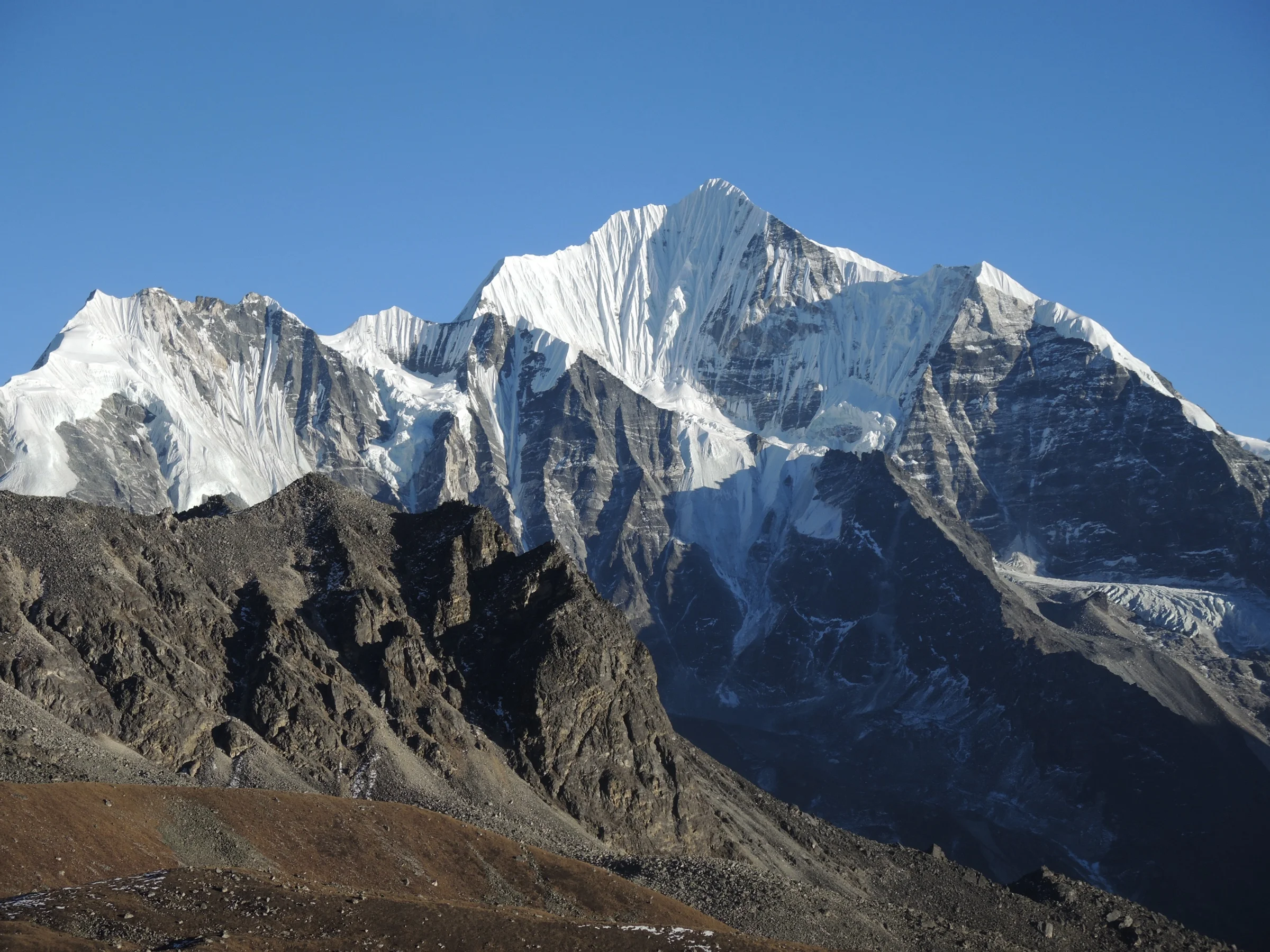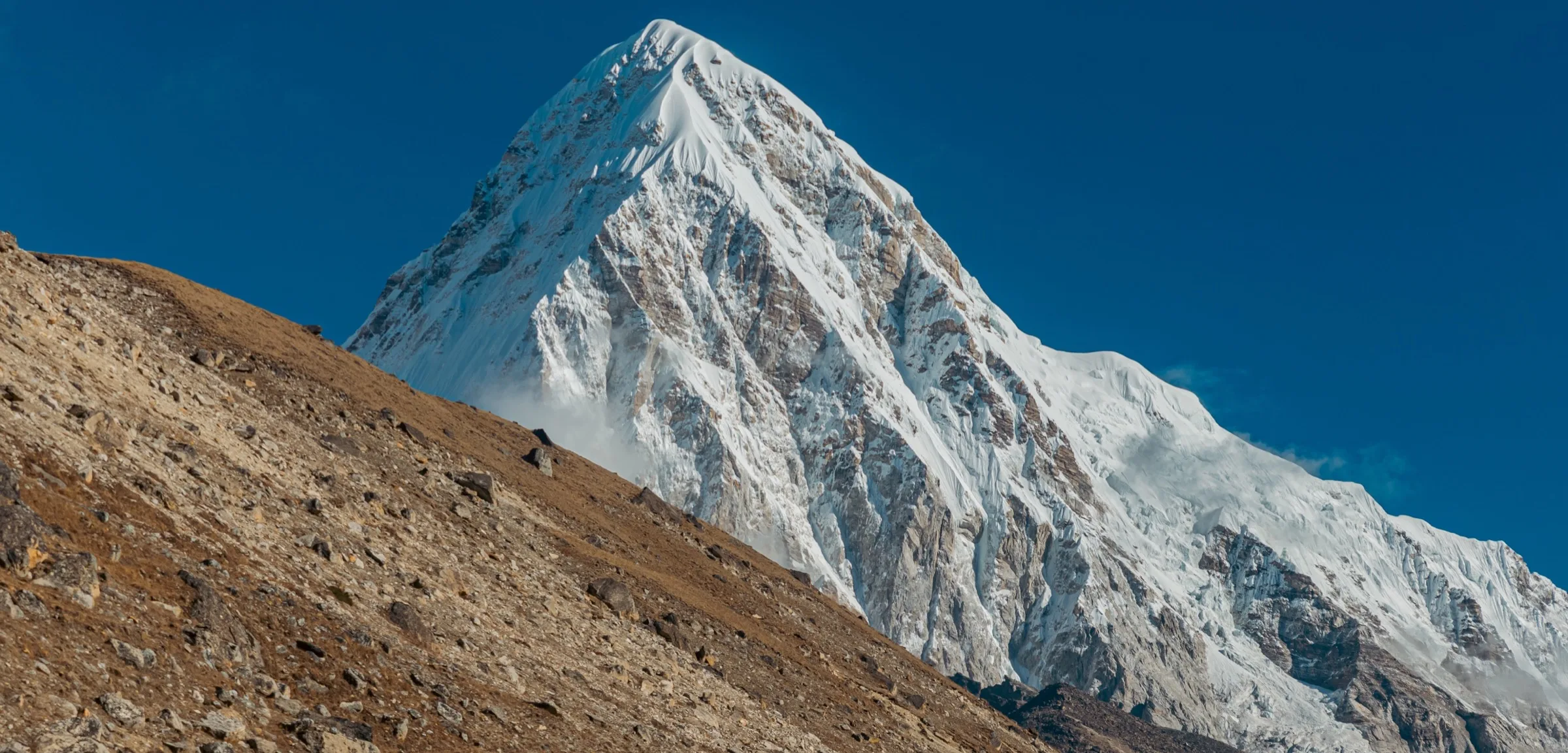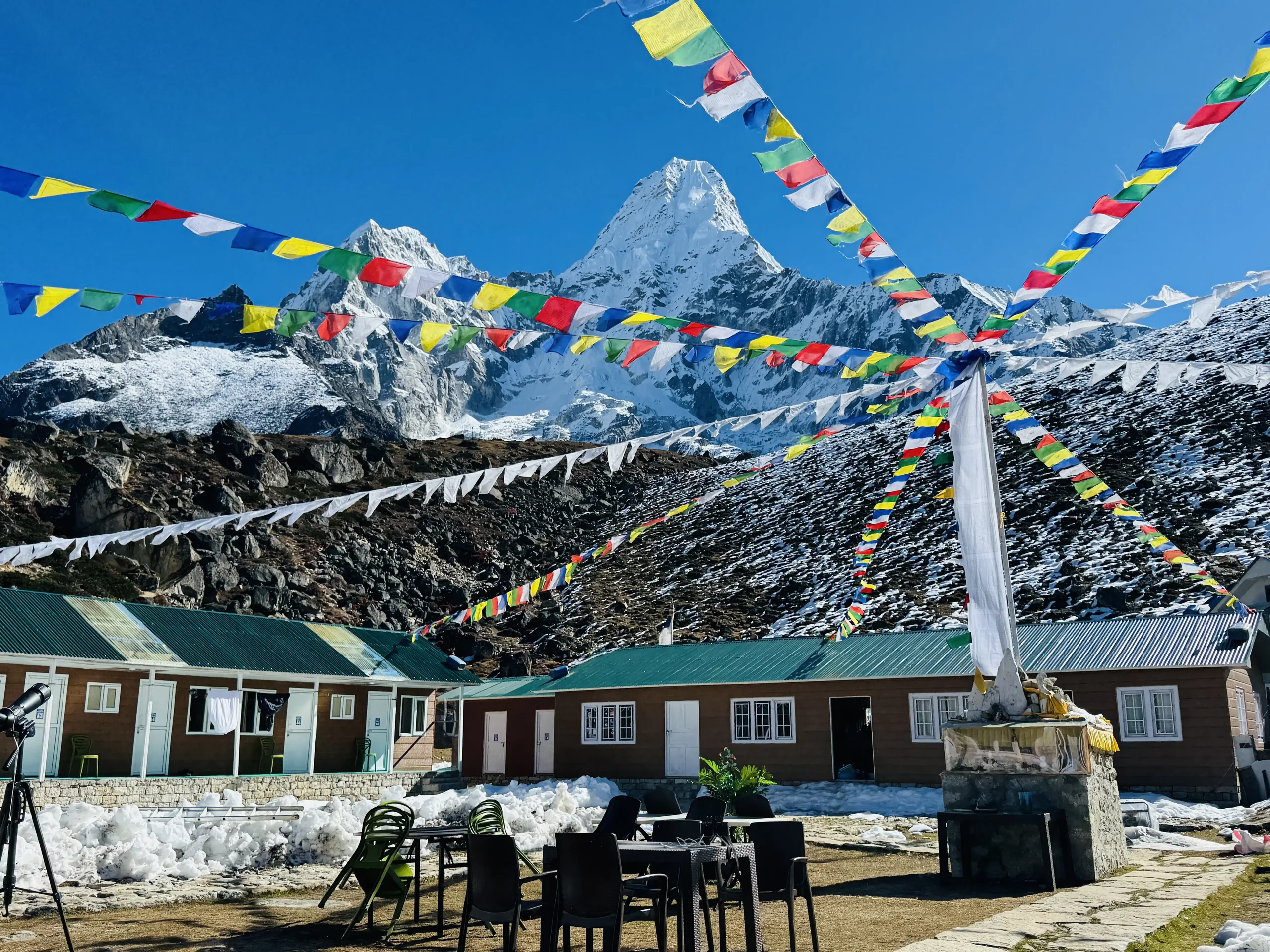
South of Everest (8,848 m), in the Khumbu region, Ama Dablam (6,812 m) is one of the most iconic and technically demanding climbs in Nepal. Its pyramid-shaped silhouette, knife-edge ridges and steep mixed terrain make it one of the most beautiful peaks in the Himalayas.
This expedition combines technical rock climbing, sections of snow and ice and constant exposure: a genuine high-altitude mountaineering experience that remains a major objective for accomplished climbers the world over.
The expedition begins in Kathmandu with the paperwork and the issuing of the expedition permits, followed by a scenic flight to Lukla. The approach trek follows the classic Everest Base Camp route, through traditional Sherpa villages and the heart of the Khumbu valley.
Thorough acclimatisation is key to a successful climb. The gradual ascent passes through Namche Bazaar (3,440 m), where a rest day allows optional excursions to Khumjung, Kunde and the Everest View Hotel, then Tengboche Monastery, the largest in the Khumbu, before Pangboche and Dingboche (4,410 m). A further acclimatisation day here is devoted to the climb up Nangkartshang Peak (5,083 m). The route then continues towards Lobuche, Everest Base Camp (5,364 m) and Gorak Shep, up to the Kala Patthar (5,644 m) viewpoint, which offers a panorama over Everest, Lhotse, Cho Oyu and Ama Dablam itself. Once acclimatisation is complete, the expedition descends via Pheriche and Pangboche to Ama Dablam Base Camp (4,570 m).
The climb itself follows the south-west ridge, one of the most technical standard routes among the Himalayan peaks below 7,000 metres. From base camp, the climbers' rotation leads first to Camp I (5,700 m), over snow slopes and trails that already call for confident use of technical equipment. Progress towards Camp II is made using fixed ropes and ascenders, while the section from Camp II to Camp III links climbs and descents that require constant use of mountaineering gear.
The Yellow Tower is one of the key sections of the climb: a near-vertical rock wall to be climbed on fixed ropes, at high altitude, where you have to manage both the exposure and the transitions between different types of terrain. Above Camp III, steep snow slopes and then a narrow summit ridge lead to the top of Ama Dablam. A successful ascent ultimately depends on the weather conditions, the safety of the route and the cohesion of the team.
This expedition is aimed at climbers who are comfortable with fixed-rope progression, exposure and mixed terrain at high altitude. Ama Dablam is, moreover, often regarded as an excellent preparatory climb before turning to Himalayan expeditions of 7,000 and 8,000 metres.
Beyond the technical challenge, this trip is also a cultural immersion in the Sherpa villages, the Buddhist monasteries of Tengboche and Pangboche and the legendary Khumbu region — a complete mountaineering expedition.
The IFMGA / NNMGA-certified high-mountain guides and the experienced Sherpa climbers of our local partner oversee every stage of the expedition. Cimes et Horizon places safety, professionalism and responsible Himalayan mountaineering at the heart of this climb, which remains, for any mountaineer, a defining milestone in their journey.
Highlights
The Khumbu region
Cross the Sherpa villages, rhododendron forests and high pastures that line the classic Everest Base Camp route, at the heart of the valley's natural and cultural heritage.
The Himalayan panoramas
From Namche Bazaar to the Kala Patthar viewpoint, the approach route offers unobstructed views of Everest, Lhotse, Nuptse and Ama Dablam.
Nangkartshang Peak and Kala Patthar
Two demanding acclimatisation hikes, reaching 5,083 m and 5,644 m respectively, that prepare the body for altitude while rewarding the effort with sweeping panoramas over the highest peaks in the region.
The monasteries of Tengboche and Pangboche
Two spiritual stages of the Khumbu, where prayer wheels and monastic life punctuate the climb to altitude.
The summit of Ama Dablam
At the end of the south-west ridge climb, marked by the technical Yellow Tower section and the fixed ropes, reach, at 6,812 m, this pyramid-shaped peak.
Itinerary
Arriving in Nepal comes with your first Himalayan panoramas from the aircraft. On landing at Tribhuvan International Airport, a representative of our local partner welcomes you and drives you to your hotel in Kathmandu. A welcome dinner is offered in the evening. Night in Kathmandu (1,400 m).
A few days are needed to prepare your permits and documents: as climbing Ama Dablam is an expedition, it requires specific permits as well as several official formalities. In the meantime, you can enjoy sightseeing in the Kathmandu valley, which is home to seven UNESCO World Heritage Sites. Pashupatinath, Boudhanath, Swayambhunath, Changu Narayan, along with the Durbar Squares of Kathmandu, Bhaktapur and Lalitpur, are among the main sites to discover over these two days. Nights in Kathmandu (1,400 m).
The flight to Lukla leaves from either Kathmandu or Ramechhap, depending on availability, which is known at booking. From Ramechhap, allow 4 to 5 hours by road followed by a 15-minute flight; if a flight is available from Kathmandu, it is a direct flight of about thirty minutes. The scenic flight over the high mountains ends with the landing on the short, cliff-edge runway of Lukla airport, one of the most intense moments of the trip. You meet the rest of the team on arrival, then the trek begins with a gentle descent followed by a short climb along the Dudh Koshi River, to the village of Phakding. Night in Phakding (2,610 m).
Leaving Phakding, the trail runs alongside the Dudh Koshi River and passes through a pine forest. Along the way, you take in views of Everest (8,848 m), Nuptse (7,861 m) and many other peaks, before a final steady climb to the picturesque village of Namche. Night in Namche Bazaar (3,440 m).
You have gained a lot of altitude in a short time, so this day is devoted to acclimatisation. During your stay in Namche, you can explore the local shops, restaurants, museums and monasteries. If you wish, you can also take short hikes to Khumjung, Kunde and the Everest View Hotel: each of these destinations illustrates in its own way the splendour of the Everest region. Night in Namche Bazaar (3,440 m).
From Namche, you set off towards Debuche. The trail from Namche to Phunki Tenga passes through several villages and beautiful pine forests. From Phunki, it climbs steeply and brings you to Tengboche, home to the largest monastery in the Khumbu region. From there, the trail descends through rhododendron and birch forests to Debuche. Night in Debuche (3,820 m).
Today, you cross the Imja Khola River and continue towards Pangboche. The trail climbs, offering fine views of the snow-capped mountains; you can also take the time to visit Pangboche Monastery. You then head on into the Imja valley and cross the Lobuche Khola River before the final climb to Dingboche. Night in Dingboche (4,410 m).
This day is again devoted to acclimatisation. You climb up Nangkartshang Peak (5,083 m), from where there are striking views of the Himalayas of the Everest region. The hike is fairly difficult because of the altitude, so it is best to rest well before setting off. Around Dingboche, you can also visit Nangkartshang Monastery, on the edge of the village. In the evening, you return to Dingboche. Night in Dingboche (4,410 m).
Today's trek begins with a gentle climb out of Dingboche, above the Pheriche valley. You climb a ridge, skirt the base of the Khumbu Glacier, then cross the Thukla pass (210 m of ascent). Here you see many prayer flags and memorials dedicated to those who lost their lives climbing in the Himalayas. The trek then continues along the terminal moraine to Lobuche. Night in Lobuche (4,910 m).
The trail runs parallel to the glacial moraine. The stage to Everest Base Camp is strenuous because of the thin air at high altitude, and the path is strewn with rocky moraine and glacial dunes. Once you reach base camp (5,364 m), you take time to rest and admire the views of the surrounding mountains; the icefall and the Khumbu Glacier form a striking landscape. You then head back along the trail to Gorak Shep. Night in Gorak Shep (5,164 m).
Early in the morning, you set off for the Kala Patthar viewpoint. It is a prime spot to watch the sunrise and enjoy panoramic views of the mountains, including Everest (8,848 m), Lhotse (8,516 m), Cho Oyu (8,188 m), Ama Dablam (6,812 m) and many other peaks. After a while at Kala Patthar (5,644 m), you descend to Gorak Shep for breakfast, then take the trail back to Lobuche before descending to Pheriche. Night in Pheriche (4,371 m).
You leave Pheriche and cross the bridge over the Khumbu Khola River. The trail heads towards Orsho and continues downhill to Pangboche. Along the way, you enjoy views of Ama Dablam (6,812 m) and Nuptse (7,861 m). Walking along the Imja River, you pass Somare and follow a series of monasteries as you approach Pangboche. Night in Pangboche (3,985 m).
Today, you cross the Imja Khola River and head towards Ama Dablam Base Camp. The remote trail offers views of Ama Dablam (6,812 m), Lhotse (8,516 m), Nuptse (7,861 m), Lobuche Peak (6,119 m), Pumori (7,165 m) and many other peaks. On arrival at base camp, you rest and prepare your body for the climb. Night at Ama Dablam Base Camp (4,570 m).
The climbing phase begins: the absolute priority is to stay cautious and keep a steady pace on every ascent. The expedition is organised in acclimatisation rotations between the camps, with a few days kept in reserve for the weather.
The route follows the south-west ridge and starts with a climb to Camp I (5,700 m), a long and rough approach over snow or rock that ends with a fixed-rope climb up to the ridge where the tents stand. Progress towards Camp II (6,000 m) continues on fixed ropes and ascenders, through steep steps, slabs and ridges that call for skilful use of technical equipment, and up the Yellow Tower, one of the key sections of the climb. The climb from Camp II to Camp III (6,300 m) is the hardest part of the route: a steep snow-and-ice couloir, mixed ground and exposed slopes, with a succession of climbs and descents.
The final ascent to the summit of Ama Dablam (6,812 m) follows a narrow, steep and very exposed ridge of snow and ice, passing beneath the hanging serac. It is technically easier than the sections below, but the exposure is extreme and clear thinking is essential. The summit offers an immense view over the Himalayas, including Mount Everest (8,848 m) and many other giants. You then return to Ama Dablam Base Camp. Nights in a tented camp.
You leave Ama Dablam Base Camp and head back down the valley, following the Imja Khola River towards Pangboche. After the effort of the climb, the descent is a first chance to rest and to enjoy the views of the mountain you have just climbed. Night in Pangboche (3,985 m).
You leave Pangboche and take the route to Namche Bazaar. The trail follows a narrow path and passes through Phortse. You then descend to the Dudh Koshi River, cross it, and make a steep climb to reach Namche Bazaar. Night in Namche Bazaar (3,440 m).
Today is the final day of trekking. The descent from Namche to Lukla can be one of the hardest sections on the knees: even though the path goes downhill, some slopes remain challenging. The trail passes through rhododendron and pine forests and goes through many Sherpa villages, such as Monjo, Jorsalle and Chheplung. Night in Lukla (2,860 m).
You take an early flight from Lukla. Depending on availability, known at booking, the flight from Lukla lands in either Kathmandu or Ramechhap. At Ramechhap, our vehicle is waiting for the 4 to 5-hour road journey to your hotel in Kathmandu. After this long stay in the Everest region, you leave the Himalayas behind and return to the capital. Depending on your arrival time, you have free time in Kathmandu, which you can spend sightseeing or shopping for souvenirs. In the evening, a farewell dinner is offered at a typical Nepalese restaurant, with a local cultural show. Night in Kathmandu (1,400 m).
This day is kept in reserve in case the flight from Lukla is delayed or cancelled because of bad weather. If it is not needed, you have free time in Kathmandu. Night in Kathmandu (1,400 m).
A representative of our local partner drives you to the airport for your return flight. We wish you an excellent journey and hope to welcome you again soon.
Practical information
Best time to go
The best seasons for Ama Dablam are autumn (October to November) and spring (April to May), when the weather is most stable, the mountain views are clear and temperatures are moderate. Autumn is considered the prime season, with less precipitation, more stable weather windows and the highest summit success rates.
What the price includes
Included
- nights in a 3-star hotel, in a shared room, with breakfast
- nights in a lodge, in shared accommodation
- nights in a tent, in shared accommodation
- a welcome dinner and a farewell dinner
- 3 meals a day during the trek and the climb
- half a litre of water at lunch and dinner during the trek and the climb
- a hot drink on arrival at the day's stage during the trek and the climb
Not included
- lunches and dinners in Kathmandu
- sweets and snacks
- single-room supplements
- drinks other than those listed as included
- showers and hot water during the trek and the climb
- laundry
Included
- airport–hotel transfers for the international flights
- airport–hotel transfers for the domestic flights
- domestic flights
- road transport
Not included
- international flights
- excess baggage fees on domestic flights
- helicopter flights