On the edges of the Everest massif, this crossing combines three high passes and three Himalayan peaks and covers the whole Khumbu region. The itinerary offers one of the most demanding routes in Nepalese trekking, far from the classic base camp trails.
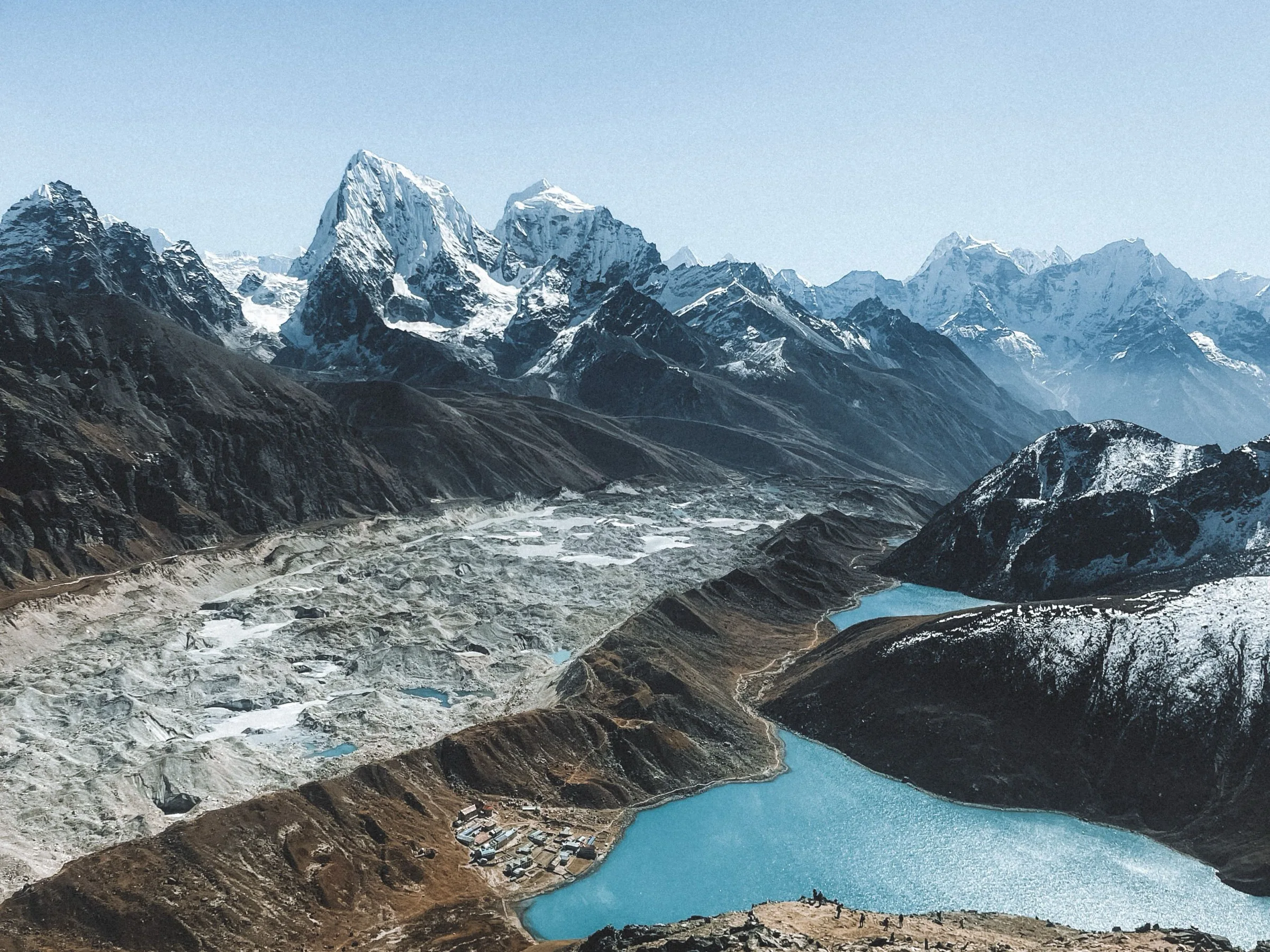
The journey begins with a flight to Lukla, the gateway to the Everest region. The trail then climbs through the Sherpa villages of Phakding, Namche Bazaar, Thame and Lumde, before reaching the first of the three passes, the Renjo La (5,360 m). Beyond it opens the unspoilt Gokyo valley and its glacial lakes, where the climb up Gokyo Ri (5,357 m) offers a first overall panorama of the massif.
Crossing the Cho La pass (5,420 m), over icy and sometimes slippery terrain, leads to Lobuche Base Camp, the starting point for the first climb: Lobuche East (6,119 m), reached by an exposed final ridge. The third pass, the Kongma La (5,535 m), usually snow-covered, then leads to Pokalde Base Camp, where the climb up Pokalde Peak (5,806 m) begins. The last technical stage of the trip, the ascent of Island Peak (6,165 m), ends with an exposed traverse to the front of the summit glacier, with views of Everest (8,848 m), Lhotse (8,516 m) and Makalu (8,485 m).
After these three summits, the descent passes through Chhukung, Dingboche and Tengboche Monastery, before reaching Namche Bazaar and then Lukla, for a flight back to Kathmandu.
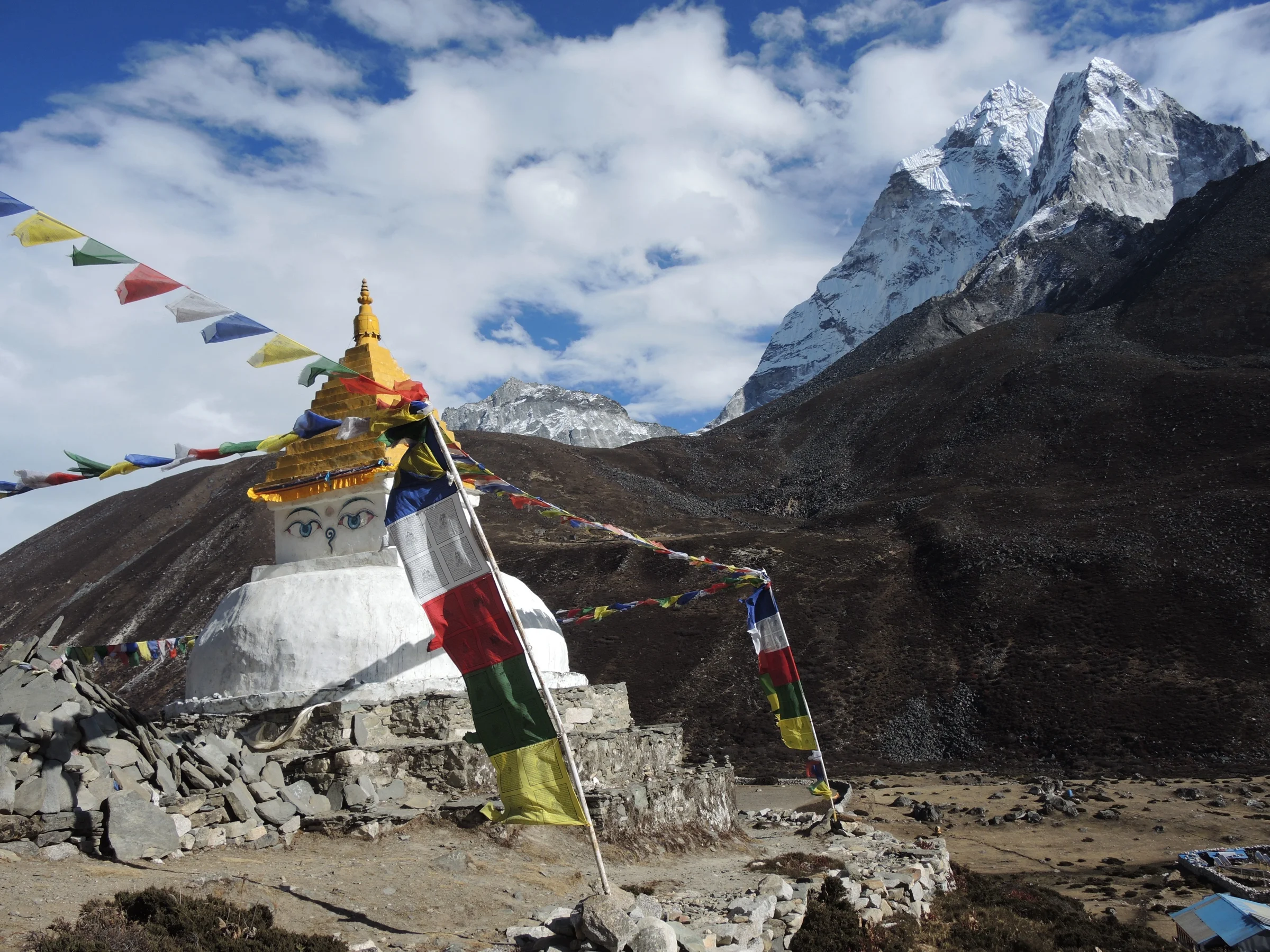
Throughout the route, the landscapes alternate between rhododendron forests, glacial moraines and snow-covered passes, while the Sherpa villages you pass through — Namche Bazaar, Thame, Gokyo, Dingboche, Tengboche — offer a continuous immersion in the Buddhist culture and traditions of the Khumbu. The panoramas open onto some of the highest peaks in the world: Everest, Lhotse, Nuptse, Ama Dablam, Makalu, Cho Oyu.
This route is aimed at experienced trekkers, in excellent physical condition, able to operate for several days above 5,000 metres and to handle technical terrain — snow, ice, exposed ridges — on three successive climbs. The gradual acclimatisation and the contingency days built into the itinerary, notably at Chhukung before Island Peak, take account of this dual physical and altitude demand.
Highlights
Three high passes
Cross the Renjo La (5,360 m), the Cho La (5,420 m) and the Kongma La (5,535 m) in a single traverse of the Khumbu.
Three summits
Climb Lobuche East (6,119 m), Pokalde (5,806 m) and Island Peak (6,165 m), with a gradual progression in difficulty.
The Gokyo valley and its lakes
Reach the turquoise lakes after the Renjo La pass, then climb Gokyo Ri (5,357 m) for a first panorama over the whole massif.
Sherpa culture and traditions
Stay in villages such as Namche Bazaar, Thame, Gokyo, Dingboche and Tengboche, where Buddhist monasteries mark the rhythm of daily life.
Panoramas over the highest peaks
Everest (8,848 m), Lhotse (8,516 m), Nuptse (7,861 m) and Ama Dablam (6,812 m) accompany the route.
Itinerary
On your arrival at Tribhuvan International Airport, a representative of our local partner welcomes you and drives you to your hotel in Kathmandu. There you meet your Sherpa guide for an initial discussion about how the trip will unfold. The end of the day is free for a stroll through the streets of the capital or last-minute equipment shopping for the trek and the climbs. A welcome dinner is offered in the evening. Night in Kathmandu (1,400 m).
This day is devoted to preparations for the crossing: gathering the documents needed for the permits, a full equipment check and, if necessary, renting or buying additional gear. Depending on the time available, you can also visit the UNESCO World Heritage Sites of the Kathmandu valley — Pashupatinath, Boudhanath, Swayambhunath and Durbar Square are among the main places to see. Night in Kathmandu (1,400 m).
After an early breakfast, you set off for Lukla, the gateway to the Everest region. The flight to Lukla leaves from either Kathmandu or Ramechhap, depending on availability, which is known at booking. From Ramechhap, allow 4 to 5 hours by road followed by a 15-minute flight; if a flight is available from Kathmandu, it is a direct flight of about thirty minutes. After landing, the trek begins towards the nearby village of Phakding. Night in Phakding (2,610 m).
The trek progresses gently through the villages with their lively traditions in the Khumbu region. The trail reaches Jorsalle along the Dudh Koshi River valley, then Monjo, the entry point to Sagarmatha National Park. Once the permit is obtained, the climb continues north towards Namche Bazaar, through unspoilt Himalayan flora and fauna. Night in Namche (3,440 m).
An acclimatisation day is planned in Namche Bazaar, an essential stage before continuing the climb to altitude. A short hike leads to the neighbouring villages of Khumjung and Kunde. Khumjung, a small Sherpa village, is known for its school founded by Edmund Hillary and its monastery, where a Yeti scalp is said to be kept in a display case. Kunde, another Sherpa village close to Namche, owes its fame to its hospital, founded in 1966. Night in Namche (3,440 m).
Namche gives way to the route towards Thame, to the east. The trail passes through the Sherpa hamlets of Thesko and Thamo, amid pines, spruces and rhododendron bushes. At Thame, a visit to the monastery with its remarkable frescoes is possible. Night in Thame (3,820 m).
The day begins with a moderate climb towards Lumde. The trail passes through Thambuteng, then Thumla Kharka, where it crosses the Chhujungma Khola River. Beyond Taranga, the route crosses the Bhote Koshi River to reach the picturesque Sherpa village of Marulung, before descending to Lumde via Gomo. Night in Lumde (4,368 m).
A short walk from Lumde leads to the foot of the Renjo La (5,360 m), one of the highest passes in the region. The trail makes its way over rocky terrain, along snow-covered moraines, following the Renjo and Relama Tsho lakes. Night at Renjo La base camp (4,900 m).
The climb of the Renjo La pass marks the crossing of one of the highest passes in the region. From the top, Everest (8,848 m) and Nuptse (7,861 m) are revealed. The descent follows several lakes, including Longpongo and Taboche Tsho, before reaching the village of Gokyo, on the shore of Dudh Pokhari lake. From its banks, the panorama extends over Cho Oyu (8,188 m), Lhotse (8,516 m), Makalu (8,485 m) and Taboche (6,495 m). Night in Gokyo (4,790 m).
The village of Gokyo gives way to the climb up Gokyo Ri (5,357 m), a local peak dominating the Ngozumpa Glacier to the west, which offers a vast panorama over the surrounding mountains. The return to Gokyo precedes the departure for Dragnag, on the other side of the Ngozumpa, the largest glacier in the Everest region. Night in Dragnag (4,700 m).
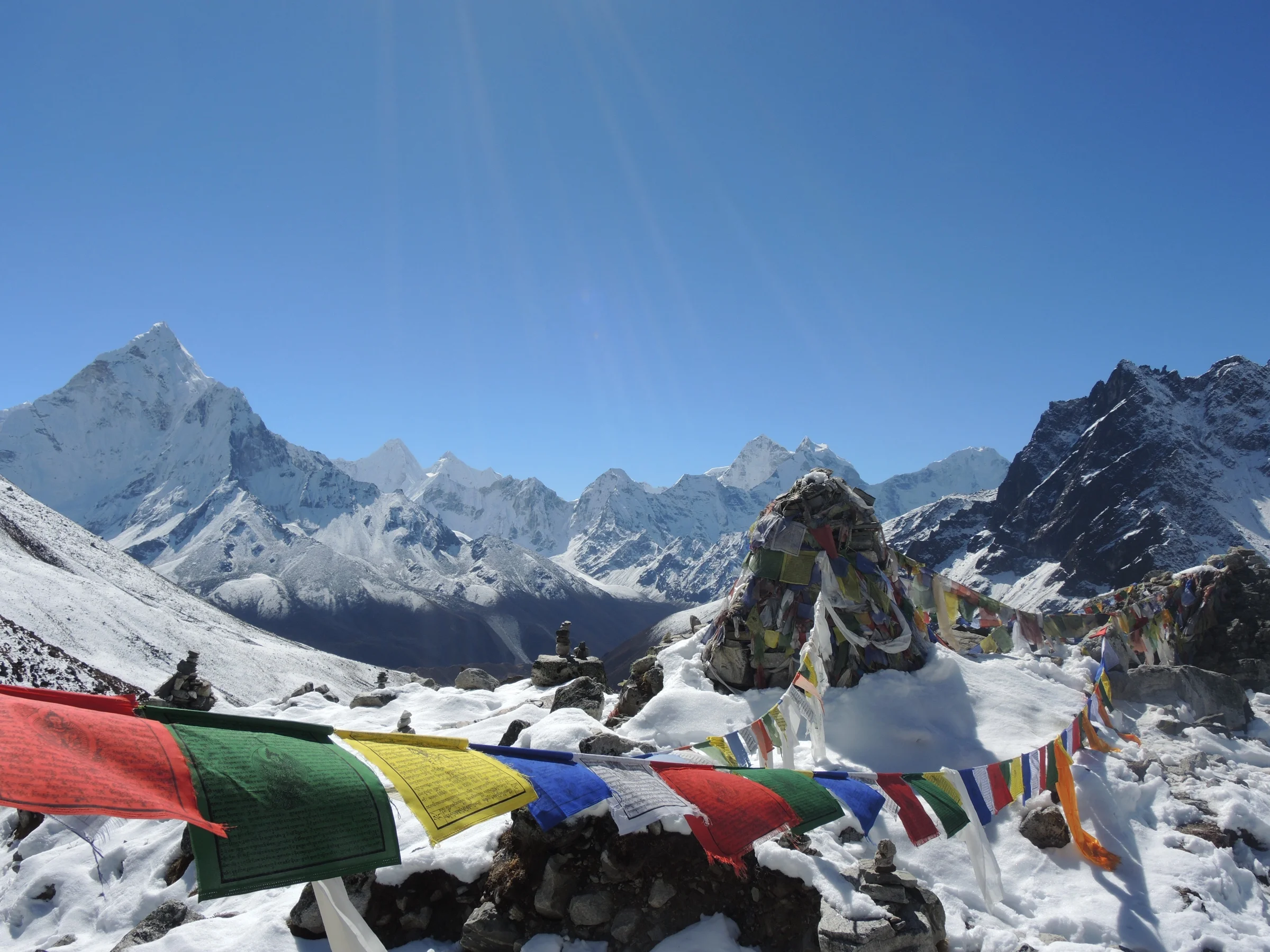
Crossing the Cho La pass (5,420 m) is one of the technical days of the route. The trail climbs from Dragnag over snow-covered terrain, made difficult in places by ice. The top, where Buddhist prayer flags fly, offers a view of Cholatse (6,440 m) and Taboche (6,495 m). The descent, just as tricky on the black ice, leads to the village of Dzongla. Night in Dzongla (4,830 m).
Dzongla gives way to the classic Everest Base Camp route. A short walk on a flat trail, offering a fine view of the surrounding peaks, leads to a junction where trekkers coming from Tengboche, Dingboche and Pheriche meet. An uphill detour then leads to the village of Lobuche, and then, a short walk further east, to Lobuche Base Camp. Night at Lobuche Base Camp (4,950 m).
An early start for the ascent of Lobuche East (6,119 m), the first of the trip's three climbs. The route follows the Lobuche Glacier, with views of Ama Dablam, Cholatse, Pokalde, Thamserku and the Kangtega massif. Setting off early makes it possible to avoid deteriorating weather and to complete the climb in good conditions. The final climb takes an exposed, technical ridge just below the summit, from where the whole valley and several of the region's highest peaks come into view. After a brief moment at the top, the descent returns to base camp. Night at Lobuche Base Camp (4,950 m), or, depending on the group, in a lodge in the village of Lobuche.
The day starts from the base camp, or directly from the village of Lobuche for the groups that went down the day before, and is left to each person's choice, in consultation with the guide. After crossing two passes and the trip's first climb, tiredness may set in: rest is possible in Lobuche. For those who wish to extend the exploration, two options are available as day return trips, each involving about 7 hours of walking: Everest Base Camp (EBC) or Kala Patthar (5,644 m). The next day brings the crossing of the Kongma La pass, one of the most demanding sections of the route. Night in Lobuche (4,910 m).
The trip's third pass, the Kongma La (5,535 m), is crossed today over terrain that is generally snow-covered and demanding. From the top, the panorama of Nuptse (7,861 m), Pokalde (5,806 m) and Lhotse (8,516 m) is revealed. After a brief stop, the descent leads to Pokalde Base Camp, at the foot of Pokalde Peak. Night at Pokalde Peak Base Camp (5,000 m).
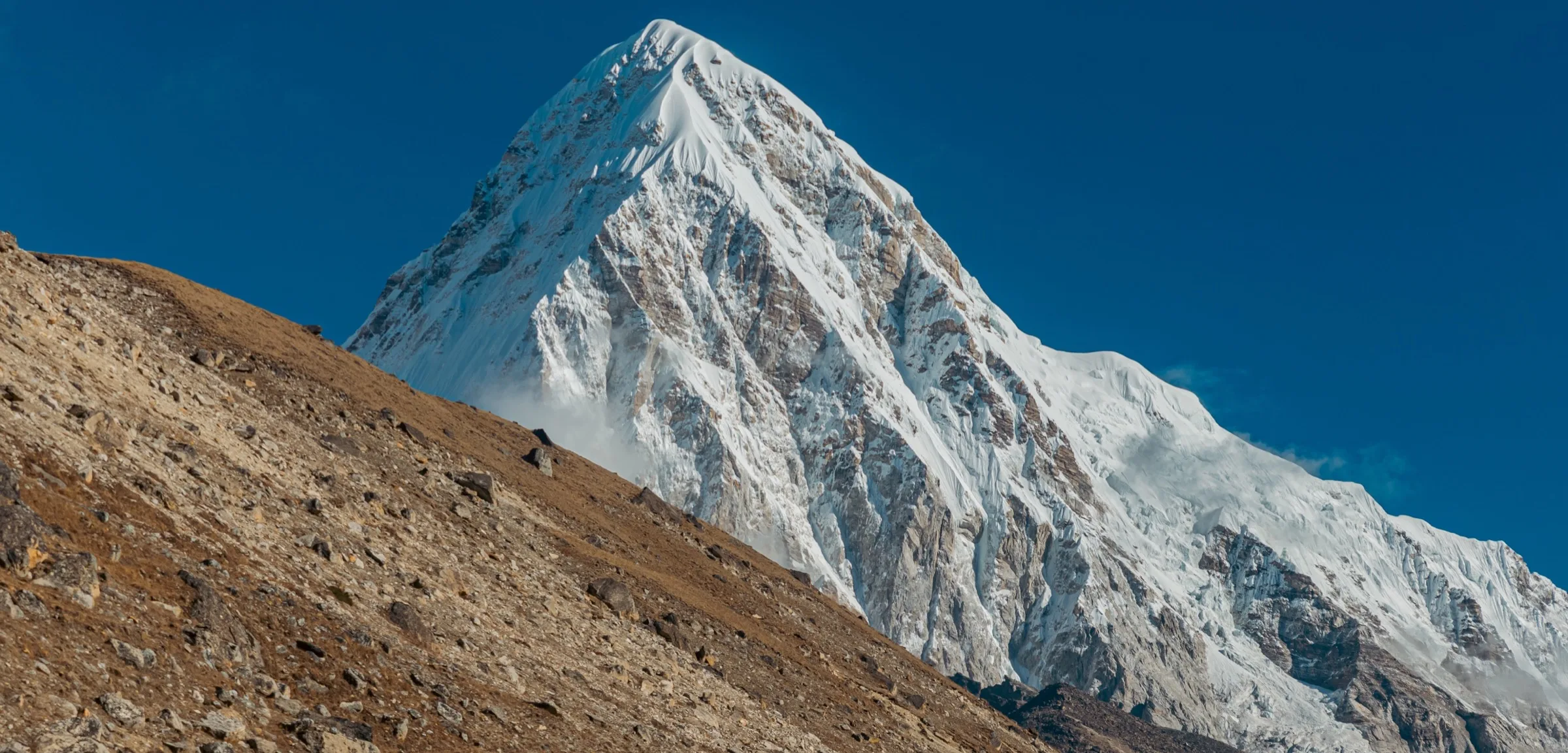
An early start for the ascent of Pokalde Peak. The snow-covered trail leads to a narrow ridge that runs to the summit, from where a panorama unfolds over Makalu (8,485 m), Pumori (7,165 m) and Ama Dablam (6,812 m). After a moment spent at the top, the descent returns towards the Chhukung valley. Night in Chhukung (4,730 m).
A day is devoted to acclimatisation in Chhukung, before the trip's last major climb. The Sherpa guide explains the technical aspects of Island Peak and the use of the equipment needed for the climb. The rest of the day can be spent exploring the village and observing the snow-capped peaks of the Everest massif. Night in Chhukung (4,730 m).
Today the route heads north-east, towards Island Peak Base Camp. The trail crosses the Lhotse Glacier and then rough terrain, between Imja Lake and the glacial moraines, before emerging onto a wide valley bordering the south-west flank of Island Peak. Once at base camp, the rest of the day is devoted to resting and preparing for the climb. Night at Island Peak Base Camp (5,090 m).
You wake before dawn for the ascent of Island Peak (6,165 m), the highlight of the trip. The route follows a ridgeline before emerging onto an exposed traverse to the front of the summit glacier. The summit offers a panoramic view over the whole valley and several major peaks, including Everest (8,848 m), Lhotse (8,516 m) and Makalu (8,485 m). After a brief moment at the top, the descent returns to base camp. Night at Island Peak Base Camp (5,090 m).
Ideally, the ascent of Island Peak was completed the day before, and this day is a walk down to the village of Dingboche via Chhukung. If the weather did not allow the summit, the day can be used for a new attempt. Night in Dingboche (4,410 m).
The day starts from Dingboche or, depending on whether the weather allowed the ascent on the first attempt, directly from Island Peak Base Camp. The trail descends towards Tengboche, along the Dudh Koshi River valley, over rocky terrain. The route follows the Imja River and passes through Somare and then Pangboche before reaching Tengboche, where a fine view of Ama Dablam (6,812 m) is revealed. Night in Tengboche (3,860 m).
A short downhill trail leads back from Tengboche to Namche, by a few steep stone staircases offering a panoramic view of Kongde Ri and Numbur in the background. Back in Namche, the day gives way to rest, or to a wander through the town's busy market. Night in Namche Bazaar (3,440 m).
Namche Bazaar marks the last look out over the Dudh Koshi River valley. After breakfast, the descent crosses the Hillary suspension bridge to reach Phakding, then continues to Lukla. Once there, the team and the porters share a convivial moment to celebrate the completion of the trek. Night in Lukla (2,860 m).
Depending on availability, known at booking, the flight from Lukla lands in either Kathmandu or Ramechhap. At Ramechhap, our vehicle is waiting for the 4 to 5-hour road journey to your hotel in Kathmandu. This flight offers a last look at the Khumbu valley and its panorama of peaks. In the evening, a farewell dinner celebrates the completion of this Himalayan journey. Night in Kathmandu (1,400 m).
This day is a necessary margin in case of flight delays out of Lukla. Delays are common, and a contingency day is a wise precaution. If you return on the planned schedule, the day is free for sightseeing or shopping on your own. Night in Kathmandu (1,400 m).
The departure for the airport takes place about two hours before the flight, as a precaution against the capital's traffic jams. The journey is a chance to talk with a representative of our local partner about your next travel plans.
Practical information
Best time to go
The best seasons for this trip are spring (March to May) and autumn (September to November), with December also possible. The weather is then most stable and the mountain views are clear. Outside these seasons, the passes and peaks are colder and more exposed to snow and storms.
What the price includes
Included
- nights in a 3-star hotel, in a shared room, with breakfast
- nights in a lodge, in shared accommodation
- nights in a tent, in shared accommodation
- a welcome dinner and a farewell dinner
- 3 meals a day during the trek and the climb
- half a litre of water at lunch and dinner during the trek and the climb
- a hot drink on arrival at the day's stage during the trek and the climb
Not included
- lunches and dinners in Kathmandu
- sweets and snacks
- single-room supplements
- drinks other than those listed as included
- showers and hot water during the trek and the climb
- laundry
Included
- airport–hotel transfers for the international flights
- airport–hotel transfers for the domestic flights
- domestic flights
- road transport
Not included
- international flights
- excess baggage fees on domestic flights
- helicopter flights