In the Khumbu region, Everest district, the ascent of Lobuche East (6,119 m) leads to a summit with an unobstructed view of Everest (8,848 m) and several other snow-capped giants, at the end of a route that mixes traditional Sherpa villages, forest trails of Sagarmatha National Park and a final climb requiring constant attention.
The trip begins in Kathmandu, where a representative of our local partner welcomes you at the airport and takes you to your hotel. The next day is devoted to preparing for the climb (permits, full equipment check, additional gear) and, depending on the time available, to visiting the city.
On the third day, a short scenic flight takes you to Lukla, where the approach trek begins. The trail follows the Dudh Koshi River to Phakding, crosses several suspension bridges and passes through pine and rhododendron forests before reaching Namche via Monjo, the gateway to Sagarmatha National Park. The route continues towards Tengboche, Dingboche and then Lobuche, with two acclimatisation days along the way, to Gorak Shep. From there, an excursion leads to Everest Base Camp and the Kala Patthar viewpoint, before descending back to Lobuche.
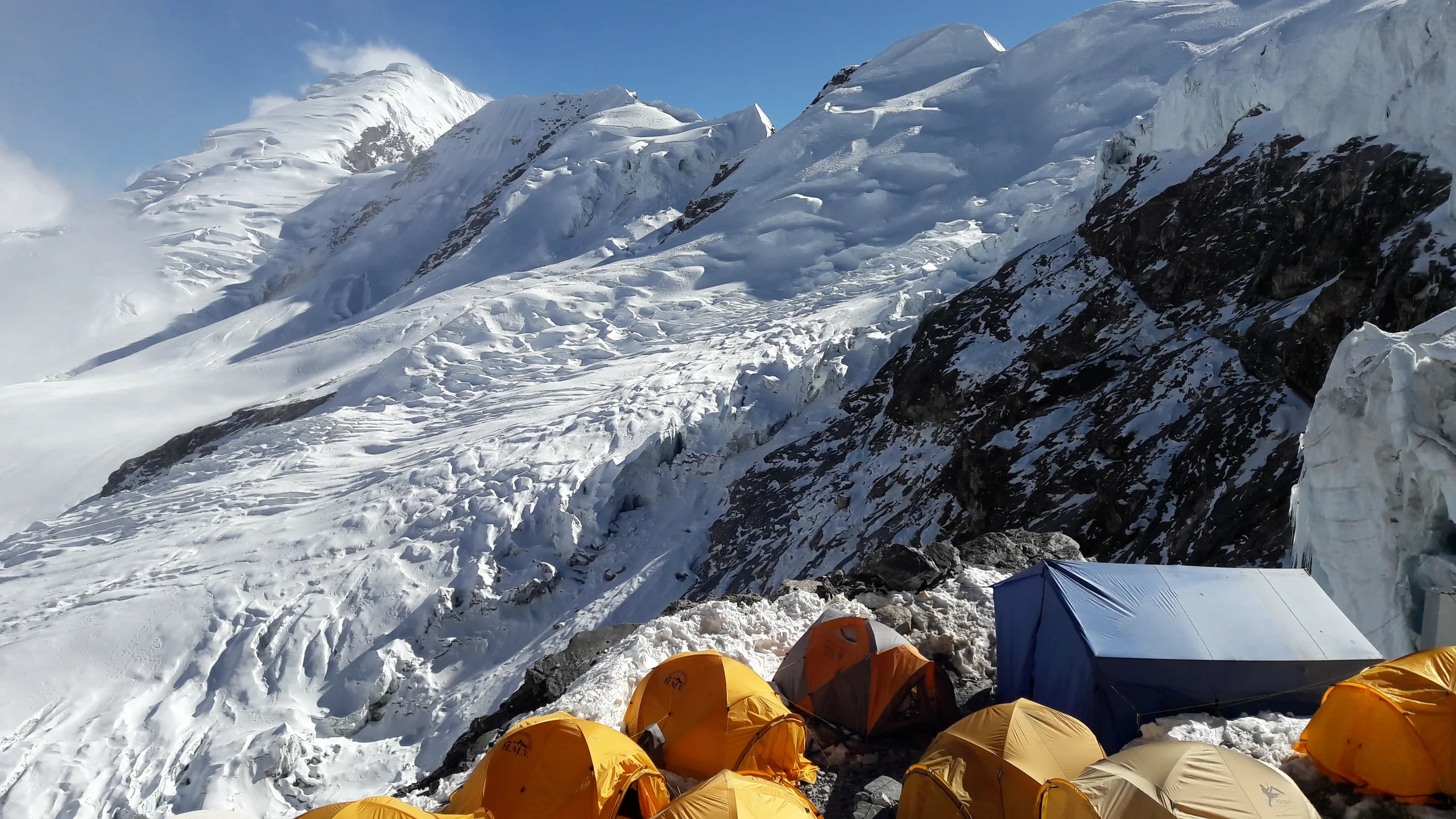
The climb and the camp structure. The climb itself then begins. From Lobuche, a steep trail leads to the high camp (5,400 m), where crampons and ice axe become necessary to cross snow-covered terraces and glaciers. The final climb to the summit first crosses rocky terrain to about 5,700 m, then continues on fixed rope over sometimes slippery slopes, under the strict guidance of the guides. At the summit, in clear weather, the panorama extends over Everest (8,848 m), Lhotse (8,516 m), Cho Oyu (8,188 m), Nuptse (7,861 m) and Ama Dablam (6,812 m).
The return takes the same route to Lukla, before a flight to Kathmandu. Along the way, the trek is a chance to discover the wildlife and vegetation of Sagarmatha National Park, the culture and traditions of the Sherpa people, and wide panoramas over the peaks and valleys of the Khumbu. The best times for this climb are from September to November and from March to May.
This trip combines two inseparable dimensions: the approach route, marked by the encounter with Sherpa culture and the landscapes of the Khumbu, and the climb itself, which demands rigour and technique on the summit slopes of Lobuche East. The guides of our local partner accompany every stage, from the preparation in Kathmandu to the return, with the possibility of adapting certain aspects of the trip to the needs of the participants.
Highlights
The summit of Lobuche East
At 6,119 m, in clear weather, a panorama over Everest, Lhotse, Cho Oyu, Nuptse and Ama Dablam.
The glacier climb
Crampons and ice axe on the snow-covered terraces and glaciers leading to the high camp, then fixed rope on the slopes of the summit.
Sagarmatha National Park
Wildlife and lush vegetation along the approach trail, between pine and rhododendron forests.
Everest Base Camp and Kala Patthar
Grand panoramas over the Everest region from these two great landmarks of the Khumbu.
The culture and traditions of the Sherpa people
Villages, monasteries and mountain life set the rhythm of the whole approach route.
Itinerary
On arrival at Tribhuvan International Airport, a representative of our local partner welcomes you and takes you to your hotel in Kathmandu. The rest of the day is free, and a welcome dinner is offered in the evening. Night in Kathmandu (1,400 m).
This day is devoted to preparations for the climb: gathering the documents needed for the permits, a full equipment check and, if necessary, renting or buying additional gear. Depending on the time available, you can also visit the UNESCO World Heritage Sites of the Kathmandu valley — Pashupatinath, Boudhanath, Swayambhunath and Durbar Square are among the main places to see. Night in Kathmandu (1,400 m).
The day begins with the departure for Lukla. The flight to Lukla leaves from either Kathmandu or Ramechhap, depending on availability, which is known at booking. From Ramechhap, allow 4 to 5 hours by road followed by a 15-minute flight; if a flight is available from Kathmandu, it is a direct flight of about thirty minutes. This flight passes over the hills and then the Khumbu peaks. The trek starts right at the Lukla runway: the trail follows the Dudh Koshi River to Phakding, under the gaze of Nupla (5,885 m) and Kusum Khangkaru (6,367 m). Night in Phakding (2,610 m).
The climb from Phakding to Namche Bazaar passes through a mosaic of forests, waterfalls and small hamlets such as Bengkar, good for spotting local wildlife. At Monjo, the gateway to Sagarmatha National Park marks the start of the protected area; the trail then continues via Jorsalle to Namche. Night in Namche Bazaar (3,440 m).
A rest and acclimatisation day in Namche, the trading capital of the Khumbu. Early in the morning, you can take a short walk to the national park museum, devoted to Sherpa culture and traditions, or to the Everest View Hotel, from where a wide view of Everest (8,848 m) and the surrounding peaks opens up. In the evening, the local market and its stalls offer a glimpse of village life. Night in Namche Bazaar (3,440 m).
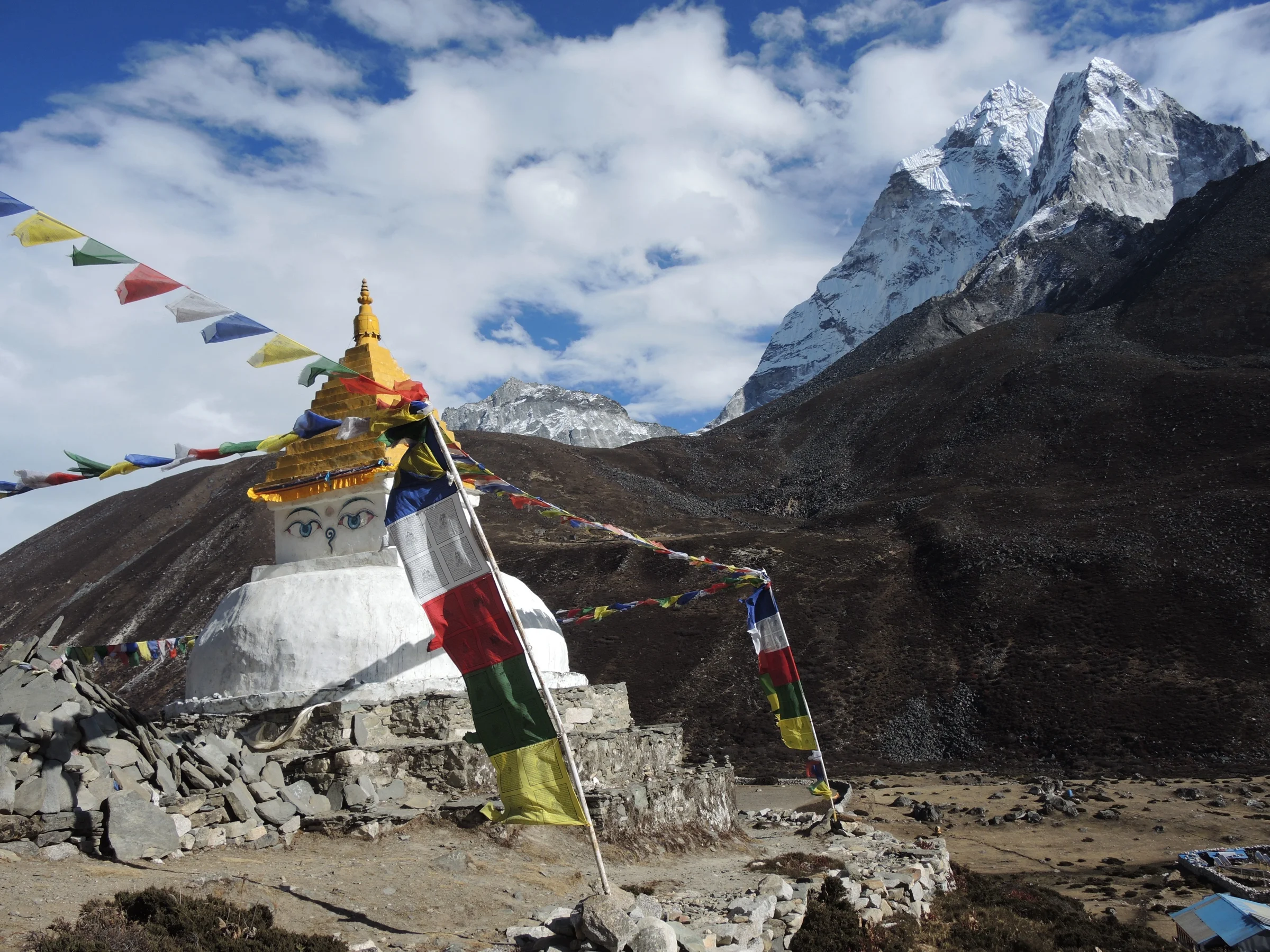
The trail follows the Imja Khola River, descends to Phunki Tenga and then climbs gradually to Tengboche, through wide forests of sal and pine. The views of Ama Dablam (6,812 m), Everest (8,848 m), Lhotse (8,516 m), Cho Oyu (8,188 m) and Nuptse (7,861 m) accompany the whole climb. The stage ends at Debuche. Night in Debuche (3,820 m).
From Debuche, a steady climb leads to Pangboche, the last year-round settlement in the sector, along narrow trails and sloping terrain. The route continues via Somare and Orsho, along the Imja River, to Dingboche, whose viewpoint overlooks the surrounding glaciers and peaks. Night in Dingboche (4,410 m).
A rest and acclimatisation day in Dingboche. You can take a short hike to Chhukung along paved paths and narrow trails, with views of Ama Dablam (6,812 m), Lhotse (8,516 m), Cho Oyu (8,188 m) and Nuptse (7,861 m), or simply rest in Dingboche, with time to explore the village. Night in Dingboche (4,410 m).
The trail first reaches Thukla and then climbs steeply to the Dughla pass (4,830 m), between narrow stone paths and forests of pine and juniper. The rest of the route, more even, follows the Lobuche Glacier to the village of the same name. Night in Lobuche (4,910 m).
From Lobuche, the trail crosses the Changri Glacier towards Gorak Shep, then crosses moraines and watercourses to Everest Base Camp (5,364 m). From this point, framed by the Khumbu Glacier, the view takes in several major peaks of the region. The day ends with the return to Gorak Shep. Night in Gorak Shep (5,164 m).
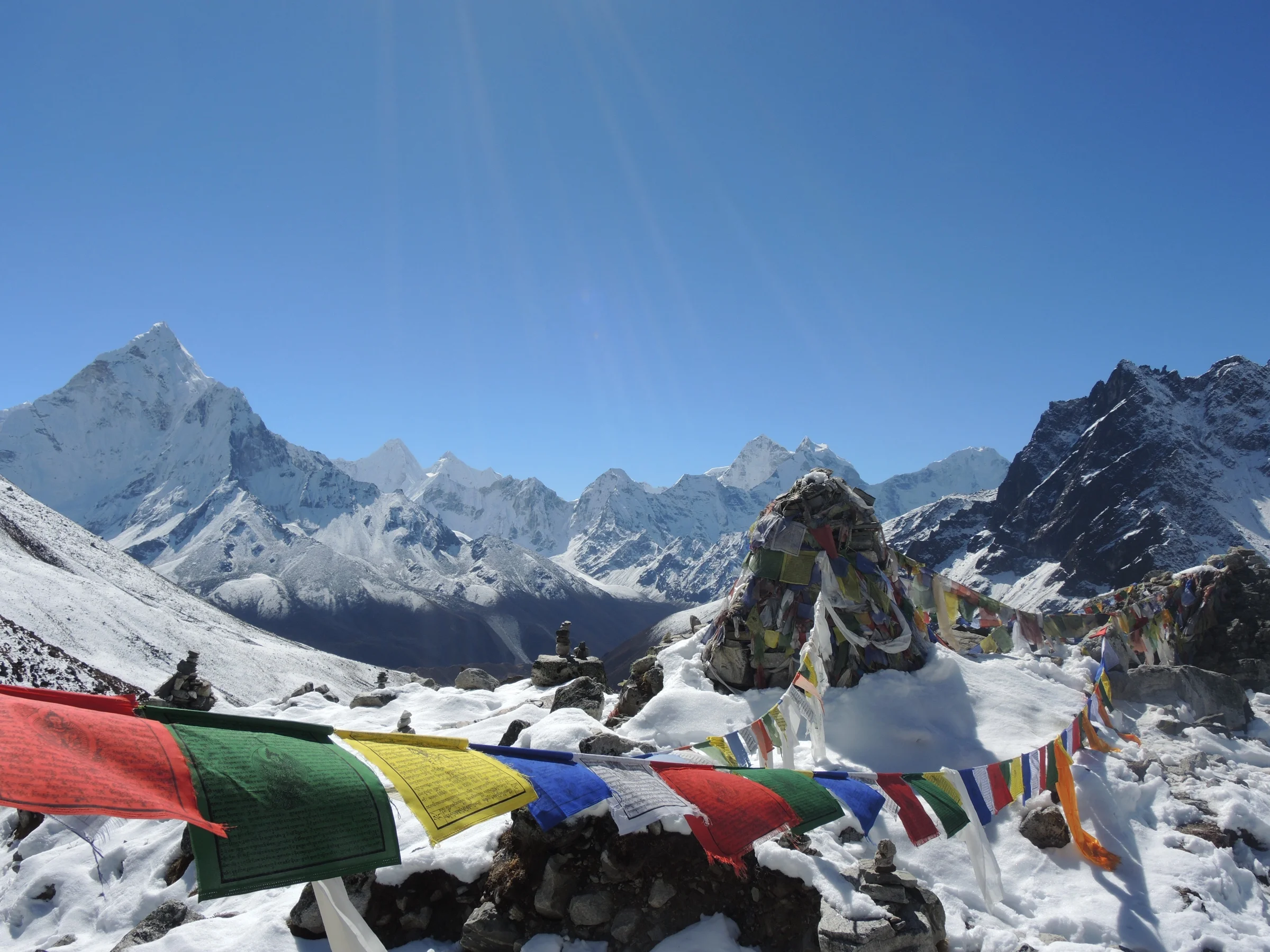
From Gorak Shep, the trail climbs to the Kala Patthar viewpoint (5,644 m) before descending to Lobuche, past isolated chortens (Buddhist monuments) and the plains where yaks graze. Night in Lobuche (4,910 m).
From Lobuche, a steep and rocky trail leads to Lobuche East base camp, then on to the high camp. From the high camp, the view takes in Cho Oyu (8,188 m), Nuptse (7,861 m), Ama Dablam (6,812 m) and other snow-capped peaks. Towards the end of the route, crampons and ice axe are needed to cross snow-covered terraces and glaciers. Night at Lobuche High Camp (5,400 m).
An early start from the high camp for the final climb. The trail first crosses glaciers and wide snow-covered expanses, then rocky terrain to about 5,700 m; beyond that, progress is made on fixed rope and ice axe, under the strict guidance of the guides, over sometimes slippery slopes. The summit of Lobuche East (6,119 m) delivers, in clear weather, a panorama over Everest (8,848 m), Lhotse (8,516 m), Cho Oyu (8,188 m), Nuptse (7,861 m) and Ama Dablam (6,812 m). You then descend to the high camp. Night at Lobuche High Camp (5,400 m).
From the high camp, the descent reaches Pangboche via Lobuche and Dingboche, with the same panoramas over the snow-capped peaks and the chance to observe the local wildlife and flora. In Pangboche, you can visit the monastery, one of the most influential in the region. Night in Pangboche (3,985 m).
The trail descends towards Namche, offering, near Debuche, open views of Ama Dablam (6,812 m) and Everest (8,848 m). The route crosses several suspension bridges, waterfalls and green forests, following the Imja Khola River via Phunki Tenga. Night in Namche Bazaar (3,440 m).
From Namche to Lukla, the trail passes through vast forests of pine and rhododendron, terraced crops and yak pastures. The descent to Phakding is steep, before a slight climb along the Bhote Koshi River to Lukla, where the success of your climb can be celebrated. Night in Lukla (2,860 m).
Depending on availability, known at booking, the flight from Lukla lands in either Kathmandu or Ramechhap. At Ramechhap, our vehicle is waiting for the 4 to 5-hour road journey to your hotel in Kathmandu. This return flight offers a last look at the Everest region and the Himalayan peaks. Depending on your arrival time, you can wander through Kathmandu or find a few souvenirs. In the evening, a farewell dinner celebrates your climb. Night in Kathmandu (1,400 m).
This day is a necessary margin in case of flight delays out of Lukla. Delays are common, and a contingency day is a wise precaution. If you return on the planned schedule, the day is free for sightseeing or shopping on your own. Night in Kathmandu (1,400 m).
A representative of our local partner accompanies you to Tribhuvan International Airport for your international flight.
Practical information
Best time to go
The best seasons for Lobuche East are spring (March to May) and autumn (September to November). The climb is also possible in winter, but the passes may be blocked by ice or snow; the trekking routes are busy in spring and autumn, but quieter in winter and during the monsoon.
What the price includes
Included
- nights in a 3-star hotel, in a shared room, with breakfast
- nights in a lodge, in shared accommodation
- nights in a tent, in shared accommodation
- a welcome dinner and a farewell dinner
- 3 meals a day during the trek and the climb
- half a litre of water at lunch and dinner during the trek and the climb
- a hot drink on arrival at the day's stage during the trek and the climb
Not included
- lunches and dinners in Kathmandu
- sweets and snacks
- single-room supplements
- drinks other than those listed as included
- showers and hot water during the trek and the climb
- laundry
Included
- airport–hotel transfers for the international flights
- airport–hotel transfers for the domestic flights
- domestic flights
- road transport
Not included
- international flights
- excess baggage fees on domestic flights
- helicopter flights