Chulu Far East is a 6,059 m trekking peak in the Annapurna region, one of the least frequented climbs of Nepal. This trip combines its ascent with a long trek around the Manang valley and the sacred Tilicho Lake (4,920 m), for a route as varied in its landscapes as in its culture.
The journey begins in Kathmandu, where a free day lets you meet your guides and prepare for the climb. A long drive then leads to Chame, in the Manang district, where the trek begins. The trail follows the Marsyangdi valley through the Tibetan Buddhist villages of Pisang and Ngawal, then turns north to Julu Khola and to Chulu Far East base camp (5,000 m). Two acclimatisation days, one at Julu Khola and one at base camp, and a training session on the use of technical equipment prepare you for the climb. After a night at the high camp, you climb to the summit, from where the panorama stretches over the Annapurna, Gangapurna, Manaslu and Chulu massifs.
After the climb, the route goes back down to Manang and continues through a quiet part of the Annapurna region, by Siri Kharka and Tilicho base camp, to Tilicho Lake, considered sacred and cited in the Ramayana. Two high passes lead to Yak Kharka, then the trail descends to Jomsom, in Mustang, from where a flight reaches Pokhara before the road back to Kathmandu.
The best seasons are spring (March to May) and autumn (September to December). Although the peak is not technical, it requires good physical fitness and a first experience of altitude, because of the length of the route and the altitude reached at the high camp and at the passes.
Highlights
The summit of Chulu Far East
The highlight of this trip, this trekking peak climb to 6,059 m offers a 360° panorama over the Annapurna, Gangapurna, Manaslu and Chulu massifs.
Manang and Pisang
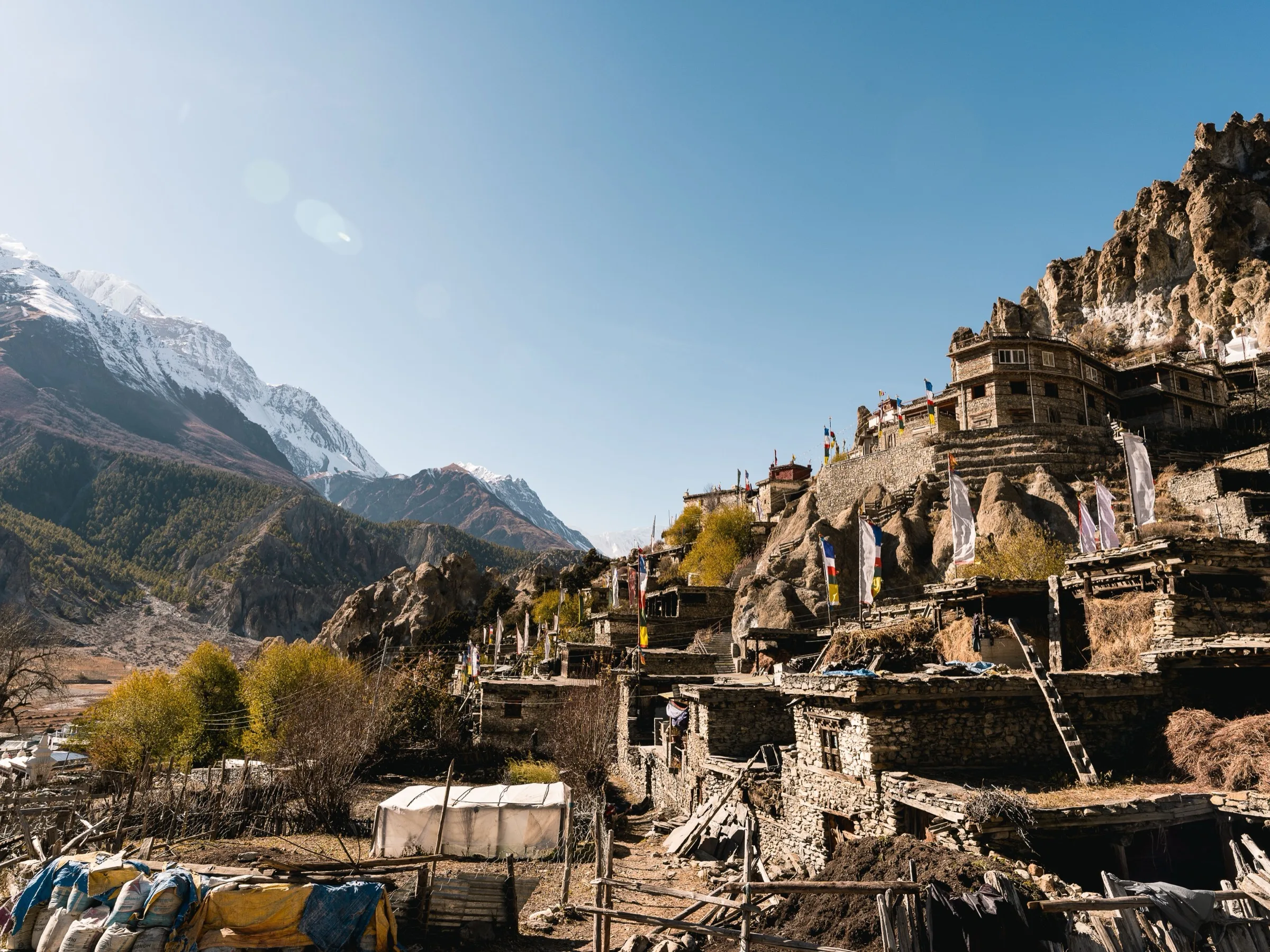
These Tibetan Buddhist villages, with their gompas and stone architecture, line a route still little frequented by Nepal's classic treks.
The Himalayan panorama
Annapurna (8,091 m) and Dhaulagiri (8,167 m) accompany the walk along the entire route.
The East pass and the Mesokanto La pass
Two high passes, at 5,340 m and 5,467 m, crossed well away from the busiest trails, with open views of the main peaks of the Annapurna region.
Tilicho Lake and its base camp
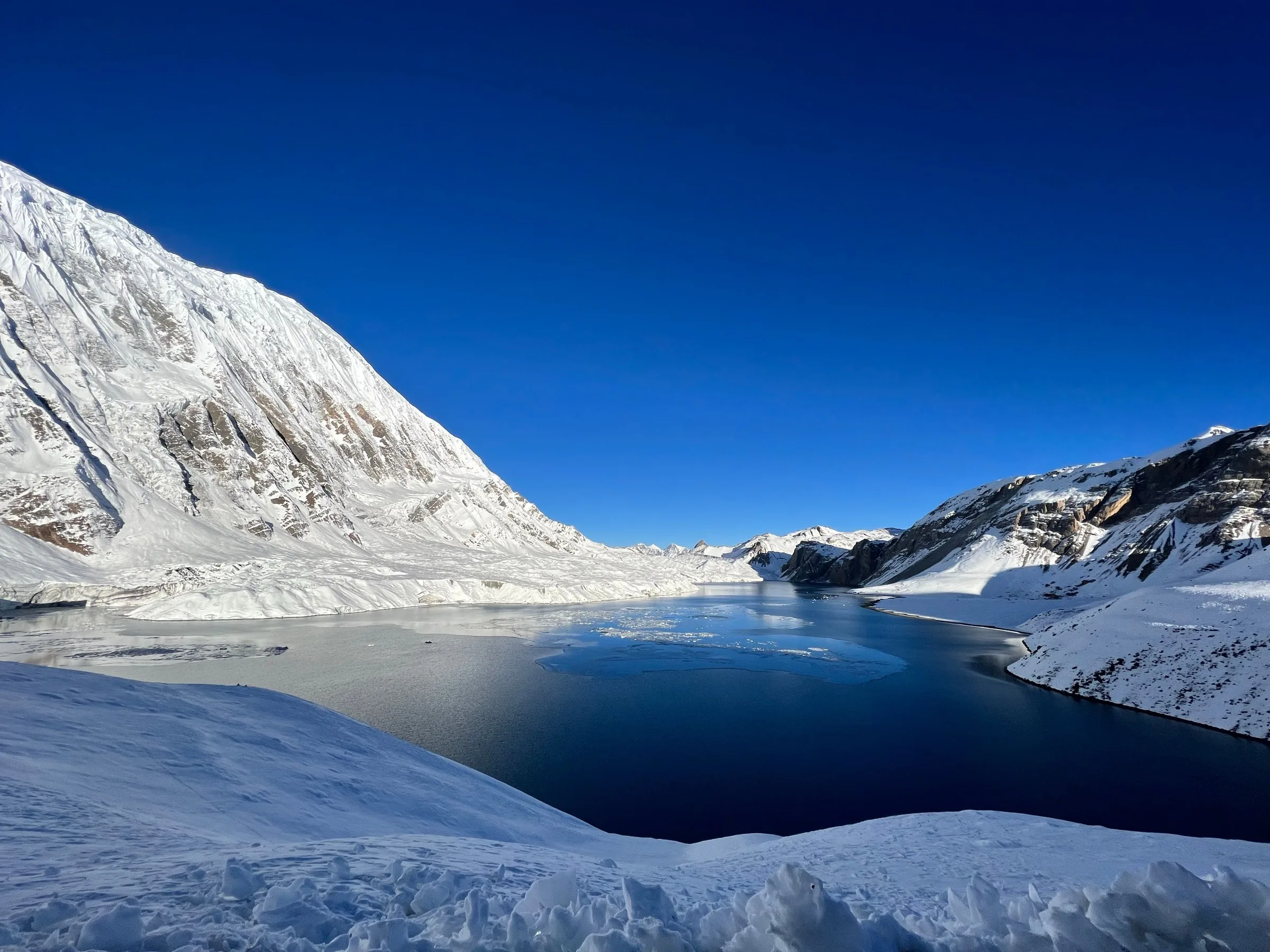
At 4,920 m, one of the highest lakes in the world, held to be sacred and mentioned in the Hindu text of the Ramayana.
Itinerary
Your arrival in the capital of Nepal is marked by the landing at Tribhuvan International Airport in Kathmandu. A representative of our local partner welcomes you and drives you to your hotel in Kathmandu. A welcome dinner is offered in the evening; the rest of the day is free to explore the immediate surroundings. Night in Kathmandu (1,400 m).
A free day in Kathmandu, devoted to exploring the valley or resting at the hotel. It is a chance to meet the guides and porters who will accompany you during the trek and the climb, to check the equipment and to finalise the last preparations before heading into the mountains. This day also allows you to complete any equipment purchases still needed. Night in Kathmandu (1,400 m).
Early departure for the road to Chame (2,670 m), a journey of about 9 hours that is a first test. The road crosses contrasting landscapes: dense vegetation, tumbling rivers, small hamlets and peaks taking shape in the distance, offering a representative taste of Nepalese mountain roads. Arriving in Chame allows a first contact with the inhabitants of the Marsyangdi valley. Night in Chame (2,670 m).
The trek truly begins as you leave Chame. The narrow, steep trail passes through dense forests to a curved rock at the foot of the Pangdi Danda. As you progress, the surrounding Himalayan peaks and the first panoramas over the Manang valley are gradually revealed. Crossing this valley, you reach Pisang. Night in Pisang (3,250 m).
Today's stage leads to the village of Ngawal, through scattered hamlets and vegetation that gradually opens onto more open spaces. The trail offers a view of the Manang airstrip and the vast plains surrounding it. As you approach Ngawal, the first houses and a few lodges signal your arrival in this highland village, still off the busiest routes. Night in Ngawal (3,660 m).
The trail passes through forests of pine, cedar and oak to Julu Khola. It goes past Lophelling Monastery before reaching Sher Gompa, then climbs north along the Julu Khola River to the day's campsite. Pisang Peak (6,091 m) takes shape in the distance for much of the walk. Night at Julu Khola (3,500 m).
An acclimatisation day at Julu Khola, with no long walk but a hike in the immediate surroundings. A climb up to the base camp of Julu Peak offers a chance to admire the Annapurna Himalayan range as well as Pisang Peak (6,091 m). Lunch is taken there, before descending back to Julu Khola in the late afternoon. Night at Julu Khola (3,500 m).
The day is marked by a significant altitude gain, of around 1,500 m. To prevent acute mountain sickness and limit fatigue, the walk is done slowly and carefully. The trail to the Chulu Far East base camp is steep and demanding, crossing rocky areas and snow-covered sections in places. This sustained climb nonetheless leaves time to gaze at length at the Annapurna ranges. Night at Chulu Far East base camp (5,000 m).
A second acclimatisation day, necessary before tackling Chulu Far East Peak (6,059 m). The guides train you in the use of technical equipment (crampons, harness, rope) and go over the safety rules to follow at altitude; a glacier outing may be included depending on conditions. It is also the time to check all the equipment before the climb. Night at Chulu Far East base camp (5,000 m).
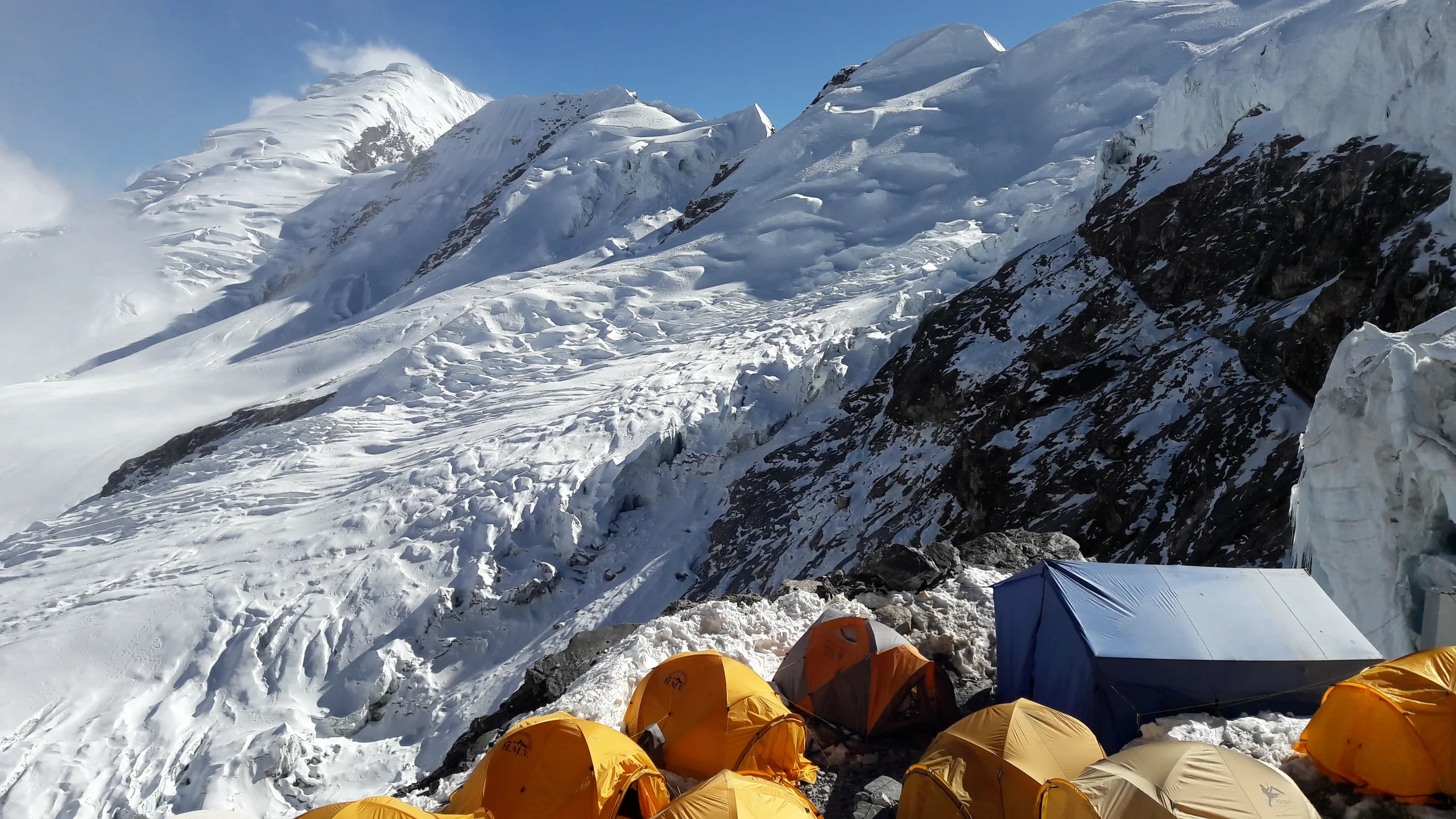
A steep trail leads to the Chulu Far East high camp. The climb reveals open views of the Himalayan peaks of the Annapurna valley, including Chulu East (6,429 m), Chulu West (6,419 m), Chulu Central (6,584 m) and Chulu Far East (6,059 m). After a few hours' walk, the high camp appears amid the snow, recognisable by its colourful tents. Night at Chulu Far East high camp (5,450 m).
Summit day. The start takes place early in the night, in the cold and sometimes the wind, to make your way over terrain that is at first relatively flat and then increasingly steep, up to rocky sections requiring the use of technical equipment (crampons, rope, ice axe). At the summit of Chulu Far East (6,059 m), the panorama opens onto the Annapurna, Gangapurna and Manaslu massifs and the whole Chulu range. The descent is done slowly to the base camp, where a well-earned rest awaits you. Night at Chulu Far East base camp (5,000 m).
The descent begins with a stop at Julu Khola, then crosses wooded areas to Manang. The trail, broadly flat, offers a more restful walk after the climb. Manang is a village typical of the region, marked by a strong Tibetan Buddhist influence; the gompas of Braga and Boozo, along the way, can be visited en route. Night in Manang (3,519 m).
The trail out of Manang crosses the western gates of the valley before descending towards the Thorong River. After crossing the watercourse, the route heads south through coniferous forests, with a stop at the village of Khangsar before reaching Siri Kharka. Gangapurna Himal and the Chulu massifs accompany the walk for much of the way. Night at Siri Kharka (4,060 m).
The descent to Tilicho base camp is steep and demanding, on a narrow trail that only allows a few people through at a time. The unspoilt nature you pass through along the way, with its views of the snow-capped Annapurna peaks, more than makes up for the demanding nature of the route. Night at Tilicho base camp (4,150 m).
The trail crosses moraine ridges, grassy slopes and long switchbacks cut into the hillside to a watershed line overlooking the turquoise waters of Tilicho Lake. Framed by snow-capped peaks and a wide blue horizon, the lake is lined with prayer flags; it is considered sacred by Hindus, who mention it in the text of the Ramayana. One of the highest lakes in the world, still relatively little visited. Night at Tilicho Lake (4,920 m).
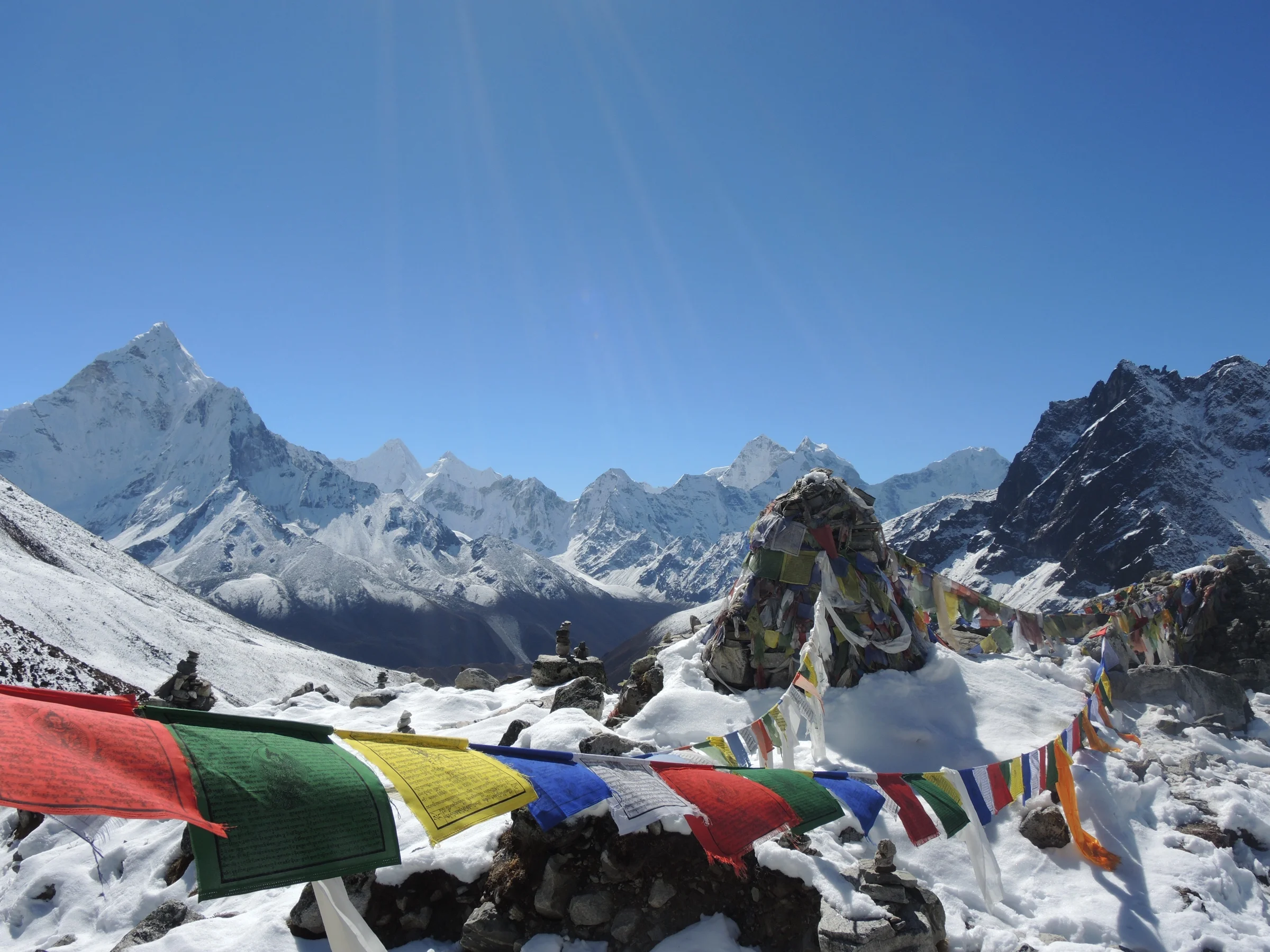
The first part of the day involves climbing the trail to the East pass (5,340 m), which offers an open view of the Annapurna massif and Tilicho Himal (7,134 m). The descent then continues to the Mesokanto La pass (5,467 m), a viewpoint over the Annapurna, Dhaulagiri, Nilgiri, Tilicho and Tukuche massifs. The stage ends with a long descent to the small hamlet of Yak Kharka. Night in Yak Kharka (4,200 m).
The descent continues through small hamlets and a more arid landscape, with a stop at Thini Gaon for a meal. The trail then reaches Jomsom, where the local apples and regional cuisine are worth the detour. A moment spent talking with the inhabitants helps you better grasp the religious traditions particular to this Mustang valley. Night in Jomsom (2,743 m).
A short flight from Jomsom airport to Pokhara, offering a panorama over the mountains of the Annapurna region and the lakes surrounding the town. On arrival, the day is free: explore the town or settle into the hotel, as you prefer. Pokhara, a major tourist destination in Nepal, is home to Phewa Lake, Mahendra Cave, Davis Falls and Tal Barahi Temple, among others. Night in Pokhara (822 m).
Return to Kathmandu by road, a journey of 6 to 7 hours that follows rivers and hills. On arrival, transfer to the hotel, then a free end to the day to explore the cultural riches of the capital. In the evening, a farewell dinner celebrates your climb and trek. Night in Kathmandu (1,400 m).
Last day in Nepal: a representative of our local partner provides the transfer to Tribhuvan International Airport for the international departure, according to the flight schedule.
Practical information
Best time to go
The best seasons for this trip are spring (March to May) and autumn (September to December), when the weather is most stable and the mountain views are clear. The trail is busier in these seasons; during the monsoon and winter it is much quieter, but the passes may be blocked by snow or ice.
What the price includes
Included
- nights in a 3-star hotel, in a shared room, with breakfast
- nights in a lodge, in shared accommodation
- nights in a tent, in shared accommodation
- a welcome dinner and a farewell dinner
- 3 meals a day during the trek and the climb
- half a litre of water at lunch and dinner during the trek and the climb
- a hot drink on arrival at the day's stage during the trek and the climb
Not included
- lunches and dinners in Kathmandu
- sweets and snacks
- single-room supplements
- drinks other than those listed as included
- showers and hot water during the trek and the climb
- laundry
Included
- airport–hotel transfers for the international flights
- airport–hotel transfers for the domestic flights
- domestic flights
- road transport
Not included
- international flights
- excess baggage fees on domestic flights
- helicopter flights